Richardson School (Flushing Township, Genesee County, Michigan) was a one-room rural school that served a small farming community south of the village of Flushing. The school took its name from Alfred Richardson, an early settler whose homestead was near the intersection of Seymour Road and Potter Road, southwest of Flushing. Alfred Richardson arrived in the Flushing area in 1836, when only one other settler’s house stood in that locality. He helped establish the local road network by cutting a road south from the village to his property on what are now Seymour and Potter Roads. The surrounding neighborhood became informally known as the “Richardson settlement,” and as families moved in, a dedicated school was soon needed to educate their children.
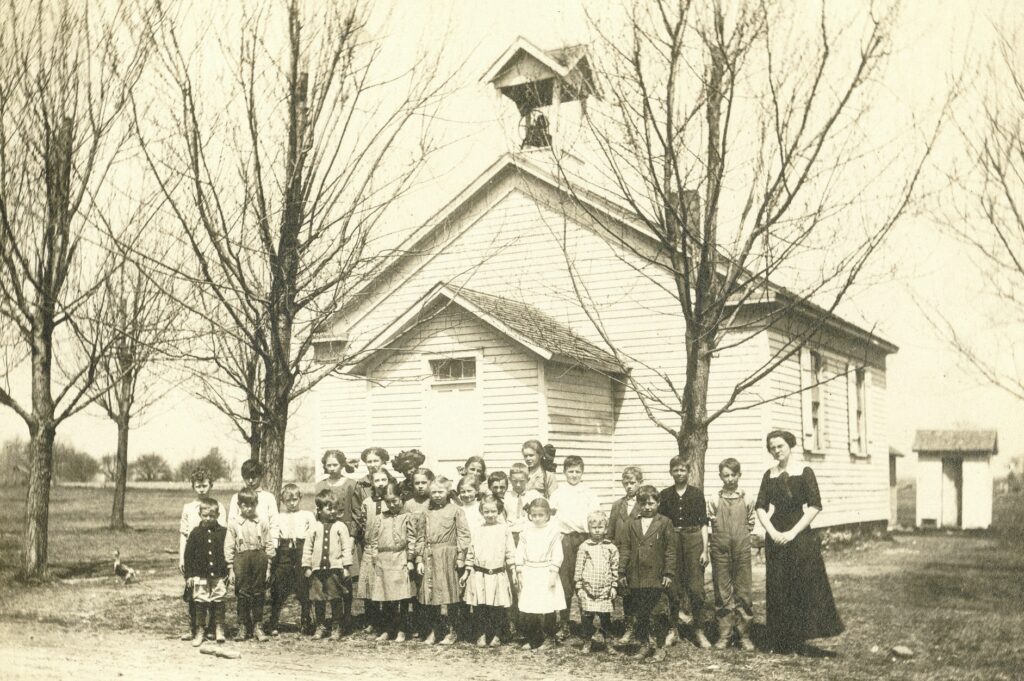
Founding and Early Structure
In the mid-19th century, Flushing Township organized its outlying areas into numbered school districts. Richardson School’s district – one of roughly sixteen in the township – was formed in this period to serve residents of the developing Richardson settlement. The exact year of the school’s establishment is not recorded, but it likely traces back to the 1840s, when many of Genesee County’s pioneer communities were building their first schoolhouses (for context, Flushing’s earliest schools were formed in the late 1830s and early 1840s). Initially, classes may have been held in a log cabin or even a local home. However, as was common for rural Michigan schools, a more permanent frame schoolhouse was eventually constructed on or near Alfred Richardson’s land. While archival records for Richardson School are scant, the first dedicated building was probably a small, wood-frame structure built around the late 1840s or early 1850s (many neighboring district schools built their first frame schoolhouses between 1845 and 1855).
The Richardson Family & Community Significance: The decision to name the school after Alfred Richardson underscores his prominence in the area. As one of Flushing Township’s earliest settlers, he not only established a farm but also actively contributed to community development. In township records from the 1840s, we find multiple mentions of individuals with the Richardson surname, suggesting a sizable extended family or related settlers. For example, Henry P. Richardson served on Flushing’s village council in the 1880s. The Richardson family, along with others like the Ottaway, Burbridge, Fenner, Lennon, and Conlon families, were pillars of the local farming community in the 19th century. The school’s presence not only fulfilled educational needs but also provided a gathering place for these families, reinforcing community bonds in a region where farms were spread out and neighbors few
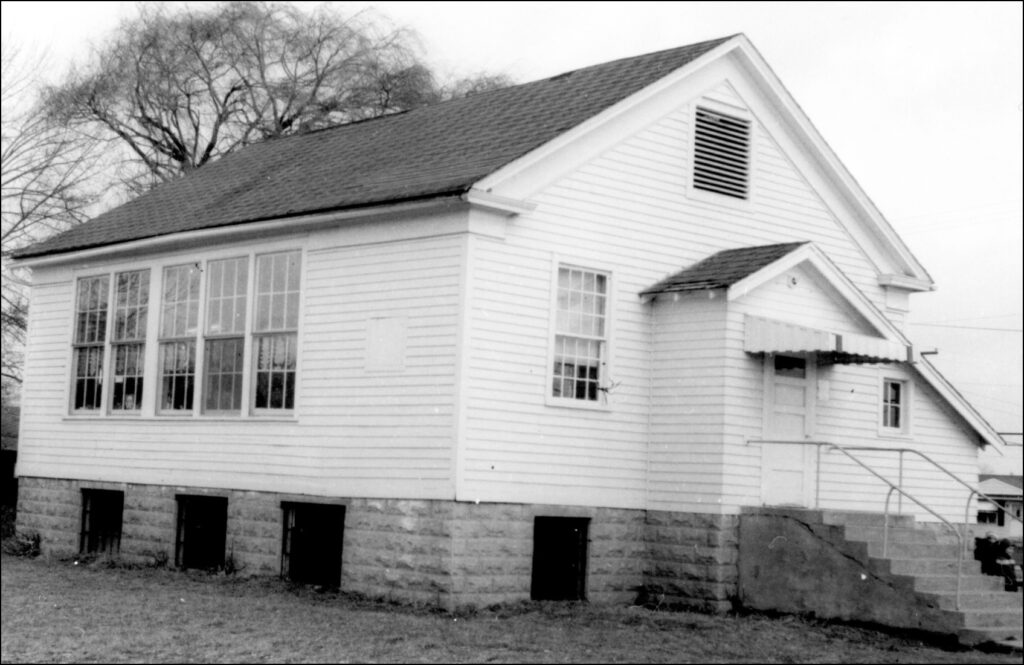
School Buildings & Operations
Like most one-room schools of its era, Richardson School was a simple rectangular building with a single classroom. Early on, it would have been heated by a wood-burning stove and furnished with basic wooden desks or benches. A teacher – often a young woman from Flushing or the vicinity – would instruct children of all ages together, teaching reading, writing, arithmetic, and other fundamentals. The school likely had a bell, rung to call children from the surrounding farms at the start of the day.
The historical society references indicate that the original Richardson School building was replaced or updated at least once. Many comparable district schools in Flushing Township underwent rebuilds in the late 19th century as communities grew and sought improved facilities. For instance, the Lyons School (another rural school in Flushing Township) first convened in a log structure, then saw a frame school built in 1846, followed by a larger building in 1881. It’s very plausible that Richardson School followed a similar pattern: an initial modest structure and a later, upgraded building, possibly erected around the 1880s as the district’s population peaked. Indeed, township histories note that a number of rural schools were rebuilt in the 1880s, often at costs of a few hundred dollars each – a significant sum for small farming communities.
Students and Teachers
Enrollment at Richardson School ebbed and flowed with the fortunes of the community. Typically, a one-room school in this part of Michigan might serve anywhere from a dozen to 30 students at various times. The family names of students attending Richardson School would have mirrored the local farm families. The Ottaway family, for example, had multiple children attending rural schools in Flushing (a township record from the 1880s lists several Ottaway children of school age). Other frequent surnames in Flushing’s rural school rosters included Burbridge, Fenner, Conlon, Lennon, Miller, Mundy, Carton, and Richardson – reflecting the kinship ties and neighbors around the Richardson settlement. In fact, a later recollection from 1935 indicates that “out of a family of eight children” at the old Richardson School, only one descendant remained in town by the mid-20th century (that descendant being Bruce Ottaway, a member of another pioneering family). This remark suggests that large families once populated the school, though by the 1930s many younger residents had moved away or the family names had died out, a common trend as rural populations shifted.
Role in the Community
In addition to instruction, the Richardson School – like other one-room schools – was a community hub. Spelling bees, holiday pageants, and community meetings were held at the schoolhouse. In an era before dedicated township halls or convenient transportation, a local school was often the only public building available for miles. Oral histories of Flushing Township recall that neighborhood residents would gather at their district school for everything from Christmas celebrations to sunday school or church services when circuit riders (traveling preachers) came through. It’s known that the very first Baptist congregation in Flushing held early meetings in a schoolhouse in 1847. While that particular meeting occurred closer to the village, it underscores the multi-use nature of 19th-century school buildings.
Later Years and Consolidation
Richardson School continued to operate into the early 20th century, but by the 1920s and 1930s, the trend toward school consolidation was growing. In 1949–50, Genesee County undertook a major effort to consolidate smaller rural districts into larger ones, as improved roads and school busing made it feasible for children to travel farther for education. Richardson School was one of the last of Flushing Township’s one-room schools to close. Specifically, Richardson School merged into the Flushing school system in 1950, along with five other rural schools (Maple, Kent, Graves, Lyons, and English Settlement). After that point, local students began attending the more centralized Flushing schools in town. In the 20th century, improved transportation and an emphasis on standardized, graded education led to the closure of places like Richardson School, as pupils were consolidated into larger institutions. The last scholars of Richardson School would have transferred to Flushing’s main schools around 1950, marking the end of an era.