Legacy of Flushing’s First Settler
One of Flushing’s oldest homesteads still stands at the northwest corner of Flushing and Elms Roads, quietly preserving the story of Flushing’s first settlers. This mid-19th-century farmhouse – a modest Greek Revival style structure with a front-gabled roof, clapboard siding, and simple classical trim – was built around 1853 by William Schram and his wife Harriett (Harrison) Schram. Harriett was the daughter of Rufus and Sarah Harrison, who in 1835 became Flushing Township’s first permanent settlers. Rufus Harrison’s original log cabin, erected that year on the north bank of the Flint River (just west of today’s Flushing–Elms intersection), marked the beginning of settlement in Flushing. The Harrison farm was the first to be cleared in the township. Two decades later, through Harriett’s marriage to William, the Harrison homestead passed into the Schram family – weaving together Flushing’s founding family with one of its early farm families.
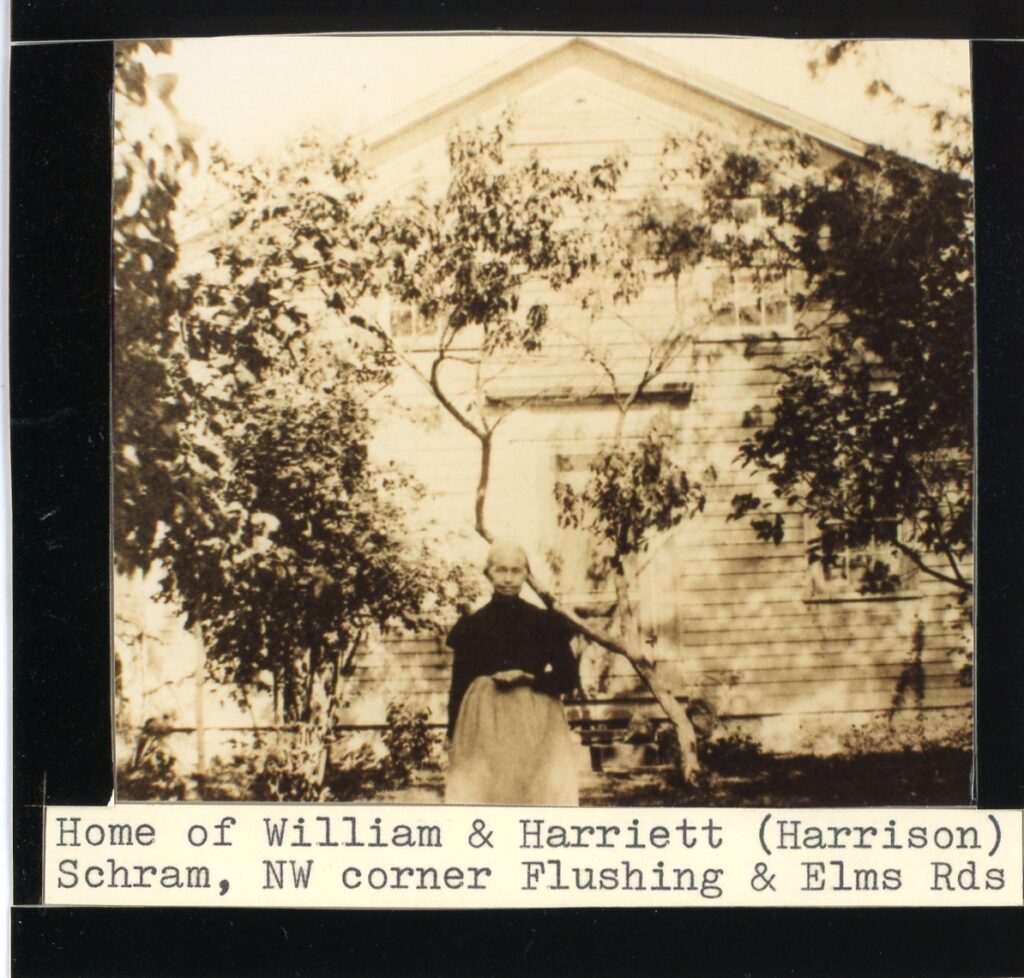
Harriett in front of Harrison-Schram home before her death Aug 8, 1914
The Harrison-Schram House, as it became known, was a straightforward yet charming example of a vernacular Greek Revival farmhouse. It features a front-gabled roof with cornice returns (the little horizontal eaves at the gable ends suggesting a classical pediment) and a symmetrical façade – design cues borrowed from the popular Greek Revival style of the mid-1800s. The wood-frame structure rests on a stone foundation, with horizontal clapboard siding (today painted a red-orange with light trim, echoing traditional 19th-century colors). Historic construction details include an original central chimney base (now only visible in the basement) that once served multiple fireplaces, and a rear ell extension that began as a “summer kitchen” – a small wing where warm-weather cooking was done separate from the main house. Over time, this summer kitchen was enclosed and integrated into the house, illustrating how early farm families adapted their homes for practicality. Despite such changes, the farmhouse’s outward appearance has changed little since the 1850s, and it continues to exemplify the modest, sturdy homes built by the area’s settlers
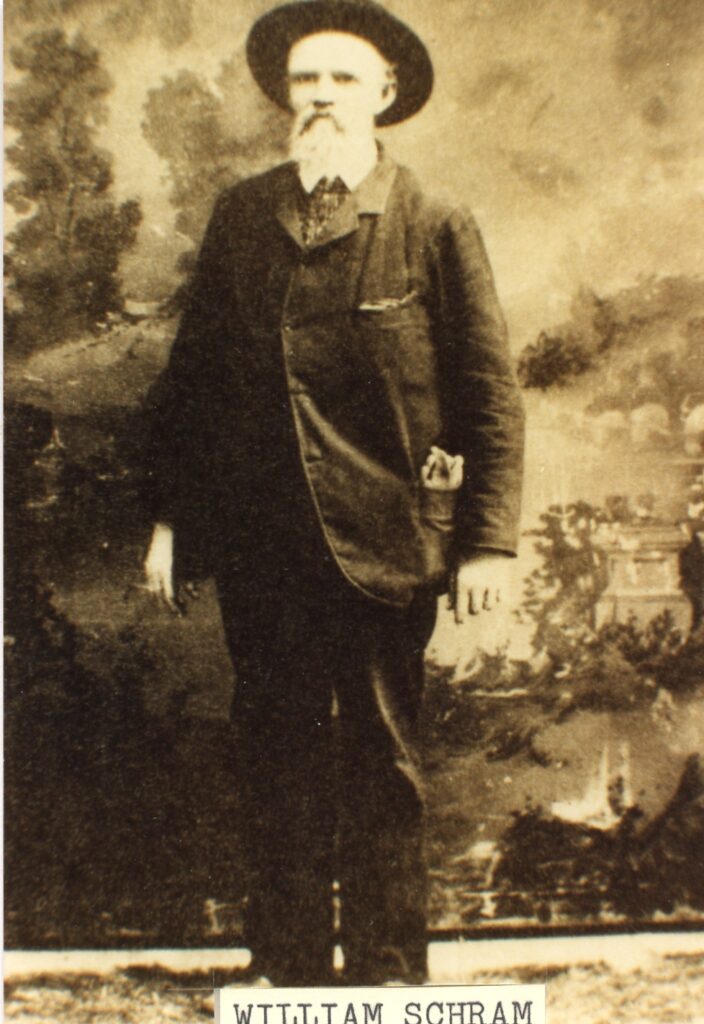
Harriett and William Schram’s lives at this homestead literally bridged Flushing’s pioneer age into the 20th century. The couple married on December 15, 1852, in Flint, and soon after purchased 170 acres of farmland across from Harriett’s childhood home. By 1853–1855, they had constructed the present two-story frame house and accompanying barns on their land. The house became a center for the family’s farming operations and a familiar landmark for locals.
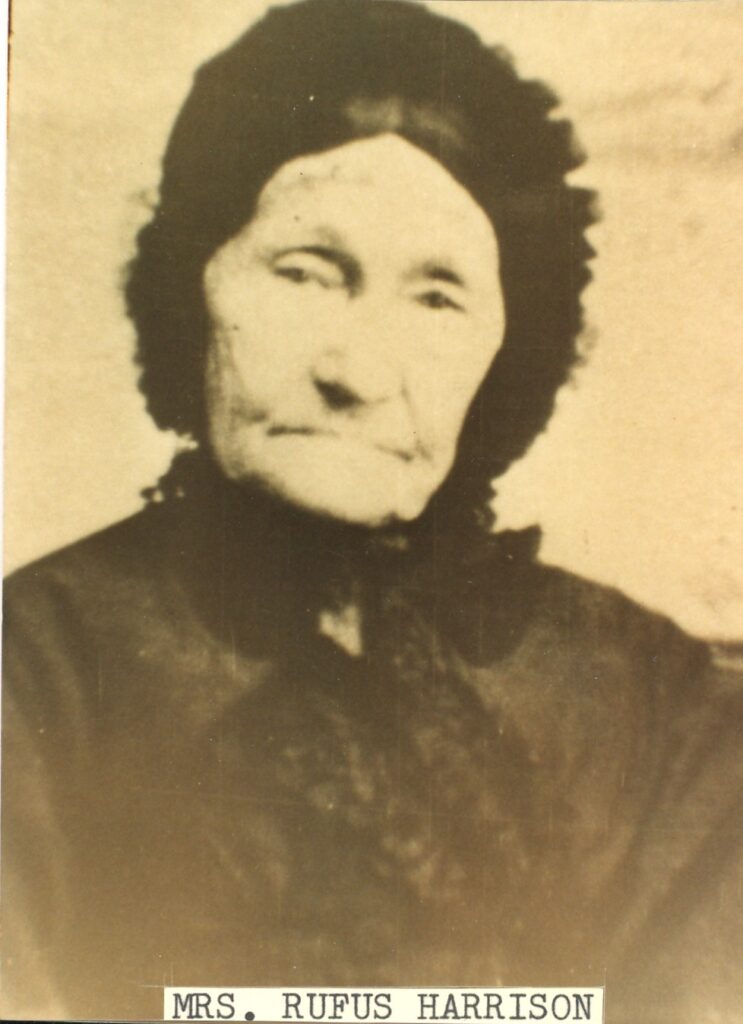
In 1856, tragedy struck: Harriett’s father Rufus Harrison died on November 4, and just four days later her brother Warren Harrison also passed. With Rufus gone, William Schram acquired the Harrison farm, effectively uniting the two properties. Harriett’s widowed mother, Sarah Harrison, moved in with the Schram family and spent her later years in the farmhouse; she died there at the remarkable age of 92. The Schram homestead remained in family hands and continuous use into the early 1900s — an enduring symbol of stability and continuity in the growing township. Many members of both the Harrison and Schram families, including Rufus, Sarah, Harriett, and William, are buried together at Flushing Cemetery in what became known as the Schram family lot, reflecting the close ties between Flushing’s founding generation and the next.
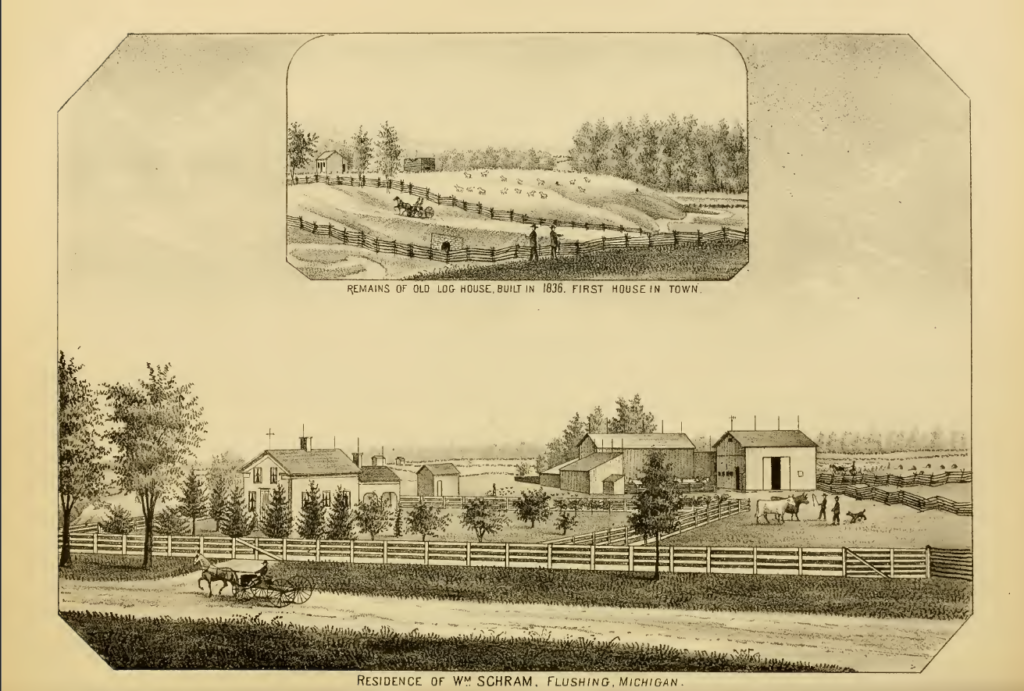
By the late 19th century, the significance of the Harrison-Schram property was well recognized. The 1879 History of Genesee County specifically noted the farm as the site of Flushing’s first settlement (Rufus Harrison’s homestead) and highlighted that the Schram residence “still stands” on that pioneer ground. A biographical sketch of Flushing Township’s early settlers in that publication proudly identified Rufus and Sarah Harrison’s 1835 cabin, describing their move west from New York and the eventual transition of the farm to their son-in-law William Schram. Indeed, an engraved illustration of the William Schram residence was included among the book’s depictions of prominent local landmarks, underscoring the home’s importance in the community’s early history.
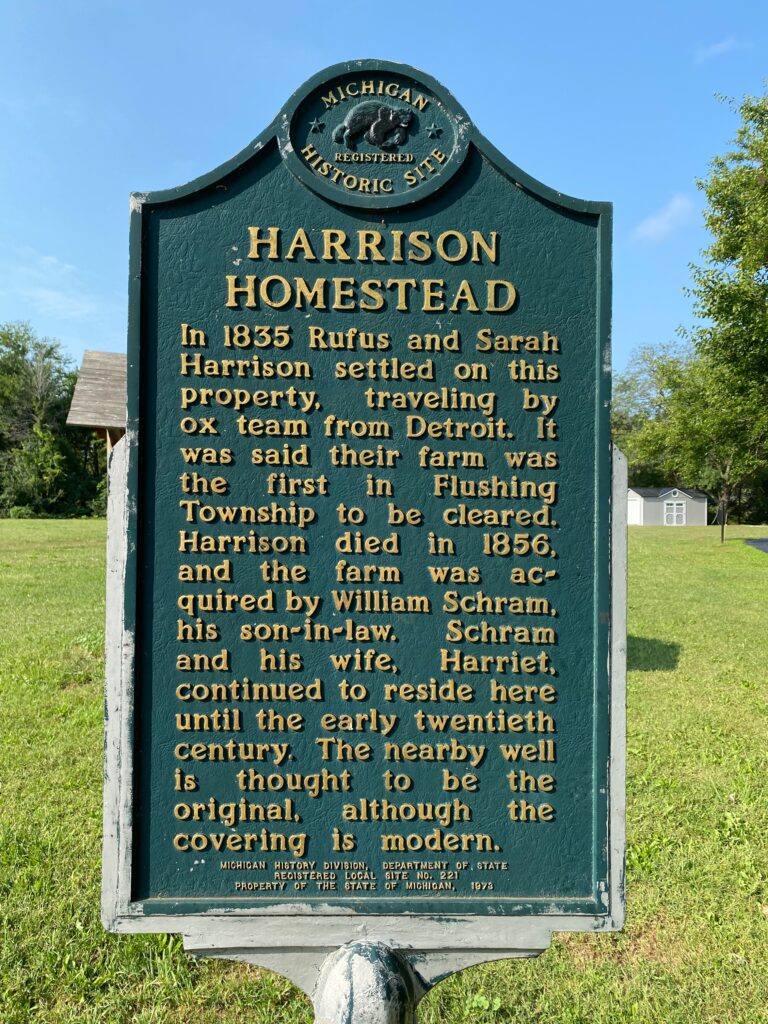
In recognition of this rich heritage, the property received an official Michigan Historical Marker (No. L221) in 1973, titled “Harrison Homestead.” The marker’s inscription commemorates the Harrisons’ 1835 journey by ox team and their pioneering farm – the first cleared land in the township – and notes that after Rufus’s death in 1856, William and Harriett Schram continued to reside on the farm into the early 20th century. The original farm well still exists near the house (albeit with a modern cover), serving as a tangible artifact from the homestead’s earliest days. For many years, local historians and the Flushing Area Historical Society have pointed to this site as a cornerstone of Flushing’s story.
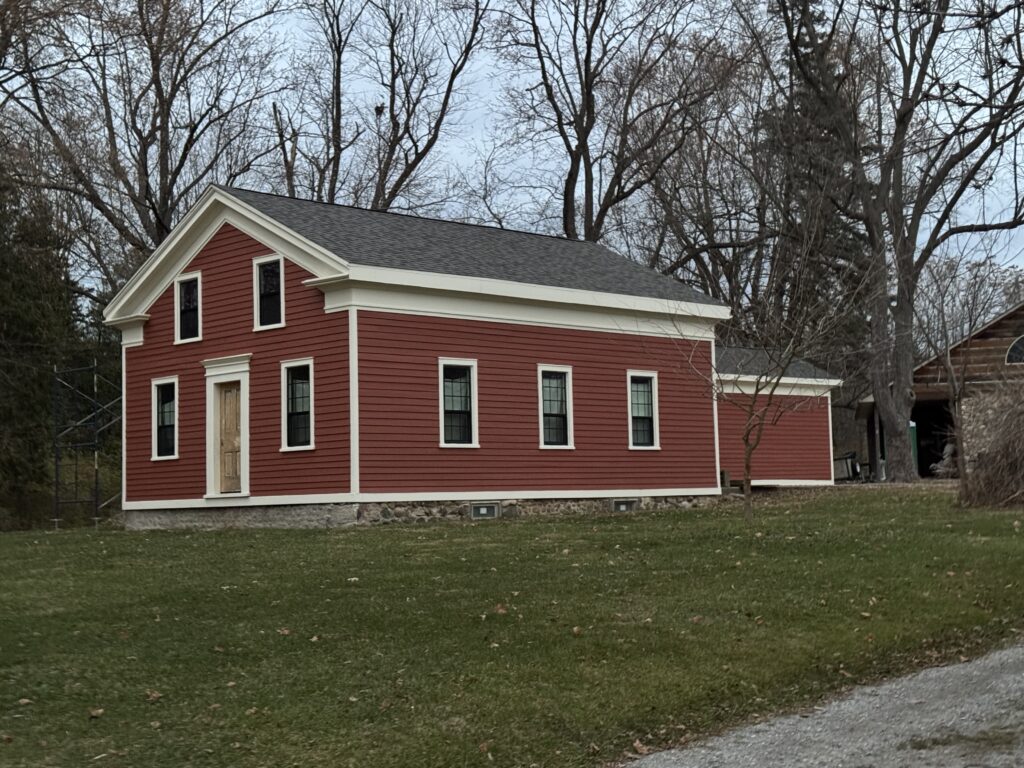
Photo from 2025 nearing end of exterior restoration.
Today, the Harrison-Schram house stands not only as a private residence but also as a significant historical landmark in the community. After periods of neglect and deterioration, a comprehensive restoration was initiated by the current owners in 2025 to preserve the home as closely to its original condition as possible. The Flushing Historical Society, while not directly conducting the restoration, has provided research and historical guidance to support the project – for example, sharing archival photos, documents, and knowledge about original architectural details. Thanks to these efforts, the old farmhouse is gradually regaining its 1850s appearance and structural integrity. Once fully restored, the Harrison-Schram house will continue to embody Flushing’s early heritage for future generations. It remains a beloved local treasure: a rare survivor from the Statehood Era that connects Flushing’s modern community with its pioneer roots, reminding residents of the humble beginnings from which their town grew.
Overall, the Harrison-Schram house illustrates the continuity of Flushing’s history: from the first pioneer cabin in the wilderness to a cherished historic home today. Its story is not just about a building, but about the family legacy and community heritage it represents. The Flushing Historical Society is proud to highlight this property for its central place in our city’s past and the ongoing efforts to secure its future as a living piece of history.