About the Flushing Area Historical Society & Museum
Our Mission
The Flushing Area Historical Society is a non-profit organization founded in 1973 to preserve, promote and educate the public about the history of the Flushing area. We collect, safeguard and interpret our community’s heritage so that current and future generations can understand and appreciate the people, places and events that shaped Flushing, Michigan.
The Flushing Depot Museum
The museum is housed in the restored 1888 depot building at 431 W. Main Street, an architectural treasure that reflects the town’s railroad heritage. Inside, visitors will find period rooms and displays that highlight the history of Flushing and the railroad industry, along with antique tools, furniture, clothing and other artifacts used by early settlers. Exhibits are refreshed regularly to showcase items from our extensive collections.
July 1888
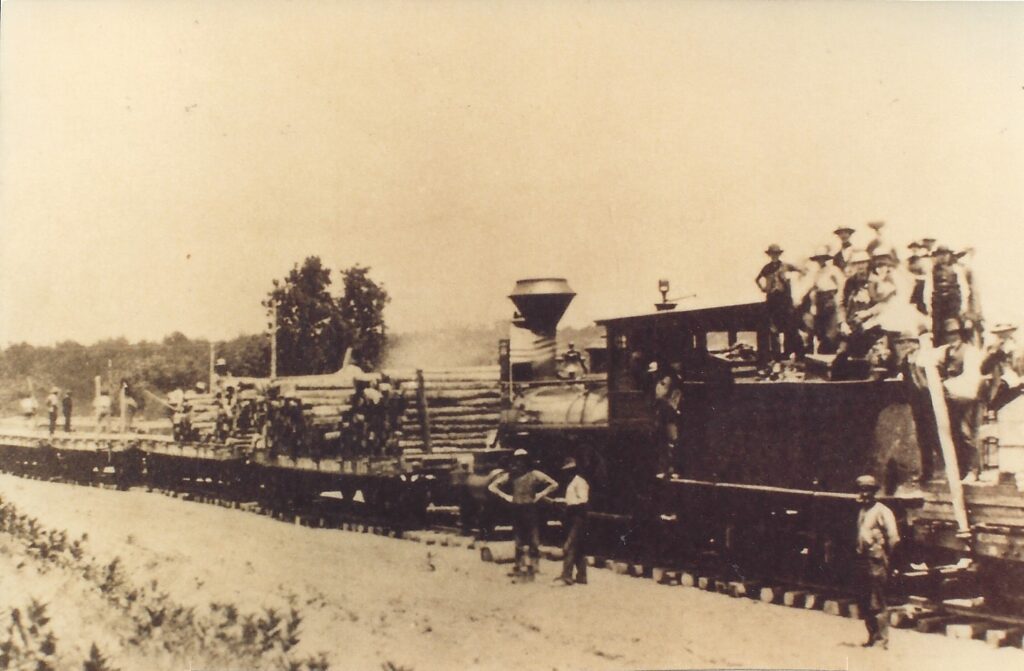
Construction train reaches Flushing.
December 17, 1888
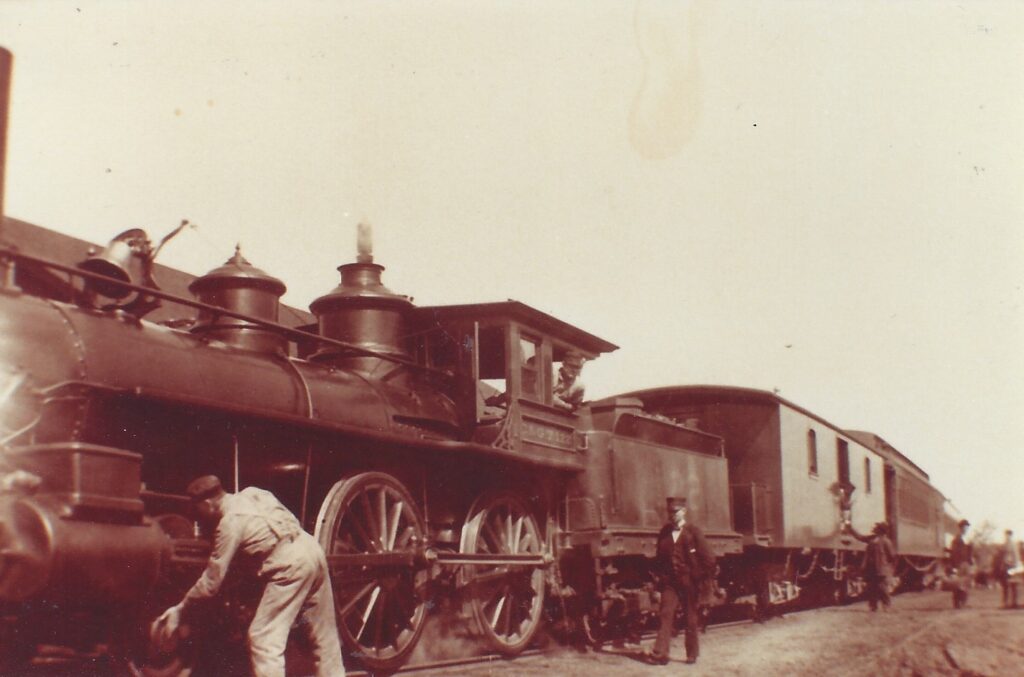
The first passenger train arrived from Saginaw with an 80-cent fare. Commencement of regular passenger service connected Flushing to regional rail lines.
1966
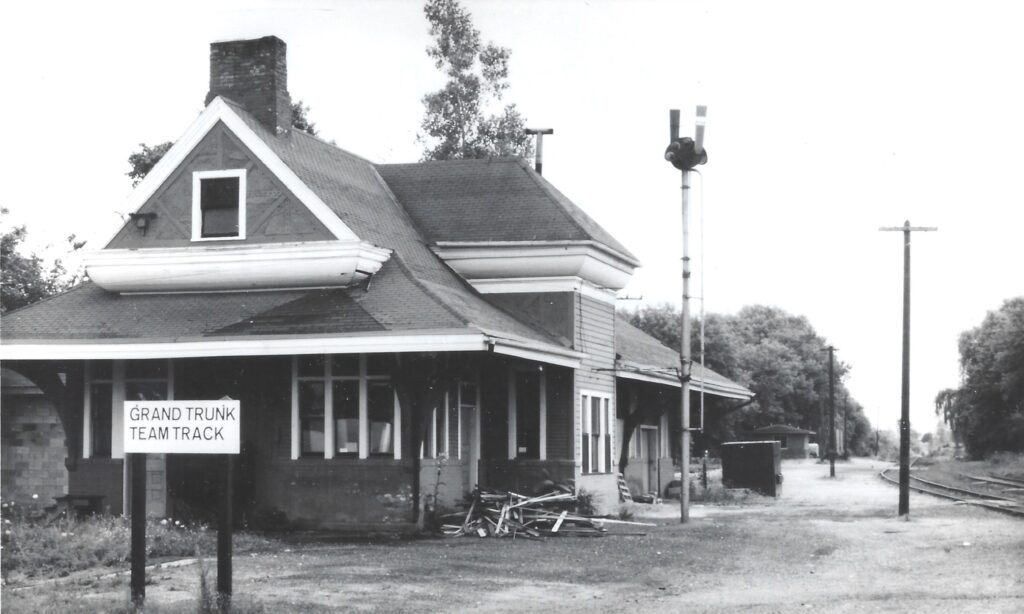
In the mid-1960s, Grand Trunk announces plans to close and demolish the Flushing depot as a cost-cutting measure. Local residents, led by station agent Clare Fox, rally to save the historic building. By 1966 their efforts convince the railroad to reverse course: the depot is spared demolition and instead undergoes minor remodeling (including removing the distinctive north portico, altering the ticket agent’s bay window, and replacing its colored glass windows) and a fresh coat of paint. The station remains in service for a few more years.
May 1, 1971
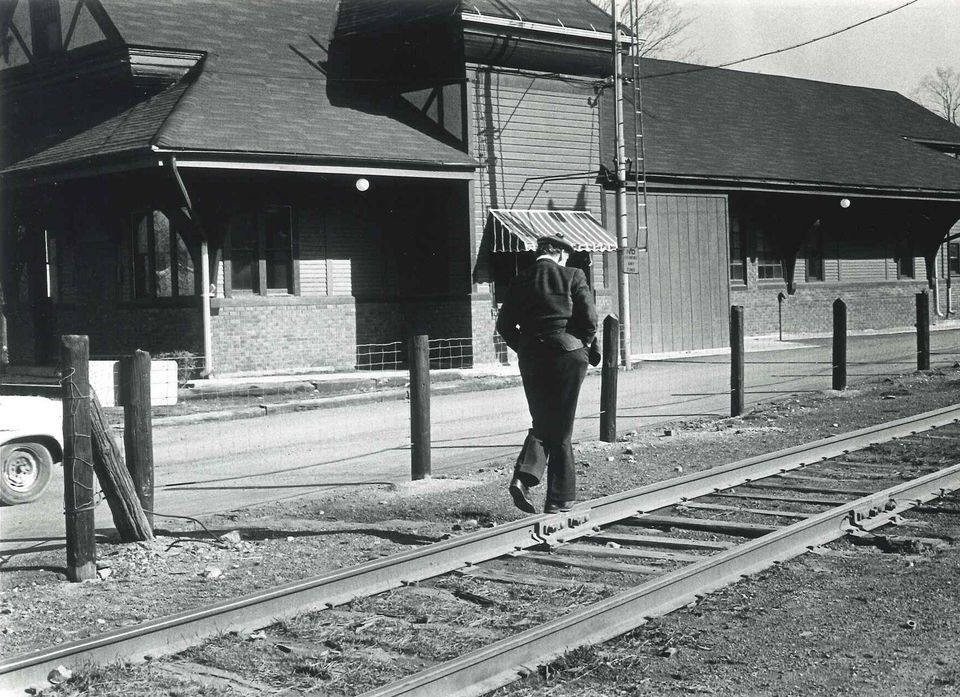
The last passenger train stops at Flushing as Amtrak takes over intercity rail service. Grand Trunk discontinues all passenger operations on the line (freight trains continue to pass through). With no more passengers, the 83-year-old depot is closed, marking the end of Flushing’s era as a passenger rail hub.
1973
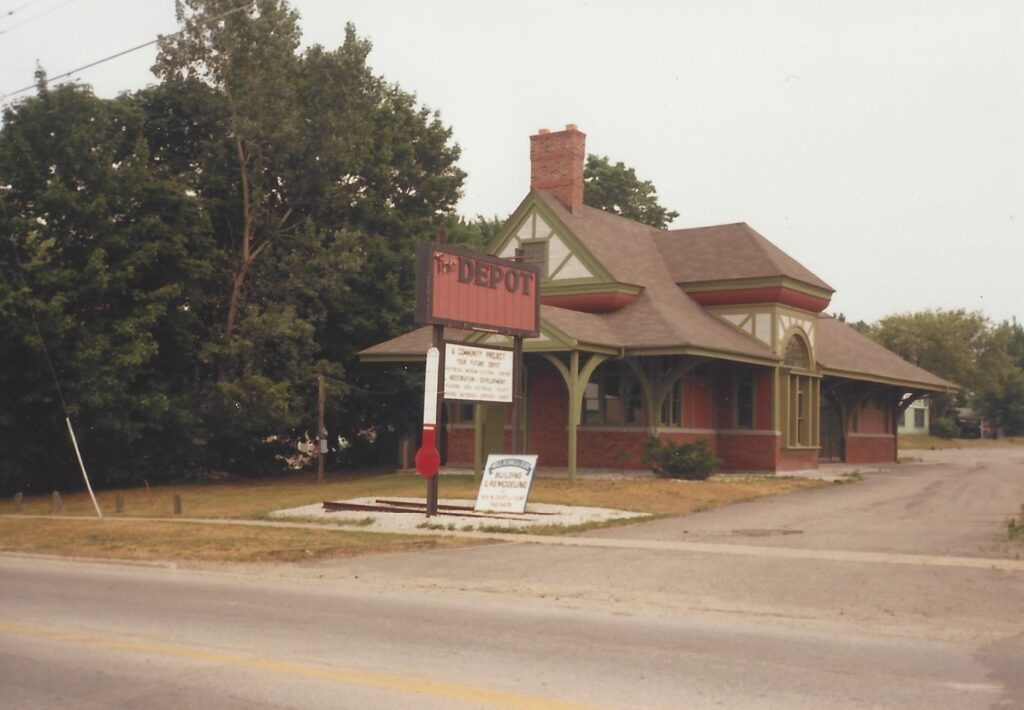
Two important events involving the depot, sale of the building and property, and formation of the group that would eventually restore that building. The Flushing Area Historical Society, which would play that role, was founded in 1973. Grand Trunk sold the depot and property, with the exception of the main line right-of-way, to Harry Herman and Robert Myers.
1975
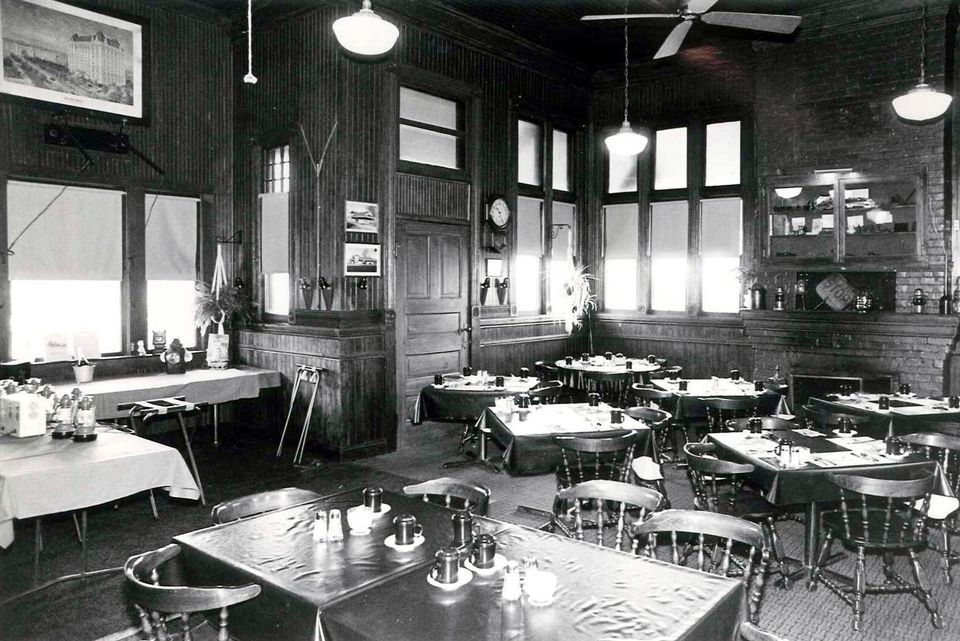
Harry Herman and Robert Myers convert the old station into a business – the “Depot Restaurant” – complete with a lounge and new kitchen addition on the southeast side. The restaurant becomes a popular local eatery, repurposing the historic building for a new community use.
October 6, 1978
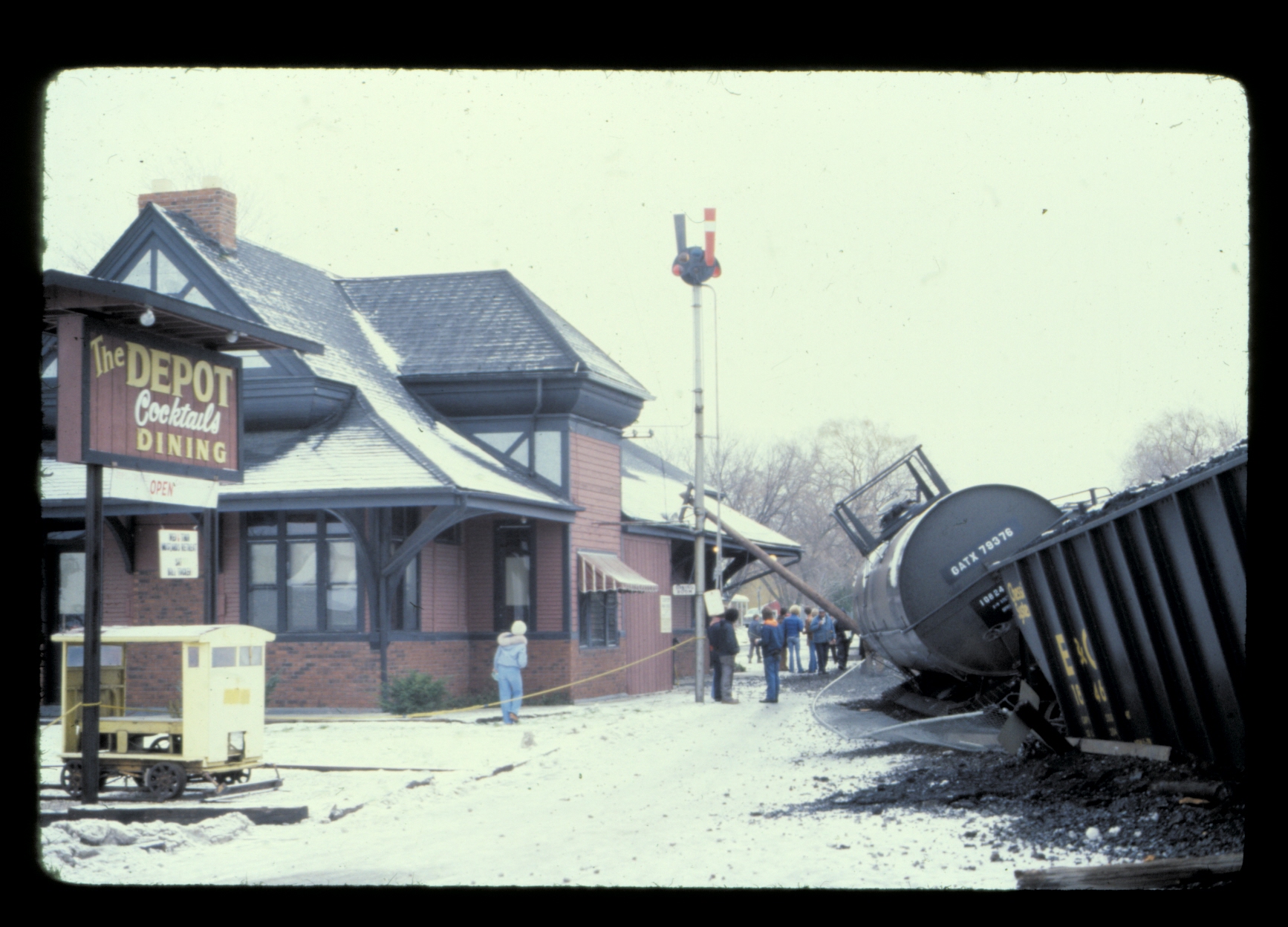
Grand Trunk freight train derails in front of the depot, with tank cars tipping over near the attached freight warehouse. Fortunately, the depot itself is not seriously damaged. During track repairs, Grand Trunk uses the opportunity to remove excess sidings around the depot, leaving only the main line and one short spur, as freight traffic has diminished.
April 20, 1980
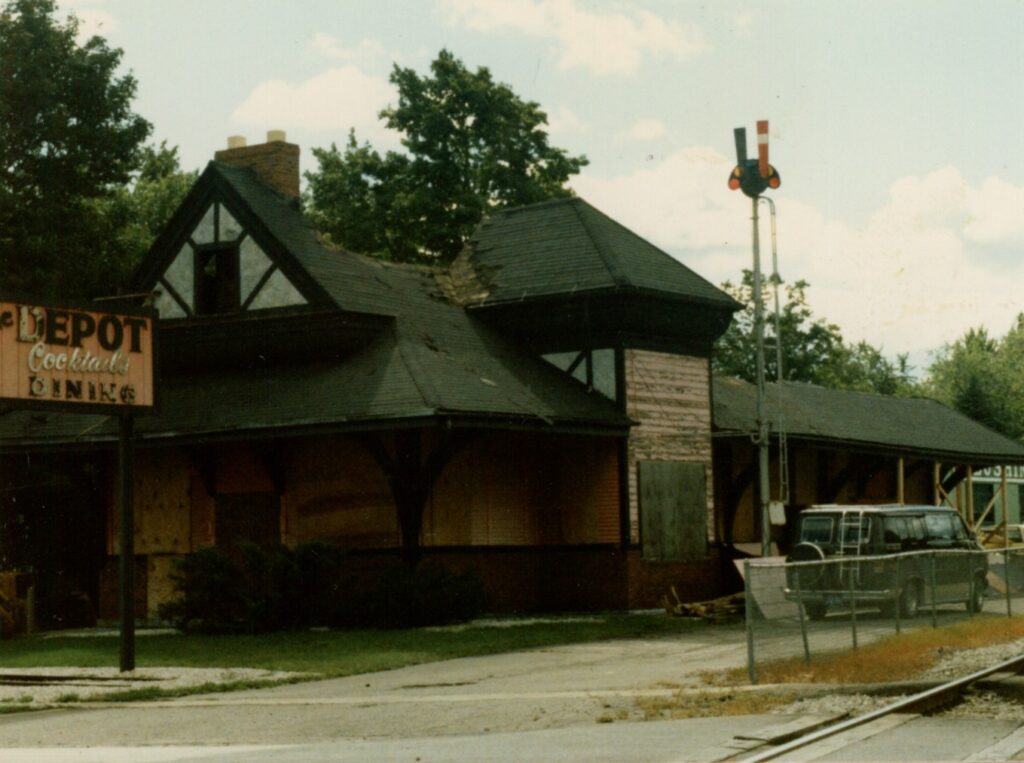
Flushing Depot burns.
1984-1986
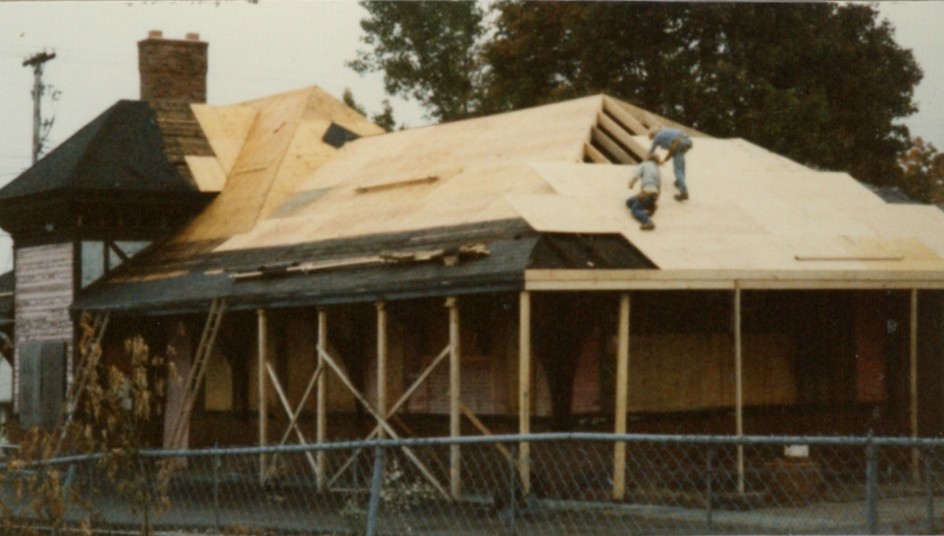
Restoration gets underway in 1984–85 with cleanup of debris and stabilization of the fire-damaged structure. The project’s first phase is rebuilding the complex 19th-century roof and replacing the lost north portico exactly to its original design. Funded by state/local grants and community donations, contractor Will Hall & Sons completes the new roof by September 10, 1986. Engineers determine the original charred brick and wood walls are still sound enough to support the new roof.
June 7, 1997
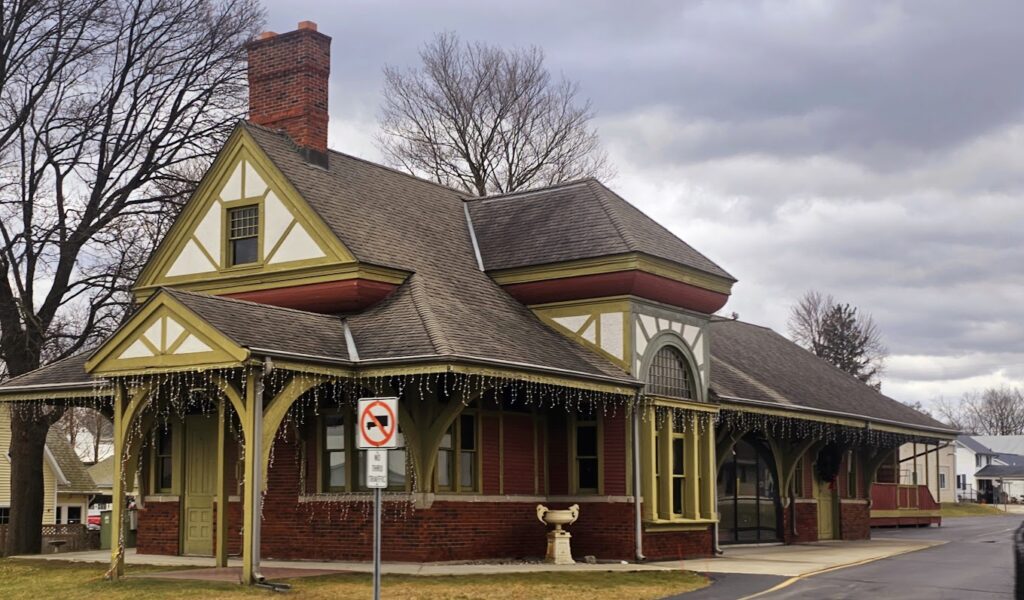
The Flushing Area Historical Society opens the Flushing Depot Museum.