Cronk School was a one-room rural school that served the farming community in the southwestern part of Flushing Township, Genesee County, Michigan. It was named after the Cronk family, early settlers who established a pioneer settlement in that area during the 1830s. In fact, brothers Corydon Cronk and Walter Cronk purchased 90 acres of government land in Flushing Township in October 1836, at the junction of what is now Beecher Road and South River Road, a location that became known as the Cronk Settlement. The Cronk Settlement was originally just inside Flushing Township (along its border with Flint Township), and the Cronk family quickly became prominent in local affairs. James W. Cronk, for example, served as a township official and even acted as a trustee of school lands in the mid-1830s, reflecting the family’s early involvement in educational matters. Given this strong local presence, it was natural that when a district school was formed to serve the Cronk Settlement’s children, it took on the Cronk name.
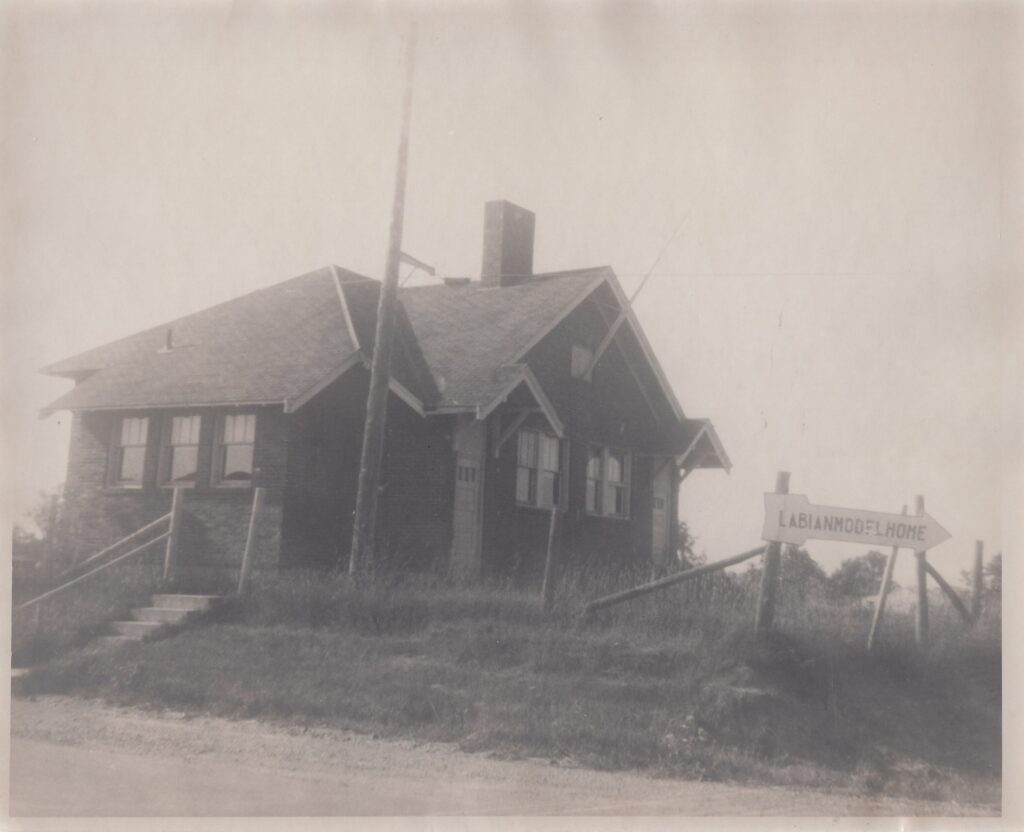
Founding and Early Years
The exact founding date of Cronk School is not recorded in surviving documents, but it likely originated around the late 1840s or 1850s. By that time, Flushing Township had many small “district schools” spread across its rural areas. Cronk School would have been one of these numbered districts (town records indicate that Flushing had roughly 16 outlying school districts by the late 19th century). The first Cronk School may have started very informally – possibly in a log cabin or a repurposed structure on a settler’s property – before a dedicated schoolhouse was built. Given that Cronk Settlement was slightly removed from the village of Flushing, local families needed a nearby school so their young children wouldn’t have to travel miles into town. By the 1850s, a modest wood-frame schoolhouse had been constructed in or near the Cronk Settlement, marking the formal establishment of District School (Cronk). The earliest school building was probably a humble one-room wooden structure with a simple stove for heat and crude benches for the pupils.
Community Role and Naming
Cronk School derived its name from the Cronk family because they were among the predominant landowners and community figures in that locale. In those days, rural schools often took on the name of the family who donated land or of the local “neighborhood” name. The Cronks likely provided land or significant support for the school’s founding. The school served children from several neighboring farm families, not only Cronks but also others like the French, Ottaway, Kimmell, Ransom, and other residents of southwestern Flushing Township. Many of these surnames appear in township records of the 19th century, indicating that Cronk School’s student body came from a close-knit rural community. Like most one-room schools, Cronk School educated all grades (typically 1 through 8) together. A single teacher – often a young woman in her late teens or twenties – would instruct students in basic reading, writing, arithmetic, geography, and civics. Older students helped the younger ones, and seasonal attendance patterns were common (kids might miss school during planting or harvest). Despite these challenges, Cronk School was the center of learning for the area and also doubled as a social hub for residents.
Facilities and Changes Over Time
The first dedicated Cronk School building of the 1850s was likely a simple frame building with minimal amenities. As decades passed and the community grew a bit, there may have been pressure to improve the schoolhouse. Many Genesee County rural districts upgraded their school buildings in the late 19th century (for instance, Lyons School built a new structure in 1881, and the Richardson district likely did similar around that era). Cronk School also appears to have been rebuilt or substantially renovated around the late 19th century – though specific records are sparse, it’s reasonable to assume that by the 1880s a newer one-room schoolhouse (perhaps larger or better constructed than the original) stood on the site. If a new schoolhouse was built, it would have used stronger timber framing, maybe a higher ceiling, and could have included a belfry for a school bell – a common feature by 1880 to signal the start of the school day. One clue that Cronk School persisted and was maintained is that it remained in operation well into the 20th century, suggesting that the building was kept in usable shape or updated as needed.
There is no indication that Cronk School ever expanded beyond a single-room format; unlike some village schools that added wings or extra rooms, the rural population density didn’t justify a multi-room school. Enrollment at Cronk varied over time but was usually modest – perhaps anywhere from a dozen to two dozen students in various years, depending on the birth rates and migration of families. Teachers’ journals and county reports from the early 1900s (if any survived) would likely list 15-20 students in a term at Cronk School, spanning ages 5 to 15. Notably, Cronk School is mentioned by name in Flushing School Board documents of the mid-20th century, confirming its status as a distinct district school up until that time.
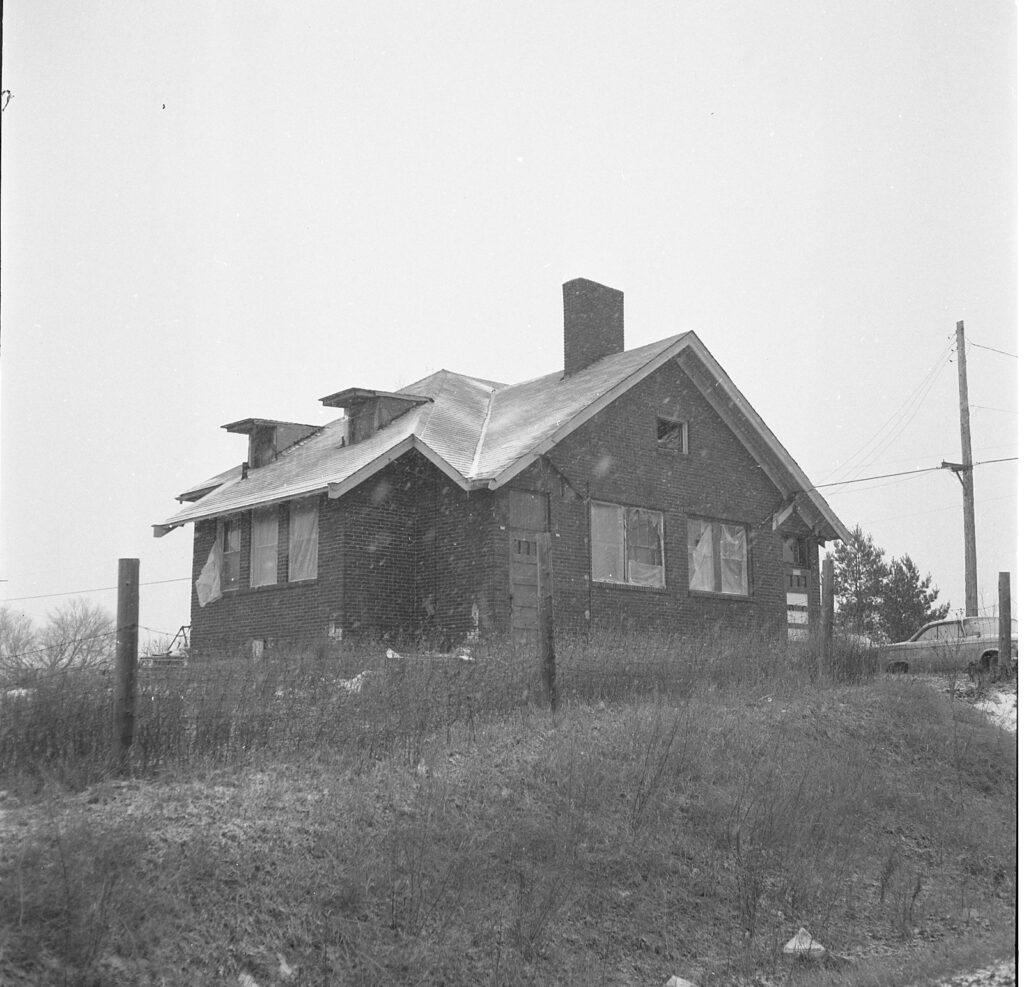
Decline and Consolidation
By the 1940s, the era of the one-room school was coming to an end in Michigan. Improved roads, automobiles, and the push for standardized, quality education for all children led the state to consolidate many rural districts. In 1949, Cronk School (which by then was often referred to simply as “Cronk District” by the school board) was closed as an independent school and absorbed into the Flushing Community Schools. Students who would have attended Cronk were thereafter bused into the village to attend a larger, graded school with multiple classrooms. This 1949 consolidation also included other nearby one-room schools like Caldwell, Hurd, and Hopson schools. A Flushing history book notes that in the fall of 1949, five rural schools (Cronk among them) joined the Flushing district, with the remaining rural schools (Maple, Kent, Graves, Lyons, English Settlement) following suit in 1950. Thus, the 1949-50 school year was likely the first in over 90 years with no classes held at Cronk School.
Legacy
Cronk School’s legacy lives on primarily in historical records and the memories of former pupils. It represents one of the many small, foundational institutions that dotted Genesee County in the 19th and early 20th centuries, each playing a crucial role in educating rural children. The story of Cronk School is strongly tied to the narrative of pioneer families: the Cronks and their neighbors exemplified the settler ethos of building community infrastructure—roads, churches, schools—from scratch. Notably, as early as 1838, Flushing Township’s residents voted to raise money for schools, and families like the Cronks took that mandate seriously, ensuring that even in outlying areas, schooling was provided “whenever there were children to attend,” as one account of early Michigan pioneers puts it.
In summary, Cronk School near Flushing, Michigan was a classic one-room schoolhouse that for roughly a century embodied the educational aspirations of a pioneer farming community. Founded in the mid-19th century and named for a leading settler family, it provided basic education and a gathering place for generations of rural children. Its simple wooden walls saw spelling bees, reading lessons from McGuffey’s Reader, perhaps the occasional “last day of school” picnic on the grounds, and no doubt countless childhood memories. The school’s closure in 1949 was part of the wider trend of progress and school consolidation, marking the end of an era. While the building is gone and the farms it served have changed over time, the memory of Cronk School survives in local history archives and in the fact that it helped launch many young residents of Flushing on their journey of learning and citizenship.