Warner School (near Flushing, Michigan) was a historic rural schoolhouse that served its community for nearly a century and later found new life as a residential building. Established in the mid-19th century (c.1856), Warner School provided basic education to generations of local farm children in a one-room setting. It was named for the Warner family, early settlers in the area (land records show an 1834 homestead of C. C. Warner near the school site). The school originally consisted of a simple wood-frame classroom, typical of 19th-century country schools. Over time it expanded (in 1933 it was enlarged to three classrooms) to accommodate growing enrollment. After 94 years of service, Warner was the first of Flushing Township’s district schools to close when it consolidated with Flushing’s public school system in 1946. The old building then stood unused for decades, falling into disrepair. However, unlike many other one-room schools that were demolished or lost to fire, the Warner School structure survived. In 1994–95, the historic school was extensively remodeled and converted into a two-unit apartment house, preserving its exterior while adapting the interior for modern residential use (property records list the building’s reconstruction date as 1994). Today, the former Warner School stands as a pair of private apartments, representing an unusual example of adaptive reuse of a 19th-century schoolhouse and serving as a tangible link to the community’s past.
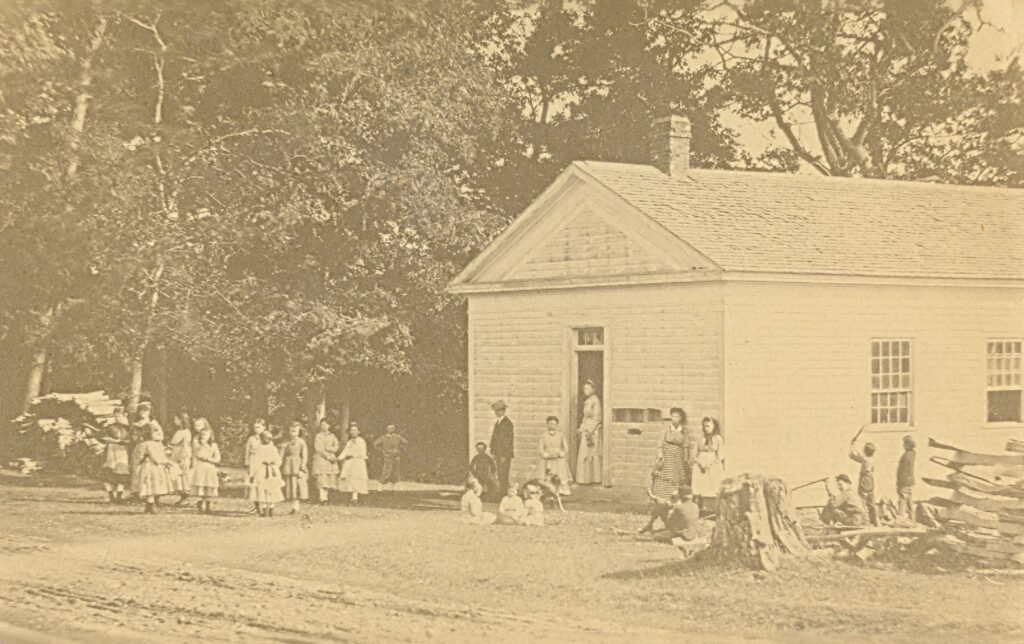
Origins and Early History (19th Century)
The roots of Warner School reach back to Flushing Township’s pioneer era. In the late 1830s, before any formal schoolhouse existed, local children in the area received lessons in the home of Ezekiel R. Ewing, an early settler. Ewing’s log house on Flushing Road (which also housed the township’s first post office) hosted the community’s first makeshift schoolroom. As more farming families settled east of the village of Flushing, the need for an official school became pressing. Flushing Township began organizing its rural areas into school districts in the 1840s, and by 1856 the district later known as Warner School had been established (a 1971 commemorative account noted the school’s 115th anniversary that year). The first dedicated Warner School building was likely a small, one-room wooden schoolhouse constructed in the 1850s. Its design would have been modest: a rectangular gable-roofed structure with a single door, tall multi-pane windows on the sides for light, and a central wood-burning stove for heat. Some one-room schools of that era had a bell to summon students; Warner School possibly featured a bell either in a simple belfry or mounted above the door. Desks and benches for all ages were arranged in one room facing a chalkboard, as one teacher taught all elementary grade levels.
The Warner family for whom the school was named played a significant role in the early development of this part of Flushing Township. The Warners were among the area’s first landowners – for instance, records show Chester C. Warner (C.C. Warner) acquiring land in the vicinity as early as 1834. The school’s location, on Flushing Road near the old Warner homestead, led to it being referred to by the family’s name. For many decades, Warner School was a centerpiece of daily life for farming families living along Flushing Road and the surrounding rural neighborhood. Parents, often busy with agricultural work, relied on the school to educate their children in basic literacy and arithmetic. Older students frequently helped instruct younger ones, and school terms were arranged around planting and harvest seasons.
In addition to its educational function, Warner School served as a social and civic hub for the community. Residents gathered there for events like holiday programs, pie socials, and local meetings. Before dedicated churches or township halls were built nearby, the schoolhouse might host a traveling pastor’s Sunday service or other community functions. Township records from the 19th century show that local schoolhouses were occasionally used as polling places and venues for public discussions, a tradition that likely applied to Warner School as well. The school’s presence helped knit together the rural families of eastern Flushing Township and even parts of neighboring Flint Township (the school was located not far from the township line). Notably, Warner School was situated along an old Native American trail (the Saginaw Trail) that paralleled the Flint River, a route that had connected Flint and Saginaw long before the area was settled by Euro-Americans. This location added historical significance – in fact, archaeologists from the University of Michigan later discovered and excavated the remains of an Indigenous woman in the school’s yard, relocating the bones to a university repository.
Twentieth-Century Changes and Consolidation
By the early 20th century, Warner School remained a traditional one-room schoolhouse even as the population of Flushing Township steadily increased. In the 1920s and 1930s, growing enrollment began to strain the little school. By 1930 the school served 67 students – a substantial number for a single-room school. Facing overcrowding, the community debated whether to construct an entirely new school building or to expand the existing one. In 1931, local landowner Thomas Wolcott offered a 5-acre parcel on Sunny Avenue as a site for a new modern school, and plans were drawn for a large cement-block structure. However, the Warner School board ultimately decided against building a new facility. This dispute “strained friendships” in the community, as some favored the new school while others wanted to preserve the old one. A compromise solution was reached: they would enlarge the original schoolhouse.
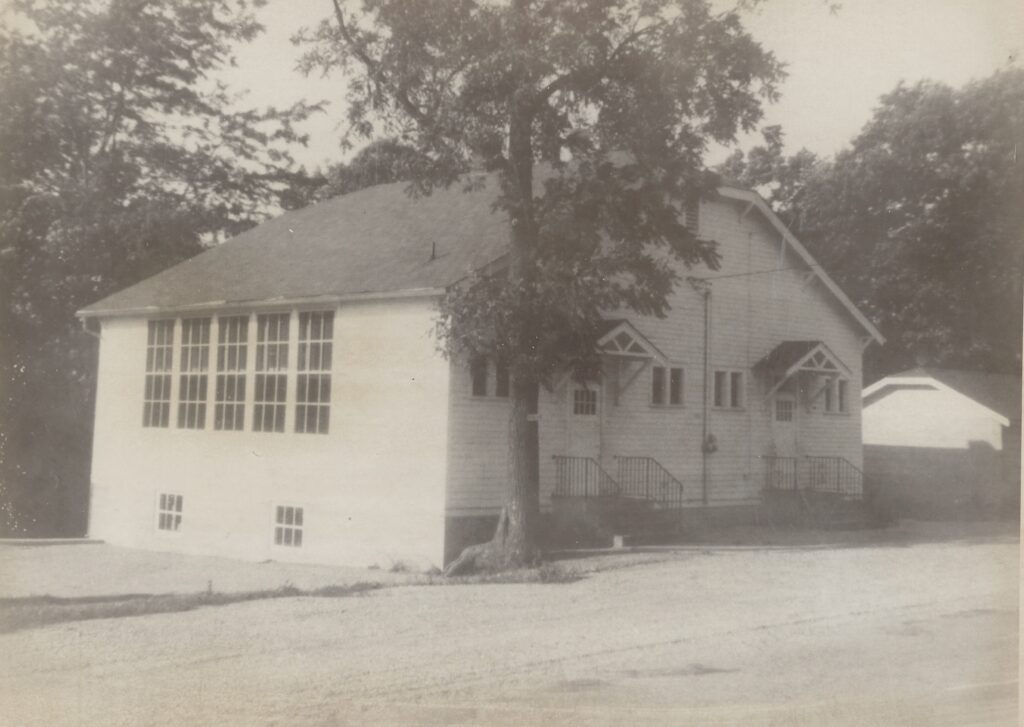
In 1933, during the construction work on the expansion, classes were held temporarily in a nearby house at the corner of Amelia and Flushing Roads. The renovation added two additional classrooms and a basement furnace room to the old building, transforming it from a classic one-room school into a three-room rural school. This allowed Warner School to continue operating and serving all grades 1–8 under one roof, but with somewhat more space and updated heating. In 1940, the district even purchased five more acres from Thomas Wolcott (bringing the school property to 10 acres) to provide a larger playground and grounds for the students. A proposal in 1942 to add two more classrooms was submitted to the state (reflecting ongoing growth), but it was not approved in Lansing. As a result, by the mid-1940s Warner was still a three-teacher elementary school, educating children from the surrounding farms and the outskirts of Flushing.
The post-World War II era brought dramatic changes to Michigan’s educational landscape. A statewide push for school consolidation aimed to replace small rural schools with modern centralized schools. In Flushing Township, this movement culminated in the late 1940s. Warner School was closed in 1946 when its district voted to join the larger Flushing school system. This made Warner the first rural district in the area to consolidate – a few years ahead of other districts like Maple, Lyons, and English Settlement, which merged in 1949–50. After June 1946, children from the Warner area began attending classes in Flushing’s village school, and the old schoolhouse on Flushing Road fell silent.
Later Years and Conversion to Apartments
Following its closure, the Warner School building stood unused for many years. Unlike some of Flushing’s other rural schoolhouses, Warner School neither burned down nor was demolished during these decades – it simply weathered and aged in place. By the 1980s, the structure was one of the few one-room (now three-room) school buildings in the township still extant, though it was in deteriorated condition.
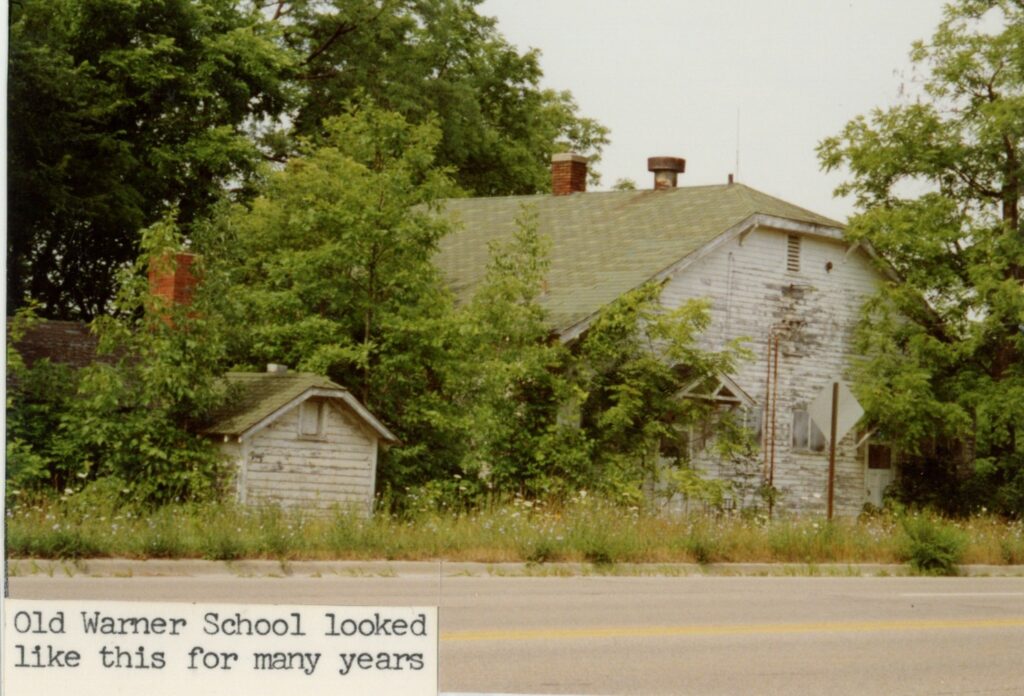
In the mid-1990s, the historic Warner School got an unexpected second life. Local sources indicate that in 1994–1995 the old schoolhouse was purchased and carefully remodeled into a duplex (two separate apartments). This adaptive reuse appears to have entailed a comprehensive renovation – essentially transforming the interior into modern living spaces while retaining the building’s historic exterior shell. Genesee County property records reflect a reconstruction date of 1994 for the building, consistent with the timeframe of this apartment conversion. Thanks to this effort, the Warner School building was saved from likely ruin, unlike many other 19th-century schools that were lost. The renovated building (now a private residential property) preserved the general outward appearance of the schoolhouse – a single-story, gable-roofed structure – but its insides were refitted with contemporary amenities to serve as housing. The original white-painted clapboard siding and simple country-school architectural charm remain visible, allowing passersby to recognize it as a historic school building even in its new role.
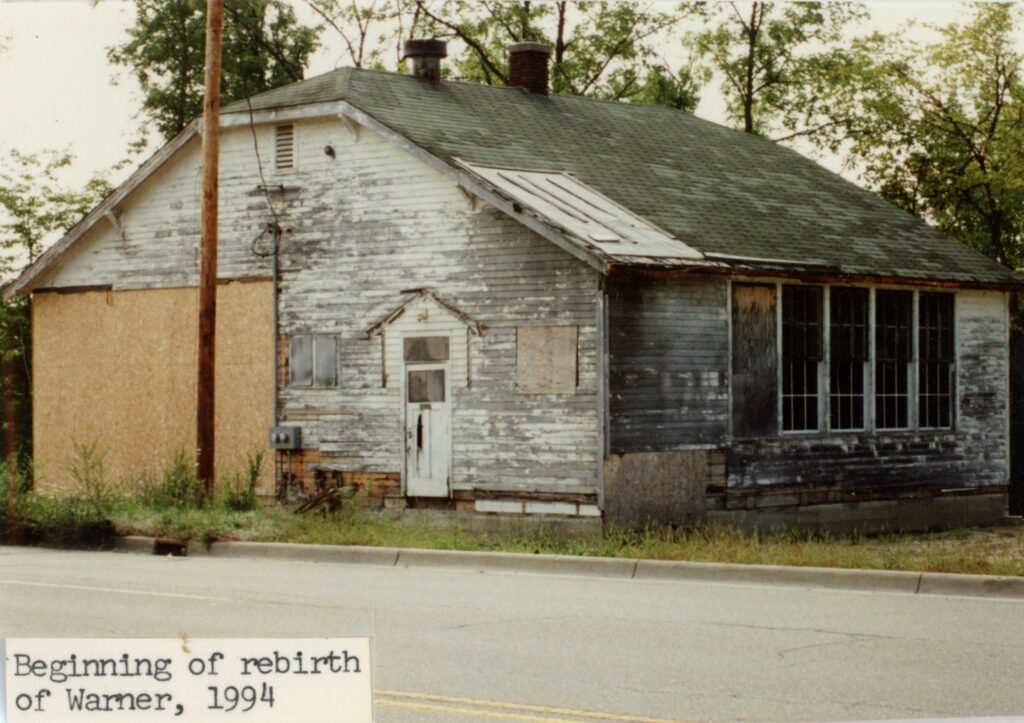
Today, the former Warner School is no longer an educational facility but a private residence (with two apartment units). The surrounding area along Flushing Road has become a mix of rural homesteads and suburban homes. While no longer owned by the public, the building stands as a piece of living history. It is a rare survivor among Flushing’s rural schools – most of the others have vanished or exist only as foundations or memories. The Warner School’s successful conversion into apartments shows how historic structures can be repurposed for modern use, blending preservation with practicality.
Legacy and Significance
Warner School’s journey from a frontier-era one-room school to a 21st-century residence encapsulates a broad swath of Flushing’s local history. Its founding in the 1850s occurred as part of the broader establishment of public education in rural Michigan – a time when communities of settlers made education a priority soon after clearing land and building farms. The school’s expansion in the 1930s mirrored nationwide trends in improving rural education during the Progressive Era and New Deal period (when many small schools were upgraded or consolidated). The consolidation in 1946 was part of a sweeping post-WWII movement in Michigan to modernize schools and ensure all children had access to better facilities and curricula; Flushing’s superintendent at the time, Marion Crouse, oversaw the merging of Warner and, soon after, the other country schools into the Flushing district.
Even beyond its educational role, Warner School is tied to significant threads of local heritage. Its location along the old Saginaw Trail (an important Indigenous travel route) and the discovery of ancient remains on its grounds highlight the deep history of the land itself, long before the school existed. The school’s presence on that spot for nearly 100 years means it witnessed and weathered many eras – from the Civil War period, through the turn of the 20th century, into the automotive boom (the school was just a short drive from Flint, the booming “Vehicle City” of the early auto industry), and up to the post-war suburbanization of Genesee County. Each of those larger historical forces had an impact on Warner School: for instance, the rise of automobiles made it easier to transport students to centralized schools, hastening the end of one-room schools like Warner.
Former students of Warner School, now well into older age or passed on, remembered it with fondness. In the Flushing Sesquicentennial history books, one alumnus reminisced about finding arrowheads in the old schoolyard as a child (hints of the land’s Native American heritage) and about the camaraderie of the tight-knit country school community. Thanks to the building’s preservation, current residents of the Flushing area can still drive by the old Warner School (now apartments) and visibly connect with the educational heritage of their town’s rural past. The building stands as a symbol of the pioneer commitment to schooling – from its humble start in a settler’s log cabin to its heyday as a bustling 1930s school and finally to its modern incarnation as a home. The Warner School story reflects both the local dedication to education and the broader patterns of American rural life, where thousands of one-room schools rose and fell as the nation grew and changed.