By the Flushing Historical Society
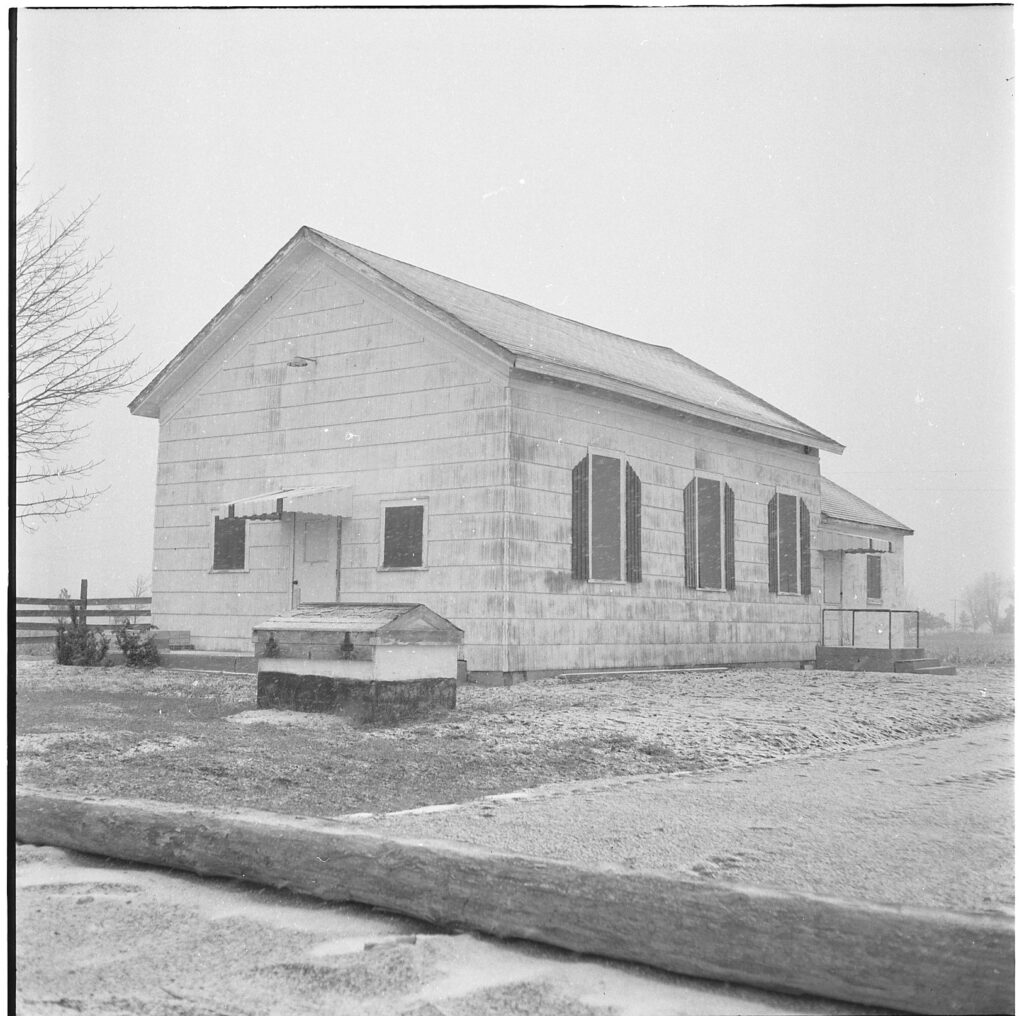
The English Settlement School remains one of the most enduring symbols of pioneer life in Flushing Township. Built in the mid‑1800s by newly arrived English immigrants, it served not only as an educational institution but also as the social and cultural heart of an entire rural community.
From Liverpool to Flushing: The Journey of the English Settlers
The school’s story begins on April 4, 1842, when several families left Liverpool, England, embarking on a six‑week voyage across the Atlantic. After traveling up the Hudson River, across the Erie Canal, and over Lake Erie to Detroit, they continued by wagon to Flint, then northwest to what would become the English Settlement, about five miles from modern‑day Flushing.
These settlers included:
- John Reed
- James Bailey
- James Wood
- Richard Bowdin
- Thomas Hough
- Enoch Vernon
- Thomas Newall
- Mr. Goddard
- Several other pioneering families
Together, they formed a tight-knit rural community grounded in shared culture, mutual labor, and an unwavering belief in education.
Founding of the English Settlement School (1845–1850)
Between 1845 and 1850, the settlers built a modest one‑room schoolhouse—the first official educational structure in their settlement.
The first recorded teacher was Huldah Ann Felt, whose role extended far beyond instruction; frontier teachers often acted as community leaders, organizers, and trusted neighbors.
The schoolhouse served multiple functions:
- Daily classes for local children
- Community meetings
- Religious gatherings
- Social events that knit together the rural families
A Rare Survivor of Rural Education
In our archival record, it is noted that “there is still an old English Settlement School near that site.” This confirms that the building—either the original structure or an early replacement—remained intact well into the late 20th century.
Historical Society Note:
As of May 2025, the English Settlement School building is still standing, making it one of the oldest surviving rural school structures in Flushing Township.
This survival is extraordinary: few one‑room schoolhouses in the region remain physically intact.
The School as Part of Flushing’s Rural District Network
The English Settlement School appeared prominently in historical listings and photographs of the township’s rural districts. In the rural school photo panel of Flushing Sesquicentennial History, Vol. 1, it is labeled as School No. 9.
Throughout its operation, the school served generations of families whose names still resonate in local history.
Consolidation and the End of the One‑Room Era (1950)
In 1950, the English Settlement School was formally consolidated into the newly expanded Flushing Community Schools district, along with several neighboring districts such as Maple, Kent, Graves, Richardson, and Lyons.
This consolidation marked the end of the one‑room school era and the beginning of centralized public education in the region.
Why the English Settlement School Matters Today
The English Settlement School stands as a testament to:
- Courageous pioneers who valued education even in wilderness conditions
- Community determination to build institutions before many had finished building homes
- Cultural preservation, reflecting the traditions and values of English immigrant families
- Educational heritage, representing one of the earliest structured learning environments in all of Flushing Township
The school remains a tangible link to the families whose courage, sacrifice, and collaboration helped shape the community we know today.
Visit, Learn, and Explore Our Heritage
We invite residents, educators, descendants, and history enthusiasts to explore the story of the English Settlement and its enduring schoolhouse. As one of the oldest surviving educational buildings in the region, it offers a remarkable window into the pioneer experience.
For additional historical resources, guided talks, or archival assistance, contact the Flushing Historical Society.