Flushing Historical Society
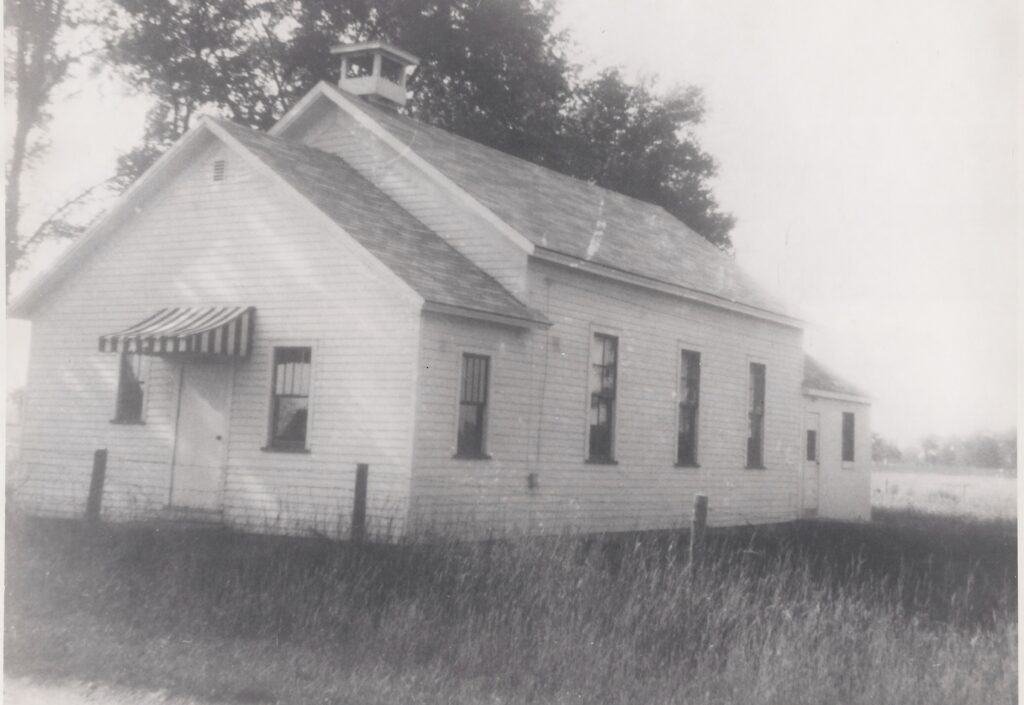
Long before modern school buses and consolidated districts, education in Flushing Township was centered around small rural schoolhouses—community-built institutions that shaped generations. Among them, the Graves School stands out as one of the most enduring symbols of that era.
Situated in the farmland of Flushing Township, the school served local families beginning in the late 19th century and continued until mid‑century consolidation transformed the educational landscape. Today, it remains one of the few surviving one-room schools in the township, and a cherished piece of our rural heritage.
Early History and Operation
The Graves School first appears in Flushing’s documented educational records in the late 1800s.
In Hart – Flushing Through the Years, Vol. I (1887–1903), it is listed among the operating rural districts, with Miss Alice Hough identified as its teacher during that period.
Like most country schools of its day, Graves School was:
- A one‑room, multi‑grade schoolhouse
- Heated by a wood stove
- Maintained by community members
- A center for neighborhood gatherings, meetings, and social events
These schoolhouses provided not only instruction but also an anchor for community identity in the rural township.
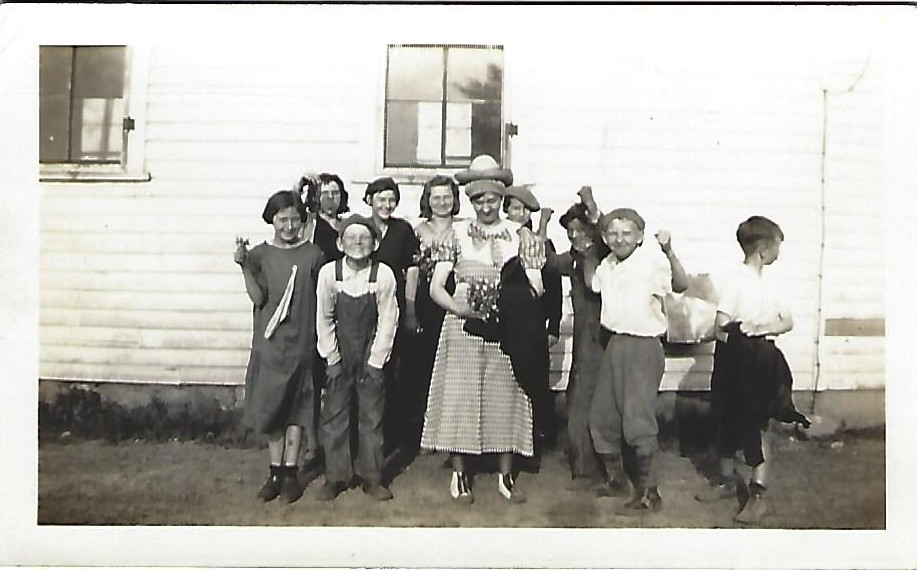
Teacher Mary Freeman. Photo from early 1930’s
Part of Flushing’s Recognized Rural Districts
In Flushing Sesquicentennial History Vol. 1, the Graves School appears prominently among the township’s official rural schools. It is included in the historic rural school photo panel, identified as “Graves School – Photo No. 59.”
This confirms its status as one of the township’s established and long‑operating school districts.
Consolidation and Closure
As educational standards evolved and transportation improved, the State of Michigan encouraged small districts to combine into larger systems. According to the consolidation records, the Graves School officially joined the Flushing Community Schools in 1950, along with several other rural districts including Maple, Kent, Richardson, Lyons, and English Settlement.
The closure marked the end of the one-room school era, but the Graves School building itself remained—a rare survivor of a bygone system.
The Building Today: A Living Artifact of Local History
The Flushing Historical Society is pleased to note that as of May 2025, the Graves School building still stands, preserved as a private residence.
While no longer accessible to the public, its survival is significant. Most rural schools in the township were demolished or repurposed beyond recognition. The Graves School remains an architectural and historical artifact—one that continues to embody the spirit of the community that built and sustained it.
Why Graves School Matters
The Graves School symbolizes:
- Community self‑reliance
- Early rural education traditions
- Generational memory of the families who farmed, lived, and learned in the district
- A physical link to the early life of Flushing Township
Its preservation—as a residence—allows the structure to continue serving the land and community where it first stood more than a century ago.