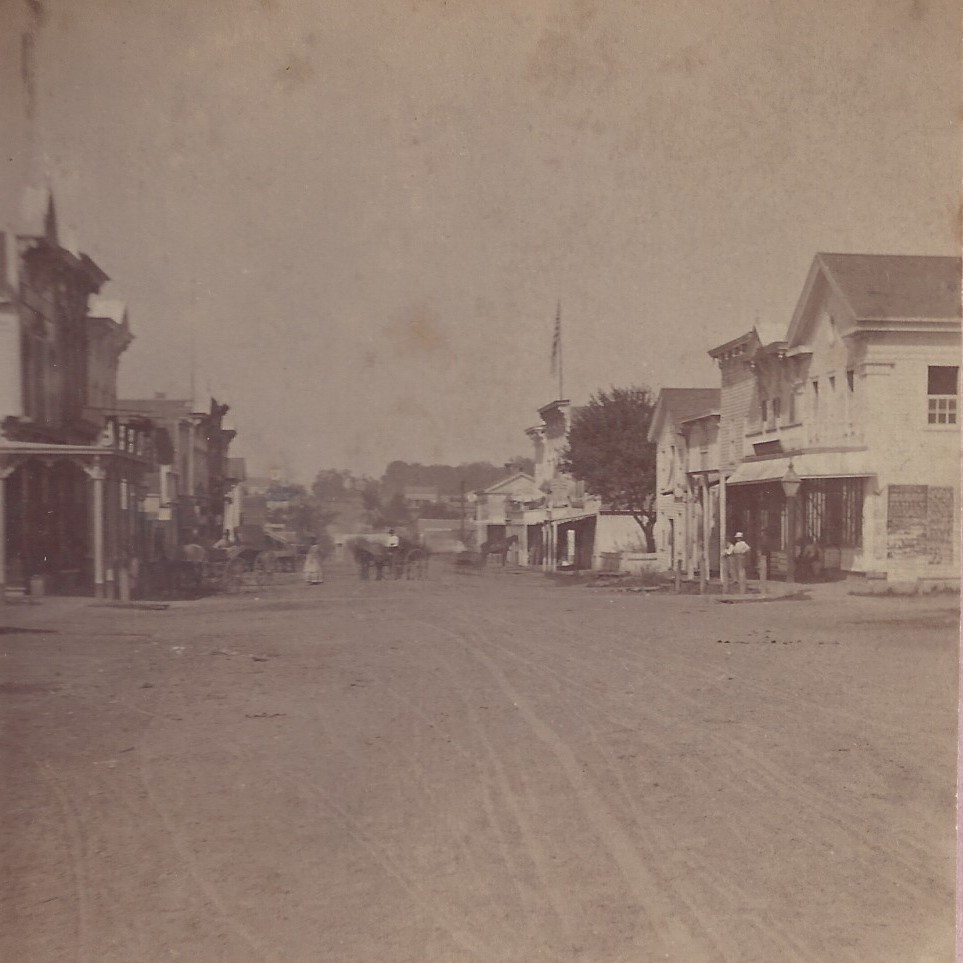
1963 - 1964 in the Village of Flushing, Michigan
| Position | Officeholder |
|---|---|
| Village President | Clayton A. Fraser |
| Village Clerk | Doris Schmoak (until Apr. 1963); Arthur Gibbs (from May 1963) |
| Village Treasurer | Harlan W. Dyball (through 1962); Nellie M. Dyball (from 1963) |
| Village Assessor | George Woodhouse |
| Chief of Police | Henry “Harry” Beach (until Jul. 1964); Vern Royston (from Jul. 1964) |
| Fire Chief | Ed Parks |
1963–1964 in the Village of Flushing, Michigan was a period of transition and progress, marked by infrastructure expansion, proactive policymaking, and preparation for cityhood. Under Village President Clayton A. Fraser, the Council addressed a chronic water shortage by securing a long-term supply from the City of Flint, extended the sewer and drainage systems to serve new neighborhoods, updated zoning laws to accommodate growth, and fostered community initiatives. The Council also maintained sound fiscal management and laid the groundwork for Flushing’s incorporation as a city at the end of 1964. What follows is an overview of the key decisions, projects, and civic developments during these two years, organized by topic.
Council Members and Appointments
During 1963–64, Flushing’s leadership combined continuity with a few notable personnel changes:
- **Village Leadership:** Clayton A. Fraser remained Village President, providing steady direction. Longtime Clerk **Doris Schmoak** resigned in April 1963 after years of service; the Council appointed **Arthur Gibbs** as the new Village Clerk effective May 15, 1963. The Treasurer’s office also saw a transition: **Harlan W. Dyball** served through early 1963, after which **Nellie M. Dyball** (his successor) took over handling the village finances. Assessor **George Woodhouse** continued in his role overseeing property assessments.
- **Trustee Changes:** The seven-member Village Council experienced mid-term vacancies and appointments. In August 1963, Trustee **Donald Plumb** resigned due to moving out of the village. The Council promptly appointed **Phillip Bueche** to fill Plumb’s seat. A few months later, in October 1963, Trustee **Robert Goss** resigned after accepting a job transfer out of state. The Council again acted to maintain a full board, appointing **Ormal “Bud” Annable** to the vacant trustee position. These new members joined incumbent trustees like Leland Furse, Herbert Gundlach, Frank McCarty, and Russell Phillips in carrying out Council duties.
- **Public Safety Personnel:** **Henry “Harry” Beach**, Flushing’s longtime Chief of Police, announced his retirement effective July 14, 1964. To ensure a smooth leadership change, the Council in April 1964 designated **Vern Royston** as Acting Village Marshal (chief) to work alongside Chief Beach until his retirement. Royston officially became Chief of Police on July 14, 1964, after a public retirement banquet honored Chief Beach’s 13 years of service. The Flushing Police Department also expanded its ranks to improve coverage: in mid-1963 the Council approved increasing the force from two full-time officers to four full-time officers, plus three part-time reserve officers for relief duty. This move nearly doubled the police staffing and demonstrated the village’s commitment to public safety as the community grew. The Fire Department continued to be led by **Fire Chief Ed Parks**, supported by volunteer firefighters. In 1963–64, the fire service remained an on-call volunteer force, with **Junior “J.R.” Bless** as Assistant Fire Chief. Key fire and police appointments (such as annual volunteer firefighter officers and any new constables) were made as needed, keeping experience and training in mind.
Major Ordinances and Resolutions
The Village Council passed several significant ordinances and resolutions during 1963–64, shaping Flushing’s regulatory and policy landscape:
- **Zoning Ordinance Update:** In May 1963, after a public hearing, the Council adopted an amendment to the zoning code (Ordinance No. 22) creating a new category called **“Neighborhood Commercial (C-1A)”**. This change expanded the definition of permissible office and service uses within existing Neighborhood Commercial zones. The impetus was a request to use a house at 720 East Main Street for business offices. Along with the ordinance amendment, the Council rezoned that specific property (Lot 69 of Assessor’s Plat No. 4, at East Main and Cherry Streets) from residential to the new C-1A classification. This allowed a local real estate and construction firm (Elite Enterprises) to convert the former residence into offices under a one-year special use permit. The C-1A zoning amendment provided more flexibility for small-scale professional offices in transitional areas while maintaining neighborhood character.
- **Annexation Petition:** On September 9, 1963, the Council passed a resolution petitioning the Genesee County Board of Supervisors to **annex a parcel of land** from Flushing Township into the village. The land in question (the eastern half of Section 25) was the intended site of a new convalescent and nursing home just north of the village limits. The resolution argued that annexation was in the public interest so the area could receive village utilities, street extensions, and police/fire protection. The Council publicized the proposal and submitted it to the county for approval. (The annexation was subsequently approved in 1964, bringing the property – which became the Willowbrook Manor nursing facility – within Flushing’s boundaries.) This was a strategic move to guide development on the village’s periphery and expand municipal services in a controlled manner.
- **Water Supply Contract:** A landmark resolution was passed on April 24, 1964, when the Village Council unanimously approved a **35-year contract with the City of Flint** to purchase treated water. President Fraser and Clerk Gibbs were authorized to sign the intergovernmental agreement, which committed Flushing to connect to Flint’s water system and buy a stipulated minimum volume of water each month. This long-term contract was a response to Flushing’s ongoing water shortages and represented a major policy shift – from reliance on local wells to becoming a wholesale customer of a regional water supplier. The agreement paved the way for construction of a pipeline and water tower to link Flushing into the Flint water network (see Infrastructure Projects below). By securing a dependable external water source, the Council aimed to support the village’s current and future needs.
- **Bond Issuances for Water Project:** To finance the Flint water connection and related upgrades, the Council enacted two ordinances in June 1964 authorizing a total of **$120,000 in Water Supply System Revenue Bonds (Series 1964)**. These ordinances (No. 52 and No. 53) were adopted at a special meeting on June 29, 1964. The bonds were structured to be repaid from water system revenues (user fees) rather than general taxation, spreading the cost over 28 years. In October 1964, after soliciting bids, the village sold the bonds to an underwriting group at an average interest rate just under 4%. Additionally, to ensure sufficient revenue for the new debt, the Council passed Ordinance No. 54 in July 1964 adjusting water rates – notably instituting a higher minimum monthly charge for customers outside the village limits (who were using the village water system) and affirming the rate increases for all users effective once Flint water became available. These financial steps demonstrated careful planning to fund critical infrastructure without burdening taxpayers directly.
- **Liquor License Decisions:** The Council dealt with a high-profile liquor license application in 1963–64. The owners of **Flushing Lanes**, a new bowling alley on Cherry Street, had applied for a tavern (beer and wine) license to operate a small lounge inside the bowling center. Initially, in 1963 the Village Council opposed granting this license, citing neighborhood concerns. However, after the bowling alley opened and a well-attended public hearing was held on February 5, 1964, the Council reversed its stance. By a close vote, it passed a resolution **recommending that the Michigan Liquor Control Commission approve the license** for Flushing Lanes, as many residents spoke in favor of the recreational business. Despite the village’s recommendation, the state Liquor Control Commission ultimately denied the application in June 1964. In response, the Council drafted a formal letter (authorized on June 10, 1964) expressing its disappointment and urging the commission to reconsider or provide a fuller explanation. This episode highlighted the sometimes conflicting layers of liquor control – local vs. state – and the Council’s willingness to advocate for a local business once community sentiment was heard. In a separate matter, the Council smoothly approved the transfer of an existing packaged liquor license on East Main Street to a new owner in September 1963, indicating its support for routine business changes that met all requirements.
- **Employee Policy and Other Resolutions:** Internally, the Council took steps to modernize village administration. On March 9, 1964, it formally adopted a **comprehensive vacation and sick leave policy** for full-time village employees – granting one week of paid vacation after six months of service, two weeks after one year, and establishing a sick day accrual system (one day per month, with up to 30 days carryover). This policy standardized employee benefits and reflected a more professional approach to personnel management. The Council also annually renewed essential service contracts and memberships: for example, in April 1964 it extended the village’s garbage collection agreement with contractor L.L. Pollard at the same rate (ensuring weekly trash pickup continued uninterrupted), and it maintained Flushing’s membership in the Michigan Municipal League for continued access to training and insurance programs. Late in 1964, as the village prepared to become a city, the Council passed transitional resolutions – such as requesting that all incumbent village officials carry over their duties until the new City of Flushing government could organize, and authorizing coordination with Flushing Township to divide assets and obligations. In sum, the major ordinances and resolutions of 1963–64 addressed the village’s infrastructure needs, growth, and operational stability in equal measure.
Infrastructure Projects
Significant infrastructure improvements were undertaken in 1963–64, building on plans from earlier years to upgrade Flushing’s utilities, roads, and public facilities:
- **Water Supply Expansion:** Confronting recurring water shortages, the Council pursued multiple strategies to bolster the village water supply before the Flint connection came online. In the summer of 1963, a drought severely lowered water levels, prompting emergency measures. The village leased a large nearby gravel pit (known as the Hansen pit) and installed temporary pumps and thousands of feet of pipe to transfer water from the pond in the gravel pit into the municipal well field (the Ott Well) to help recharge it. The Council contracted with Layne Northern Company to supply and install pumping equipment for this improvised system, which helped the village meet peak summer demand. Simultaneously, engineers tested potential new well sites on various properties: in August 1963 the Council secured a six-month option to drill test wells on land owned by Leo and Helen Weil west of town. Unfortunately, the test wells indicated insufficient yield. Earlier, the Council had also optioned land from the McCarthy family for testing and explored another site (Art Fay’s property) by early 1964. None of these local wells proved adequate for long-term needs. The village did have some success increasing output from existing sources: in late 1962, a dormant quarry pond intake near the water plant was reactivated by drilling a new collector well and adapting a turbine pump, which yielded additional raw water that could be treated. The Council also made an agreement in November 1962 with a private pit owner, John Popovits, to pump water from his gravel ponds into the village’s primary well in exchange for a monthly fee, helping sustain water levels. Ultimately, these efforts underscored that the local aquifers alone could not support Flushing’s growth, which is why the Council moved forward with the Flint water pipeline. By mid-1964, after the Flint contract was signed, contractors were busy building the interconnection: workers installed large valves and a metering pit at the Flint hookup point, and the village acquired a 4.8-acre site at Pierson and Seymour Roads (just outside the village) to construct a new **1,000,000-gallon elevated water tower and reservoir**. Land was purchased in April 1964 and cleared for the tower foundation. Construction of the steel tower began in late 1964, and crews laid the transmission main running several miles from Flint’s terminus to Flushing’s distribution grid. These infrastructure investments, funded by the water revenue bonds, were scheduled for completion in early 1965 – marking the end of Flushing’s well-water era and the start of a reliable regional water supply for the community.
- **Sewer System Extensions:** The period saw the completion of sewer projects funded by bonds and the launch of new extensions to serve outlying areas. By late 1962, the major interceptor sewer and lift station financed by the 1961 bond issue were successfully constructed, dramatically improving the village’s wastewater capacity. In 1963, attention turned to smaller neighborhood sewer lines. Property owners on **Thomas Street** (northwest side) and in the “**Luekappa Gardens**” subdivision (south of Main Street) petitioned the Council for sanitary sewer service to replace septic systems. The Council agreed to move forward contingent on cost-sharing via special assessments on benefited lots. Engineering plans were drawn up and bids sought. The Thomas Street sewer was temporarily delayed in 1963 when some petitioners withdrew support, but the Luekappa Gardens project advanced. In January 1964, the Council awarded a contract to C. J. Rogers & Sons of Flint (the low bidder) for about $15,800 to install lateral sanitary sewers throughout Luekappa Gardens. This project proceeded in spring 1964, enabling dozens of homes to connect to the village sewer by that summer. The Council also addressed individual trouble spots: for example, in May 1964, after complaints of failing septic tanks on a short stretch of Gerald Street, the Council authorized a small sewer extension to hook up four houses there, with each homeowner paying a share equivalent to a normal septic system installation. Throughout 1963–64, officials enforced the sewer ordinance requiring connection where available. They conducted surveys to identify any remaining homes still not tied into new sewer lines (such as in East Flushing Estates) and directed that violation notices be issued, since keeping old septic tanks posed health and environmental risks. By the end of 1964, Flushing’s sanitary sewer network had expanded significantly, positioning the community for further residential growth.
- **Storm Drainage Program:** The village executed multiple phases of an ambitious storm sewer program to improve drainage and prevent flooding. After Phase I was started in late 1962 (covering parts of Henry, George, and Mary Streets), **Phase II** was put out for bid in May 1963. It focused on the southeast quadrant (near Elm Street and surrounding areas). Lanphear & Smith, a local contractor that had done Phase I, won the Phase II job with a bid of approximately $25,000, and construction proceeded that summer. Next, **Phase III** targeted the southwest side of the village, including sections of Coutant Street and nearby avenues; in August 1963, Lanphear & Smith again emerged as the low bidder (around $46,000) and was awarded the contract. Phase III work extended through late 1963. The Council immediately planned **Phase IV**, addressing north-central Flushing neighborhoods. Bids for Phase IV were opened in December 1963 and were competitive; in early 1964 the Council approved a contract with Veteran Construction Company for roughly $31,000 to build those storm sewers. By mid-1964, with Phases I–IV completed, much of the village had new storm drains, catch basins, and underground piping to channel runoff to the Flint River. Residents noticed a reduction in street flooding and standing water after heavy rains, a key benefit of this multi-year investment. The Council was already looking ahead to Phase V to cover the last remaining sections in need of storm sewers, commissioning engineering surveys for future work. Funding for these projects came from the 1961 storm sewer bond proceeds (strategically released in stages) supplemented by general fund contributions. The phased approach allowed Flushing to tackle its drainage problems incrementally while staying within budget constraints.
- **Street Improvements:** Road and sidewalk improvements kept pace with utility upgrades. In mid-1963, Flushing partnered with the Genesee County Road Commission and Flushing Township to pave a deteriorated section of **River Road** just east of the village. The cost was split among the three governments, and the new pavement provided a smoother connection from the village to McKinley Road. Within the village, the steep **Terrace Street hill** (leading up from Main Street) was resurfaced in 1963: the lower portion was rebuilt with concrete for durability, while the crest area was finished in asphalt. The Council also focused on adding **curbs and gutters** to key streets to improve drainage and prepare for future paving. For instance, concrete curbs were installed along **Chamberlain Street**, a busy route, in late 1963, after abutting property owners raised no objections to a special assessment for part of the cost. In 1964 the Council turned its attention to **South Cherry Street and Henry Street** near the new Genesee Merchants Bank and A&P supermarket. With heavier traffic around those businesses, the Council obtained cost estimates for paving and sought contributions from the companies. By mid-1964, plans were in place to add curbs and pave those street segments once funding was finalized (the bank and market agreed in principle to share expenses for improvements directly benefiting their frontage). Street lighting was modestly expanded as well: responding to resident petitions, the Council approved installation of new **street lamps in the Chestnut Hills/Springview subdivision** in May 1964 to enhance safety in that developing area. Additionally, traffic control refinements were made in coordination with county engineers – for example, new parking restrictions were implemented by mid-1964 on North McKinley Road at Henry Street to address a hazardous bottleneck near a popular bakery, and a stop sign was added at an alley intersecting Maple Street to manage increased flow by the under-construction Masonic Temple. These measures, though small in scale, improved day-to-day safety for drivers and pedestrians.
- **Village Equipment and Facilities:** The Department of Public Works and other village departments benefited from equipment upgrades during this period. In April 1963, the Council purchased a new **tractor-backhoe** (from a local dealer, Bueche Implement) to replace an older model. This modern backhoe greatly aided water main repairs, sewer maintenance, and other excavation tasks. Around the same time, the Police Department obtained a new **patrol car**, selecting the lowest bid (a Ford sedan) to ensure officers had a reliable vehicle for patrols and emergency response. The DPW also acquired a heavy-duty **arc welder** in March 1963, allowing village staff to perform metal repairs in-house on trucks, plows, and water pipes instead of outsourcing. In mid-1964, the Council approved buying a specialized **sewer rodding machine** (used but in good condition) to help clear clogged sewer lines efficiently; this investment reduced the need to hire external contractors for routine sewer maintenance. Even the Village Office saw improvements: in 1964 the Council ordered a new National Cash Register accounting machine to modernize utility billing and record-keeping for the water and sewer departments. On the parks front, one notable project was securing Mutton Park with proper fencing – in spring 1963, Genesee Fence Company completed installation of nearly 800 feet of six-foot chain-link fence around the park and the adjacent Tucker swimming pool. This provided better security and delineation of the public space. The fenced-in park soon saw further enhancements through community partnerships (see Community Programs and Events). Collectively, these infrastructure upgrades and new equipment purchases enabled the village to keep up with service demands and set a strong foundation for the future city.
Legal and Zoning Matters
The Village Council navigated various legal and zoning issues during 1963–64, balancing development desires with regulatory oversight:
- **Office and Housing Zoning Challenges:** The creation of the C-1A office zoning (described above under Major Ordinances) was prompted by a zoning dilemma: a local developer wanted to use a house on East Main Street for commercial offices even though it lay in a residential zone. By crafting the C-1A classification and granting a specific use permit, the Council found a compromise that allowed the business to operate while limiting the intensity of use. This case illustrated Flushing’s flexible approach to zoning—adapting rules when appropriate after due public process. Earlier, in 1962, the Council had dealt with another significant rezoning: a portion of Assessor’s Plat No. 3 was reclassified from single-family to multi-family to permit apartment buildings (that change was completed by May 1962). In 1963–64, there were no new large rezonings of that scale; instead, focus shifted to managing how existing zones were used. For example, the Flushing Planning Commission began exploring an **Apartment Licensing Ordinance** in 1964, with the Council’s encouragement, to require safety inspections and operating permits for landlords of multi-unit dwellings. Although not yet passed by the end of 1964, this indicated the village’s desire to ensure quality and code compliance in rental housing as more apartments were anticipated under the new R-3 zoning.
- **Enforcement and Variances:** The Council showed determination in enforcing zoning and building codes, while granting relief in special cases. In January 1963, builder **Neil Hoover** petitioned to construct a new house on Joyce Drive where the street and utilities had not been extended. The Planning Commission and Council denied the request until the developer would extend the proper road, water, and sewer lines to service the lot. This decision underscored that new homes had to conform to infrastructure plans – no exceptions. On the other hand, when a construction error threatened to derail a commercial project, the Council was pragmatic. In August 1963, during construction of a retail building on Chamberlain Street (adjacent to a new A&P supermarket), it was discovered that a side wall encroached a few inches into the setback. Tearing down the wall would have been costly and wasteful. After consulting the village attorney and fire chief, the Council approved a **variance** allowing the building to remain, on the condition that the builder add fireproofing measures (fire-rated walls and ceiling) to compensate for the reduced setback. Additionally, the property owner and neighbor signed agreements acknowledging the one-time variance. By imposing strict safety requirements, the Council resolved the issue without halting the development, while making clear this was not to set a general precedent. In mid-1964, the Council addressed complaints in the new East Flushing Estates subdivision, where model homes were being used as sales offices (a violation of the residential zoning) and oversized signs had been placed. Developer Erwin Kapp met with officials and agreed to abide by the rules. The Zoning Board of Appeals granted a temporary specific-use permit allowing one model house to function as a sales office until the end of 1964 and a larger-than-normal directional sign at the subdivision entrance for a six-month period – after which both the office use and sign had to cease. This solution gave the developer a short-term marketing allowance but ultimately upheld the residential character of the neighborhood.
- **Litigation:** A holdover legal dispute from earlier years was resolved in the village’s favor. In 1962, property owner Floyd Smith had filed a lawsuit challenging the Council’s late-1961 decision to rezone Lot 15 of East Flushing Acres #1 from commercial to residential. The case concluded in Genesee County Circuit Court in late 1962, with the judge dismissing Smith’s complaint and upholding the village’s zoning authority. The Council noted this outcome in early 1963, relieved that its decision to protect a neighborhood from unwanted commerce was validated. Another legal matter emerged in 1964: local developer **E. P. “Ed” Dalton** (unrelated to the subdivision name) sued the Village of Flushing seeking reimbursement for a water main he had installed outside the village limits. Back in 1961, Dalton personally funded a water main extension in a subdivision north of town, expecting the village or township might eventually contribute. Flushing had provided fire coverage to that area by contract but never agreed to pay for the private water main. In mid-1964, Dalton’s frustration led to a lawsuit demanding over $20,000. The Council, unwilling to set a precedent of paying for developer-installed infrastructure outside the village, hired a Flint attorney specializing in municipal defense to contest the case. As of the end of 1964, the suit was still pending, but the village’s position was that it bore no responsibility for the developer’s voluntary installation. This litigation highlighted the importance of clear agreements for utility extensions – an issue that would recur as the community grew.
- **City Incorporation Efforts:** The most far-reaching legal development of 1963–64 was Flushing’s move toward becoming a city. A citizen-led “City Committee” had formed in 1962 to explore home-rule city status (which would free Flushing from township oversight and confer greater local control). In 1963, village voters elected a nine-member Charter Commission to draft a city charter. Throughout late 1963 and into 1964, this Charter Commission worked diligently – reviewing charters of other Michigan cities, debating provisions for elected offices, wards vs. at-large representation, term lengths, and administrative structure. They gave periodic reports to the Village Council. By mid-1964, the draft City Charter was completed and approved by the Michigan Attorney General. The question of adopting the charter and incorporating as a city was put on the ballot for Flushing’s residents on November 3, 1964. It passed decisively, signaling the end of Flushing’s 87-year run as a village. The new City of Flushing would officially come into existence on December 15, 1964. In preparation, the Village Council coordinated with Genesee County and Flushing Township officials to ensure a smooth transition. They arranged for asset transfers (such as the village-owned fire truck that would now serve the city, and adjustments to fire contracts with the township), and they agreed that current village employees would remain in their posts temporarily under the new city government to maintain continuity of services. The Council also resolved that village ordinances and budgets would carry over until the city council could act on them. Essentially, the final months of 1964 saw the Village Council functioning in tandem with an interim City Council (many members were the same individuals just wearing “new hats”), all to guarantee that on December 15, when Flushing became a city, there was no interruption in governance. This legal milestone – incorporation – was the culmination of years of planning and marked the beginning of a new chapter for the community.
Community Programs and Events
Flushing’s civic life remained vibrant in 1963–64, with the Village Council supporting various community programs, local events, and public improvements:
- **Downtown Revitalization:** One of the most notable actions was the Council’s decision in mid-1963 to **remove all parking meters** from the downtown business district. Based on a promising trial run of free parking (with time limits) earlier that spring, the Council voted in June 1963 to eliminate meter fees permanently to encourage shopping at local stores. By summer, every parking meter had been taken out, and downtown Flushing operated on a two-hour free parking rule enforced by the police. Merchants widely praised this move, reporting increased customer traffic and goodwill. To capitalize on the shopper-friendly atmosphere, the Flushing Chamber of Commerce organized promotional events such as a downtown **Sidewalk Sale** in July 1963. The Council enthusiastically approved these initiatives, even authorizing the temporary closure of Main Street to vehicles during peak sale hours so retailers could display merchandise outside and residents could stroll freely. The Sidewalk Sale Days, complete with music and even a street dance, were a big success and became a template for future downtown festivals. The Council’s cooperation with the Chamber of Commerce exemplified how the village government worked hand-in-hand with local businesses to boost the economy.
- **Youth and Recreation Initiatives:** During this period, the Council showed strong support for youth activities and recreation. In late 1962, a group of teenagers approached the Council about forming a **Flushing Teen Club** to provide supervised social events for local teens. The Council appointed two trustees (Frank McCarty and Leland Furse) to mentor the youth committee. By early 1963 the Teen Club was up and running, holding weekly gatherings and dances at the Community Center or school facilities. On May 13, 1963, the Council voted to allocate $209 for the purchase of a record player, amplifier, and speakers for the Teen Club’s use – equipment that greatly enhanced the club’s dances. This investment in the youth center paid off in high attendance and positive feedback from families. The Council also continued its annual recognition of **Boy Scout Week** each February. In 1964, as in past years, local Boy Scouts were invited to lead the Pledge of Allegiance at a Council meeting and hear a proclamation in their honor, reinforcing the village’s encouragement of Scouting values. The **Tucker Memorial Pool**, Flushing’s public swimming pool, benefited from community partnerships: in spring 1963 the Flushing DeMolay (a Masonic youth service group) volunteered to clean and prepare the pool for opening day. The Council gratefully accepted and coordinated the effort, resulting in a ready-to-go pool facility by the time summer arrived. For broader recreation, the Council welcomed the Flushing Jaycees’ proposal to improve **Mutton Park**. In mid-1962 the Jaycees had drafted a master plan to add amenities to the central park. After some fundraising, the Jaycees installed new **basketball courts** at Mutton Park in 1963 with the Council’s permission, and they undertook general park clean-up and landscaping projects. Meanwhile, the village’s new fence around the park (completed in 1963) and other upgrades made the area more secure and attractive for families. These collaborations with youth and civic organizations greatly enriched Flushing’s recreational offerings at minimal cost to taxpayers.
- **Community Events and Civic Groups:** Flushing’s Council routinely supported events that brought the community together. Every spring, the **Veterans of Foreign Wars (VFW) Post** held its Poppy Days fundraiser around Memorial Day; the Council annually approved the request for veterans to sell paper poppies on village streets, reflecting respect for those who served. In 1964, for instance, the Council green-lit the VFW Poppy Day sale in early May. The Council also agreed to participate in Michigan’s “**Mayor Exchange Day**” in 1964 – a program where municipalities swap leaders for a day to share ideas. While Flushing was still a village without a mayor, President Fraser took part by visiting another community, and Flushing hosted an official from a different town, fostering an exchange of municipal knowledge and goodwill. In the fall of 1963, a regional sports car club sought permission to use the village’s south parking lot for an **auto show and rally**. The Council approved this one-day event on the condition the organizers carry liability insurance and leave the area clean. Such events not only entertained residents but also drew visitors to Flushing. Another instance of regional involvement was the Council’s resolution in March 1963 **supporting Detroit’s bid for the 1968 Summer Olympics**. Although symbolic, this unanimous vote – and the letter sent to the Olympic selection committee – showed local pride and the village aligning with state-wide aspirations.
- **Library and Civic Center:** The Flushing Area Library, which was located in the Village Community Center, experienced growth in 1963–64. In early 1964, the library requested to expand into an unused second-floor balcony area to create a larger reading room and space for additional shelves. The Council quickly agreed, allowing the library to annex the balcony and even helping to remove old furniture from that space. A formal usage agreement was drafted with Flushing Township (which co-sponsored the library), and soon the library almost doubled its floor space. This cooperative spirit improved educational resources for the community. The Community Center, owned by the village, remained a hub for public meetings and social functions. The Council continued to permit local groups to use the facility for gatherings – with some limits to protect the premises. In mid-1964 the Council decided that only select organizations (like the Chamber of Commerce, Lions Club, or other longstanding civic clubs) could borrow the Center’s heavy tables and chairs for off-site events, as demand for equipment loans had grown. They wanted to prioritize use of those assets for village-sponsored or village-hosted activities. Nonetheless, the Community Center dining hall frequently hosted meetings of the Jaycees, the Firefighters Association, and other civic bodies, reinforcing its role as Flushing’s town hall and social center.
- **Beautification and Services:** The Council remained attentive to everyday quality-of-life issues. It directed the Department of Public Works to enforce ordinances requiring property owners to maintain sidewalks (repairing tripping hazards and shoveling snow in winter) for pedestrian safety. In cases where village property abutted private lots, the Council addressed nuisances – for example, in 1963 a lumber yard’s unpaved lot was kicking up excessive dust in dry weather onto nearby homes; the Council had the DPW regularly wet down the area until the owner made improvements. The Council’s actions in 1963–64 also included public health measures like **mosquito control** – an aerial spraying was contracted in summer 1963 to combat mosquitos after citizen complaints, and officials researched the purchase of a sprayer so that the village could do its own fogging in the future. In April 1963, concerned about employee safety and insurance costs, the Council instituted a new requirement that all prospective village employees pass a physical examination (paid for by the village) before their hiring was finalized. This policy, though mundane, aimed to reduce on-the-job injuries by ensuring workers were fit for duty, particularly for manual labor roles. Overall, the Council’s engagement with community programs and events during 1963–64 helped strengthen civic pride and cohesiveness in Flushing, paving the way for a smooth transition as the community prepared to become a city.
Budget and Finance
Despite undertaking many projects, the Village of Flushing managed its finances prudently during 1963–64, maintaining a solid fiscal position:
- **Annual Budgets and Taxation:** The Council continued its practice of adopting a balanced annual budget each spring. For fiscal year 1964–65, for example, a budget was approved in April 1964 after a public hearing for citizen input. The budget outlined expected revenues (mainly property taxes, state-shared revenues, and service fees) and expenditures across all funds: General, Major Streets, Local Streets, Water, Sewer, etc. The property tax collection rate remained very high – typically around 92–93% of the levy was collected by the due date each summer, which the Treasurer reported with pride. In September 1963, Treasurer Harlan Dyball (in his final report before retiring) noted a 92.6% collection on the summer 1963 village tax roll, similar to previous years, indicating residents’ strong tax compliance and the effectiveness of the village’s collection process. Stable tax income allowed the Council to cover operating costs and contribute to capital improvements without raising the millage rate during this period.
- **Investments and Debt Management:** The village employed savvy cash management. When large projects were approved, the Council timed the financing to minimize interest expenses. For instance, the $190,000 in storm sewer and $100,000 in sanitary sewer bonds from 1961 were issued with construction in phases, so the bond proceeds were held in interest-bearing accounts until needed. Throughout 1963, the Council periodically renewed short-term certificates of deposit for unused bond funds and other reserves. On May 22, 1963, they rolled over about $60,000 in surplus cash into new 90-day CDs at local banks, ensuring that money earmarked for later project phases earned interest for the village treasury. They also weren’t shy about internal borrowing between funds to avoid outside loans: in one case, the Council authorized a temporary transfer of $25,000 from the General Fund to the Sewer Construction Fund in 1962 to pay contractors promptly, with the understanding that once the investments matured or assessment revenues came in, the General Fund would be repaid. This internal loan was executed and repaid within a few months, saving the village from incurring any borrowing costs. By late 1964, after completing the sewer bond-funded projects, the village had drawn down those construction accounts and even transferred small remaining balances into operating funds (closing out the project accounts). The Council was also proactive in reducing prior debt whenever feasible. In December 1962, Flushing had an opportunity to retire some old sewer improvement bonds ahead of schedule. Using accumulated Debt Retirement Fund monies, the Council bought back $5,000 of the 1957 sewer bonds from a holder at a favorable price, thereby cutting about $3,200 in future interest payments. Similarly, in 1964 the village chose to pay off in one lump sum a special assessment owed to Flushing Township for a drainage project near the Ott well site, rather than over several years, because doing so saved approximately $1,800 in interest. These actions reflected a conservative approach to debt – only taking on new obligations when absolutely necessary (like the water project) and paying down existing ones whenever possible.
- **Operating Costs and Controls:** The Village Council diligently reviewed monthly expense reports. Each meeting, the Finance Committee (often chaired by Trustee Russell Phillips) examined the bills for payroll, supplies, and services. Typical general fund expenditures in 1963–64 included salaries for about eight full-time employees (police officers, clerk’s staff, DPW crew, etc.), gasoline and maintenance for vehicles, street lighting electricity from Consumers Power, telephone service, insurance premiums, and countless small line items from office supplies to road salt. The Council kept a close eye on overtime and unusual expenses. In mid-1964, after noting an uptick in workers’ compensation insurance costs due to a few employee injury claims, the Council instituted safety meetings and stricter reporting to try to reduce accidents. They also engaged in cost-sharing wherever possible. One example is the **fire protection contract with Flushing Township** for the Dalton-Mt. Morris area: the village agreed to continue providing fire coverage to that subdivision at the same annual fee (renewed in late 1963), which brought in additional revenue that offset village fire department costs. Another example is how the village asked local businesses to contribute to infrastructure directly benefiting them (as with the Cherry/Henry Street paving project, where the bank and grocery store were asked to pay a portion). This equitable approach helped the village afford improvements that might otherwise be delayed. The Council also occasionally received unanticipated income, such as small federal or state grants. In 1964, with the emergence of federal programs for water and sewer funding, the outgoing Village Council authorized applying for a grant under the U.S. Water Pollution Control Act to help finance an enlargement of the sewage treatment plant. This application process would continue under the new city government, but it started with the foresight of village officials recognizing an opportunity to secure outside funds for a costly future need.
- **Transition Finances:** As the village prepared to become a city at the end of 1964, a comprehensive audit was conducted of all accounts. On November 9, 1964, the Village Council reviewed a final financial statement showing Flushing to be in good fiscal health – with healthy fund balances carried forward, all bills paid, and only manageable debt (the new water bonds) on the books. They worked with the incoming City Charter Commission and newly elected city officials to draft an interim budget that the City Council would adopt to cover expenses for the remainder of the fiscal year. All village assets, from equipment to bank accounts, were formally transferred to the City of Flushing government as of December 15, 1964. Thanks to careful stewardship by the last Village Council, the new city inherited a stable financial foundation with updated infrastructure and even a modest cash surplus. In summary, the 1963–1964 period demonstrated Flushing’s ability to pursue progress while living within its means – a legacy of prudent financial management that would benefit the community for years to come.
Timeline of Key Events (1963–1964)
- **April 30, 1963:** Village Clerk Doris Schmoak resigns; at a special meeting the Council accepts her resignation “with regret” and appoints Arthur Gibbs as Clerk, effective mid-May.
- **Summer 1963:** A severe drought forces emergency action to supplement Flushing’s water supply. The village leases a nearby gravel pit and begins pumping water from the pit’s pond to recharge the municipal well. Negotiations accelerate with the City of Flint for a permanent water solution.
- **August 26, 1963:** Trustee Donald Plumb’s resignation (due to moving out of town) is accepted. Phillip Bueche is unanimously appointed to fill the vacant Council seat. On the same date, the Council authorizes test drilling on the Weil property for a possible new well, amid continuing water concerns.
- **September 9, 1963:** The Council passes a resolution petitioning Genesee County to annex a parcel in Flushing Township (planned site of a nursing home) into the village. The petition is forwarded to the county Board of Supervisors for approval.
- **October 14, 1963:** Trustee Robert Goss resigns (having relocated for work). The Council appoints Ormal “Bud” Annable to fill the trustee vacancy. At the same meeting, members of the elected Charter Commission report substantial progress on drafting a City Charter, a key step toward cityhood.
- **February 5, 1964:** A public hearing is held on the Flushing Lanes bowling alley’s request for a tavern license. After hearing community input, the Council votes to support the license application (reversing an earlier opposition). [In June 1964, the state liquor commission denies the license, to the Council’s frustration.]
- **April 13, 1964:** The Council adopts the 1964–65 village budget at its regular meeting and schedules the required public hearing. Longtime Police Chief Harry Beach announces July 14, 1964 as his retirement date. The Council hires bond consultants to assist with an upcoming revenue bond issue for water system improvements.
- **April 24, 1964:** At a special meeting, the Village Council approves a 35-year water service contract with the City of Flint, officially committing Flushing to connect to Flint’s water supply. The Council also authorizes purchasing land for a new water tower and begins soliciting bids for pipeline construction.
- **June 8–10, 1964:** The Council enacts Ordinances 52 and 53, providing for $120,000 in water revenue bonds to finance the Flint water connection project. A second public hearing on the Flushing Lanes liquor license is held (after the state’s denial); the Council sends a formal letter of protest to the Liquor Control Commission on June 10, urging reconsideration.
- **June 29, 1964:** Bids are opened for the Flint water connection construction work and the elevated tank. The Council awards contracts to the lowest qualified bidders (contingent on bond financing). In response to a lawsuit filed by developer E.P. Dalton over water main costs, the Council votes to retain an outside attorney to vigorously defend the village.
- **July 14, 1964:** At midnight, Vern Royston assumes duties as Flushing’s new Chief of Police as Chief Beach’s retirement becomes effective. (The community holds a testimonial dinner for Beach on July 22, 1964 to honor his service.)
- **November 3, 1964:** Flushing’s voters overwhelmingly approve the proposed City Charter and the incorporation of the City of Flushing. Mylo Ragan is elected as the first Mayor, along with a City Council to replace the village governance.
- **November 9, 1964:** The Village Council meets for the last time to canvass the election results and wrap up final business. Members express gratitude to colleagues and staff. The meeting adjourns **sine die**, formally ending the Village of Flushing’s government after 87 years, as the community prepares to transition to city status on December 15, 1964.