Flushing Fire Department
Key Fire Department Events in Flushing History (1835–1985)
This historical overview, prepared by the Flushing Historical Society, summarizes the major developments in the evolution of fire protection in the Flushing, Michigan community. It reflects data drawn from local histories, township records, county histories, and the official departmental chronicle covering 1893–1985.
Early Conditions and Pre‑Department Era (1830s–1880s)
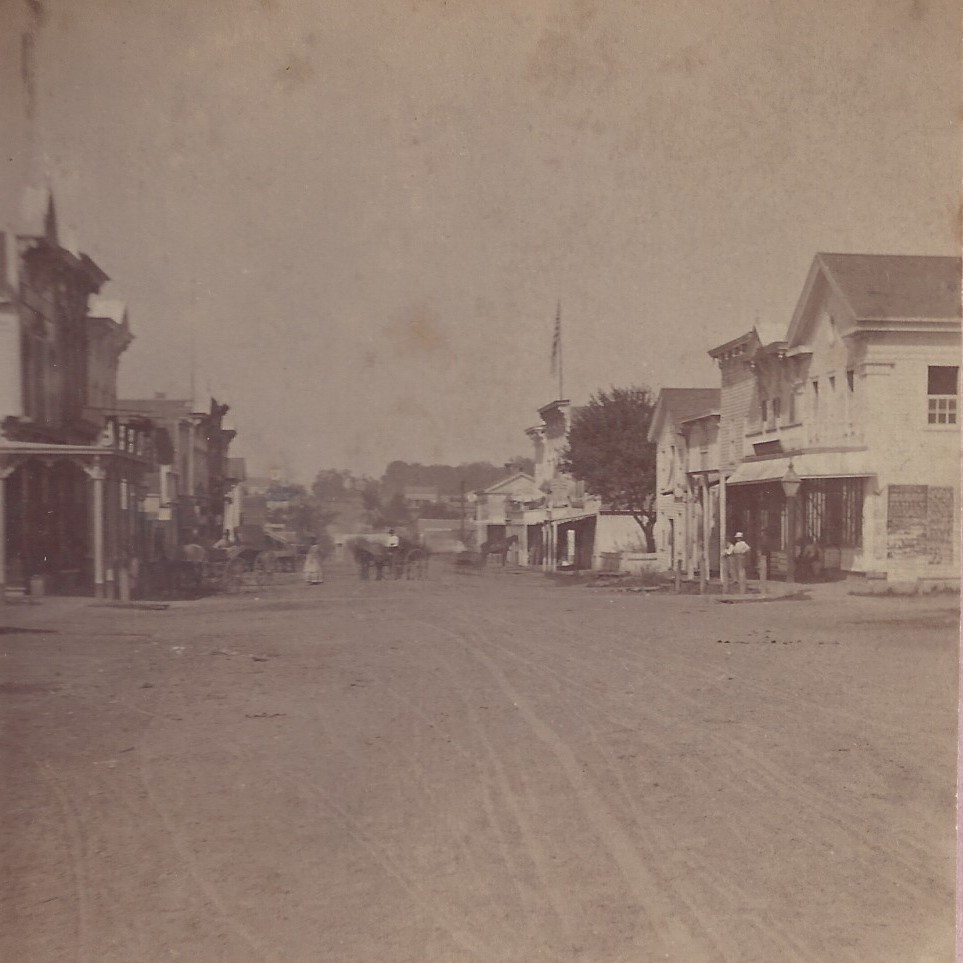
Prior to the creation of an organized fire department, fire response in Flushing depended on informal volunteer efforts such as bucket brigades, neighbors helping neighbors, and ad hoc community responses. Early settlement patterns—clustered wooden buildings, mills, and commercial structures—created a significant fire risk. These conditions shaped the eventual need for a formal fire‑protection service. A fire hall was constructed in the 1880s on Maple Street, serving as an early center of local government and community safety.
Establishment of Organized Fire Protection (1893–1910)
The first structured fire‑protection unit emerged in 1893 under the name Protection Hose Company. By 1897 it had reorganized as the Flushing Fire Company. Early challenges included limited equipment, reliance on community fundraising, and negotiations with village officials for funding. Leadership during this period began to formalize, and the company began billing the village for services, marking a shift toward institutional fire protection.
Reorganization, Leadership Growth, and Standardization (1911–1920s)
A major turning point came in 1911 when the department underwent reorganization, strengthening leadership roles such as fire chief and assistant chief. Compensation standards for fire calls were established, and the department increasingly engaged in regional fire‑service activities, including participation in state firemen’s conventions. This era marked the move from a loosely coordinated group of volunteers to a more standardized and professionally operated municipal service.
Community Engagement and Fundraising (1920s–1940s)
Community involvement became integral to the department’s identity. Fundraising events such as dances, carnivals, and keno parties provided essential financial support for equipment purchases. Annual memorial traditions emerged, including the decoration of firefighters’ graves on Memorial Day. During World War II, the department expanded membership temporarily for civil‑defense purposes and adopted new safety equipment such as pump tanks and gas masks.
Modernization and Expansion of Capabilities (1950s–1960s)
Following the war, the department modernized rapidly. A rescue vehicle was acquired, communication improved with the installation of radios, and structured pay schedules for township and village fire runs were introduced. The department expanded its community outreach through fire‑prevention education, first‑aid instruction, participation in parades and fairs, and public safety demonstrations. The introduction of typed meeting minutes beginning in 1953 created a stronger administrative record.
Formation of the Flushing Firemen’s Association, Inc. (1973)
To support expanding community and fundraising activities, the Flushing Firemen’s Association formally incorporated in 1973. The Association became central to raising funds for new equipment, organizing annual community events such as Halloween Treat Night, the Easter Egg Hunt, and Santa’s arrival, and supporting an Explorer Post to encourage youth involvement in fire service. The Association also contributed significantly to charitable causes and historical preservation efforts.
Centennial Celebration and High Public Engagement (1975–Early 1980s)
The department celebrated its 100th anniversary in 1975 with major public events, including parades, demonstrations, and competitions. Annual Christmas tree sales became a major source of revenue. Throughout this period the department played a visible role in community life by participating in festivals, maintaining fire‑prevention booths, supporting charitable drives, and partnering with local organizations on public‑safety initiatives.
Administrative Change and Departmental Conflict (1984–1985)
A significant administrative shift occurred when the city appointed its first paid part‑time fire chief in 1985. This transition away from elected volunteer leadership generated controversy within the department and led to the resignation of several long‑serving members. The Firemen’s Association restructured its operations to maintain independence from departmental governance. Despite these challenges, the department continued evolving toward the modern model of municipal fire service.
Sources Used
- A History of Flushing Fire Department 1893–1985
- Hart – Flushing & Clayton Historical Compilation, 1925 Part 2
- Hart 1925 Notes
- Flushing Sesquicentennial History Vol. 1
- 1916 History of Genesee County, Michigan, Vol. 2
- Flushing Sesquicentennial History Vol. 3 Part 2
- 1892 Portrait and Biographical Record of Genesee County
- 1916 History of Genesee County, Vol. 1
- Hart – Centennial Chronicles 1835–1935 Part 2
- 1908 Biographical History of Genesee County
- Hart – TBD Part 1
- Hart – Centennial Chronicles 1835–1935 Part 1
- 1879 History of Genesee County
- Hart – Flushing & Clayton Historical Compilation 1925 Part 1
- Hart – Flushing Through the Years Vol. II (1904–1924) Part 1
- Hart – TBD Part 2
- Hart – Flushing Through the Years Vol. II (1904–1924) Part 2
- Hart – Flushing Through the Years Vol. I (1887–1903)
- Flushing Sesquicentennial History Vol. 3 Part 1
- Flushing / Genesee Local History Vol. 2
``