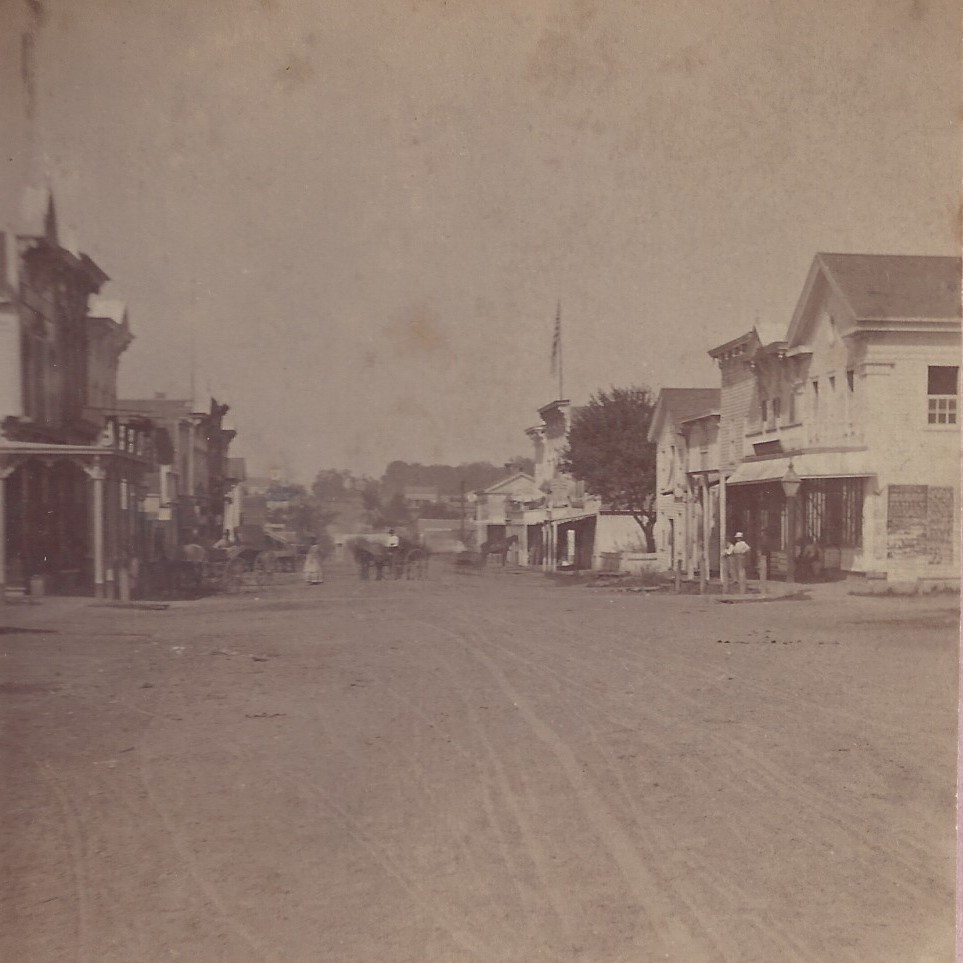
1940 in the Village of Flushing, Michigan
1940 in the Village of Flushing, Michigan
1940 was a landmark year for the Village of Flushing, Michigan, highlighted by the completion and commissioning of a modern waterworks system and active governance addressing local needs. The Village Council managed the final phases of a federally-funded water project, implemented new ordinances, and responded to public petitions and routine municipal business. The Council also conducted municipal elections and adjusted local tax policies, while continuing essential services in the community.
Municipal Officials
| Position | Name |
|---|---|
| Village President | Harley J. Parkhurst |
| Village Clerk | William E. Beebe |
| Village Treasurer | Earl P. Luce |
| Fire Chief | Claud B. Wood |
| Assistant Fire Chief | J. A. Gardner |
| Street & Water Superintendent | James C. Stout |
| Day Police Officers | James C. Stout; H. D. Armstrong |
| Night Watchman | George Nickerson |
| Trustees | Bernard P. Bueche, William J. Everett, Frank W. Hertrich, Edwin P. Dalton, Clyde A. Jessop, Frank A. Niles |
Completion of the Waterworks Project
The Flushing waterworks improvement project, launched in 1938 with assistance from the Public Works Administration (PWA Docket No. 1776-F Michigan), reached fruition in 1940. Key developments included:
January – February: Construction of the new water treatment plant progressed through the winter under PWA deadline extensions. On January 23, 1940, the Council adopted resolutions granting contractors additional time to finish work without penalty due to earlier delays. The Council also decided not to install a commemorative plaque at the plant, to avoid unnecessary expense.
March: The distribution system (Contract No. 1) was essentially complete, with new water mains in service. The Council officially approved interim payments to contractors and resolved issues that had caused delays (for example, obtaining PWA’s concurrence on the softening equipment contract). The Village arranged for the PWA to extend the project completion deadline to December 15, 1939, which had allowed final construction tasks to continue into early 1940.
April: In a special meeting on April 15, 1940, the Council formally accepted the completed water treatment plant and softening equipment. Consulting engineers from The Francis Engineering Co. certified that Contract No. 3 (Permutit Company’s installation of filtration and softening equipment) was finished satisfactorily. The Council passed resolutions approving final payments to the contractors and acknowledging that all work met contractual specifications. With these actions, the new water softening plant was fully operational. The plant used an automated zeolite process to remove hardness and iron from the village’s well water supply, providing residents with softened, clearer water for the first time.
Operational Launch: Following final inspections and acceptance, the water plant went into regular operation in the spring of 1940. The Village began sending water samples to the Michigan Department of Health for routine analysis twice monthly as a quality assurance measure. The improved water quality was evident in the reduction of “red water” complaints. In May, the Council announced the new water system’s success, indicating that Flushing’s chronic iron and hardness issues were resolved by the state-of-the-art treatment facility.
Water Rates and Policies
With the plant online, the Council updated water usage policies and rates. In January 1940, a new water rate schedule was adopted: a minimum quarterly charge of $1.25 for the first 3,000 gallons, $1.25 for the next 5,000 gallons, $1.00 for the next 5,000, and $0.15 per 1,000 gallons over 13,000. No early payment discounts were offered; instead, a 10% penalty applied to late payments (bills unpaid by the 15th of the month after billing). The Council also doubled the rate for the first 8,000 gallons consumed by customers outside village limits (who were receiving water by special agreement) while charging standard rates for usage beyond that threshold. These measures were intended to cover increased operating costs of the new plant and to encourage timely payment. The Council took steps to finalize outstanding project costs. A summary of project expenses was presented in April by the engineers, showing the total project cost (approximately $40,078) and a small overrun (~$94 above the PWA grant and bond funding) due to minor unbudgeted items like extra valves, meter parts, and freight charges. The Council arranged to cover this overrun from village funds. Additionally, a final accounting resolution was passed relieving contractors of any liquidated damages for project delays, as the Council determined the delays were beyond the contractors’ control (caused by PWA administrative processes and coordination between contractors).
Governance and Civic Affairs
Village Elections and Appointments
The March 4, 1940 village election returned all incumbents to office and ratified a notable tax policy change. President Harley Parkhurst, Clerk William Beebe, Treasurer Earl Luce, and Assessor H. L. Mann were all re-elected without opposition. Three trustee positions were on the ballot; Edwin P. Dalton, Frank W. Hertrich, and Clyde A. Jessop won new two-year terms, joining holdover trustees Bernard Bueche, William Everett, and Frank Niles on the six-member Council. Voters also decisively approved discontinuing the annual village band tax, with 54 “Yes” to 31 “No”. This ½-mill property tax had funded the Flushing civic band; its repeal, effective in 1940, reflected a shift to voluntary support for the band’s activities. At the Council meeting of March 14, 1940, newly elected officials were sworn in, and the Council confirmed President Parkhurst’s appointments for the year. Committees were established for Finance, Streets, Water, Sanitary, Buildings, Fire, Police, and other functions. The Council also reappointed James C. Stout as Street and Water Superintendent and Claud B. Wood as Fire Chief, continuing the experienced leadership team guiding daily operations. One significant personnel change occurred during the year: in March 1940, Night Watchman George Nickerson tendered his resignation after serving as the village’s overnight police officer. President Parkhurst was authorized by the Council to find a successor. (By mid-1940, Kenneth B. Young was hired to assume night police duties, though his appointment became official in early 1941.)
Budget and Taxation
The Council managed the village’s finances to accommodate new expenses and maintain balanced budgets. In June 1940, they set the 1940–41 tax levy at 16 mills (unchanged from the previous year). This levy was divided among the general Contingent Fund, the Street Fund, and other accounts. With the band tax repealed by voters, the final budget dropped that allocation, focusing resources on essential services and debt obligations. The Council took a conservative approach to spending in light of economic uncertainties. They officially designated the First State & Savings Bank of Flushing as the public depository for village funds and ensured the Treasurer’s bond was in place. By year’s end, the waterworks project was completed without significant cost overruns (thanks to federal funding covering nearly half the expense), and the village’s accounts showed only minor variances. This prudent fiscal management put Flushing in a stable position entering 1941.
Local Legislation and Public Issues
Throughout 1940, the Village Council enacted ordinances and responded to citizen petitions:
Mechanical Amusement Devices Ordinance: On May 6, 1940, the Council passed a new ordinance regulating coin-operated amusement machines (such as pinball games). It required an annual license fee of $5 per machine, prohibited minors under 18 from playing such devices, and provided penalties (up to $100 fine or 90 days jail) for violations. Operators had to affix licenses to each machine and could transfer licenses between machines only with Clerk approval. This ordinance came in response to concerns about gambling and youth activity on these machines.
Traffic and Parking Regulations: The Council made permanent a parallel parking rule on Main Street in early 1940 to reduce congestion and accidents in the downtown business district. “No Double Parking” signs were also posted at certain trouble spots (e.g., near Johnson’s Produce on Chamberlain Street) to improve safety. Additionally, in October the Council installed a small police “call box” booth at Main & Maple to serve as a headquarters for the village night watchman and provide information to the public.
No New Liquor Licenses: In January, the Council resolved that no new beer/wine licenses would be issued within the village until further notice. This was intended to limit the number of taverns and maintain public order. Existing licenses remained valid (and transfers were considered on a case-by-case basis).
Public Petitions and Community Concerns
Village residents brought forward several issues in 1940:
Tax Relief: In January, the Council approved forgiving back taxes owed by an elderly resident, Mrs. Emma Moyer, and exempting her property from tax sale. This action was taken on recommendation of the county welfare bureau to prevent hardship and loss of her home.
Flooding and Drainage: Citizens on Oak Street petitioned for a storm sewer extension to alleviate basement flooding and standing water. The Council referred this to the Street/Sanitary Committee and promised relief. By year’s end, it was noted that such drainage issues would be addressed in future infrastructure plans (the forthcoming sewer project). In the interim, some affected storm drains were extended to discharge below the riverbank to mitigate surface flooding.
Band Tax Referendum: As noted, a petition to remove the dedicated band tax was placed on the March ballot. The tax was discontinued after the majority vote. While this meant the village band lost public funding, the Council continued to support the band in other ways – for example, by allowing the Flushing Community Band to practice in the Community House auditorium without charge on Wednesday evenings.
Year-End Developments
By the close of 1940, Flushing’s new water plant was fully operational and producing high-quality water for the community. In December, the Council announced that all village officers and departments would soon move into the newly expanded Community House (which now included a dedicated public library wing completed in 1939 as a gift from local philanthropist Marion E. Packard). The year’s achievements – from improved infrastructure to updated ordinances – positioned the village to enter the 1940s with modern utilities and sound governance. The successful completion of the waterworks project, in particular, was a milestone that ensured Flushing’s residents and firefighters had a reliable supply of clean, softened water, and it freed the village from long-standing water quality problems. Overall, 1940’s municipal activities reflect Flushing’s efforts to invest in essential services, maintain fiscal health, and respond to the community’s evolving needs on the eve of World War II.