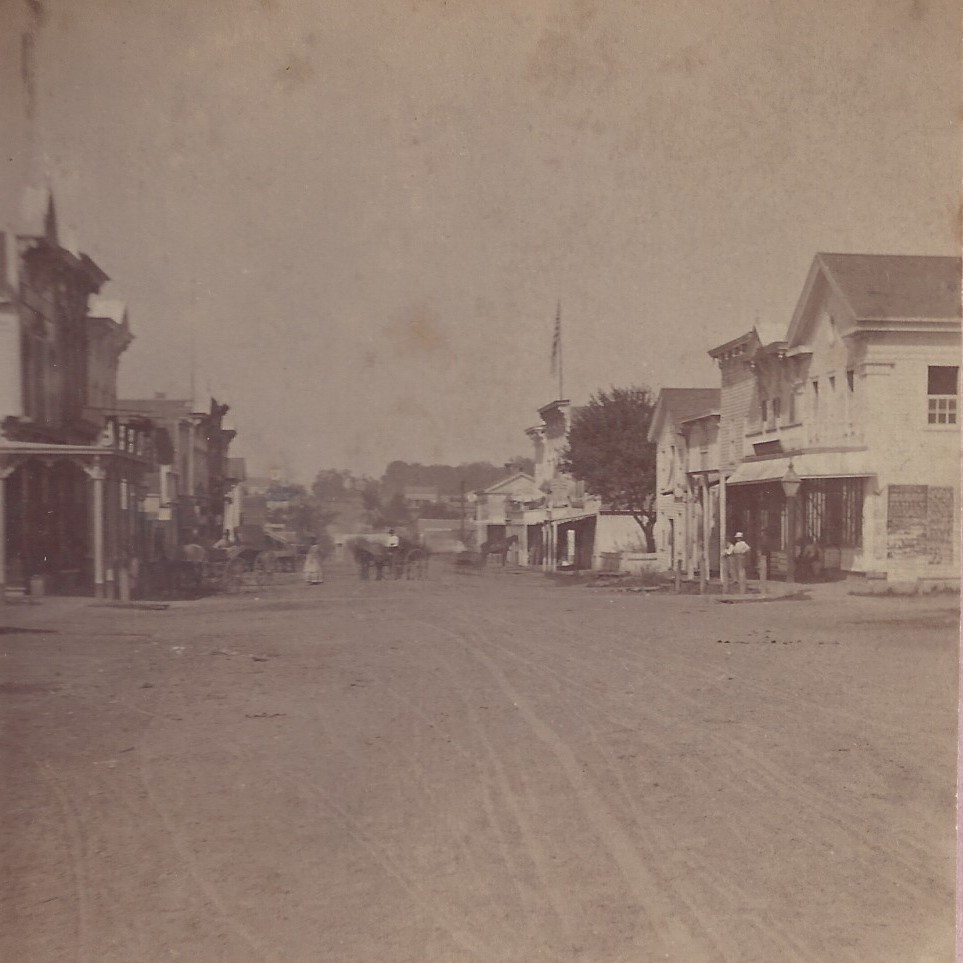
1945 in the Village of Flushing, Michigan
1945 in the Village of Flushing, Michigan
1945 was a transformative year for the Village of Flushing, Michigan, marked by the end of World War II and the beginning of post-war municipal modernization. The Village Council navigated the transition from wartime constraints to peacetime planning, advanced critical infrastructure projects including sewer system engineering, reorganized village administration through the creation of a Village Superintendent position, and maintained essential services amid staff transitions. The year saw significant developments in water system management, building code enforcement, employee compensation adjustments, and preparation for major capital improvements that would define the village's post-war growth.
Municipal Officials
| Position | Name |
|---|---|
| Village President | Bryce A. Miller |
| Village Clerk | Joy D. Scott (from February) |
| Village Treasurer | Harlan W. Dyball |
| Village Superintendent | Harry D. Armstrong (Jun–Aug) Fred W. Baker (from October) |
| Fire Chief | Claud B. Wood |
| Assistant Fire Chief | Ellis Bristol |
| Street & Water Superintendent | George Wilson (acting from May) |
| Town Marshal (Day Police) | Harry D. Armstrong (Jan–Jun) William Lorraine (Jul–Oct) |
| Night Watchman | Kenneth E. Young (Jan–Jun) Everett Adams (from July) |
| Trustees | Bernard P. Bueche, William J. Everett, Frank W. Hertrich, George C. Roof, Clyde A. Jessop, Floyd R. Fults |
Leadership Transitions and Administrative Reorganization
The year 1945 brought significant changes to village leadership and administrative structure. Long-serving Village Clerk Raymond T. "Ted" Scafe resigned in early February after health issues made it difficult to continue. The Council accepted his resignation with gratitude for his years of dedicated service and appointed Joy D. Scott as the new Village Clerk in February 1945, setting her salary at $60 per month. Scott quickly took command of village records and clerical duties, ensuring continuity in administration. The March 12, 1945 village election returned President Bryce A. Miller and other incumbents to office without opposition. The Council was composed of Trustees Bernard Bueche, William Everett, Frank Hertrich, George Roof, Clyde Jessop, and Floyd Fults. Fire Chief Claud B. Wood was reappointed for his 34th consecutive year, with Ellis Bristol continuing as Assistant Fire Chief. The most significant administrative change came with the creation of a professional village management structure. Recognizing the increasing complexity of municipal operations—particularly with the impending sewer project and water system management—the Council in June 1945 decided to establish the position of Village Superintendent (effectively a village manager). On June 16, they offered the position to Harry D. Armstrong at an annual salary of $3,000, effective July 15. Armstrong had been serving as Town Marshal and water plant operator; the Council envisioned the Superintendent role consolidating oversight of all village departments and public works. However, Armstrong's tenure as Superintendent proved brief. The workload and administrative demands exceeded initial expectations, and by late summer Armstrong indicated his intent to return to the private sector. The Council then conducted an extensive search for a replacement. In September 1945, they hired Fred W. Baker, a municipal accountant and WWII veteran with administrative experience, as the new Village Superintendent at $250 per month, effective October 2, 1945. Baker's appointment marked the beginning of Flushing's shift toward professional municipal management that would continue for decades. The police department also underwent significant reorganization in 1945. When Armstrong moved to the Superintendent role in July, the Council hired William "Billy" Lorraine as the new Town Marshal at $40 per week plus $25 monthly car allowance. Night Watchman Kenneth Young continued until mid-year, when he was replaced by Everett Adams in an acting capacity. By year's end, the Council was still refining the police department structure, with plans to standardize duties and schedules under Superintendent Baker's oversight in 1946.
Budget and Financial Management
The Council maintained fiscal discipline throughout 1945 despite the pressures of wartime inflation and post-war readjustment. In June, after the Board of Review completed property assessments, the Council set the 1945 tax rate at 20 mills—an increase from the previous 17 mills—to fund expanded services and infrastructure planning. The levy was apportioned as 9.5 mills for the General Fund, 6 mills for the Street Fund, and 4.5 mills for Bond & Interest. With total assessed property valuation at approximately $1,136,350, this rate generated roughly $22,727 in annual revenue. The increase reflected the Council's commitment to funding post-war improvements without incurring excessive debt. President Miller explained at the June 23 budget meeting that the higher rate would support sewer engineering, street paving preparations, and adequate staffing as veterans returned and village services expanded. To manage seasonal cash flow, the Council again authorized short-term borrowing: a $3,000 tax anticipation note was issued in spring and repaid from summer tax collections. By year's end, tax collection rates remained strong at over 95%, demonstrating continued community fiscal health despite economic uncertainties of the war-to-peace transition. Employee compensation received attention throughout 1945. In June, the Council granted all full-time village employees a formal vacation benefit: one day of paid vacation per month of service, not accruable year-to-year (maximum 12 days annually). This represented Flushing's first formal paid leave policy. Wage adjustments were also made: street and water laborers' pay was standardized, and the Council approved cost-of-living increases for key personnel by year's end to retain qualified staff as private-sector wages rose in the post-war economy.
Sewer System Engineering and Post-War Planning
Building on work begun in 1943–1944, the Council advanced sewer system planning as a top priority in 1945. The comprehensive sanitary sewer and sewage treatment plant project, designed by consulting engineers Pate & Hirn of Detroit, moved closer to reality. In April 1945, at a special meeting on the 17th, the Council refined the engineering contract and authorized Pate & Hirn to proceed with detailed specifications for the sewer network and treatment facility. The updated plan called for main trunk sewers along primary streets (Main, Cherry, Elm, Chamberlain, Hazelton) converging at a treatment plant site near the Flint River. Total estimated cost remained approximately $315,000, with construction anticipated to take 30 months once funding was secured. Critically, the Council on May 9, 1945 passed resolutions to apply for state and federal assistance under post-war public works programs. They formally requested the Michigan State Administrative Board to reimburse 50% of engineering costs (approximately $1,432.50 under Public Act 57 of 1944) and submitted the project to the Federal Works Agency for potential grant funding. The Council authorized spending $2,865 on final engineering plans, with the understanding that half would be state-reimbursed. By summer 1945, detailed sewer plans and specifications were substantially complete. The Council held informational sessions to educate residents about the proposed system and its benefits. They emphasized that the project would eliminate septic systems, reduce basement flooding, and protect public health by properly treating wastewater before discharge to the Flint River. The groundwork laid in 1945 positioned Flushing to seek construction bids and voter approval for bond financing in 1946–1947.
Water System Operations and Improvements
The water treatment plant, now in its sixth year of operation, continued to perform reliably. The Council ensured adequate supplies: in January they purchased approximately 250 tons of water-softening salt from Michigan Salt Company, and throughout the year they procured treatment chemicals including chlorine, caustic soda, and potassium permanganate to maintain water quality. Water production averaged 4–5 million gallons per month, with unaccounted-for water loss (leakage) typically around 8–10% of total pumpage—consistent with prior years and acceptable for the era. The Department of Public Works responded to main breaks promptly, replacing aging service lines where needed. In July, the Council authorized the installation of additional zeolite filter media in the softening plant (supplied by Permutit Company) to enhance capacity and improve water clarity during peak summer demand. A significant policy change came in July when the Council implemented a trial water treatment adjustment recommended by Sci-Effec Laboratories. They authorized a six-month test of sequestration treatment using Septa-Phosphate chemical additive to further reduce iron staining in the distribution system. Proportioners, Inc. loaned the village a chemical dosing pump for this trial. Initial results were promising, and by year's end the Council was considering permanent adoption of this treatment enhancement (which they would approve in early 1946). The Council also addressed water service policies. They standardized connection fees and deposits, requiring new customers to pay actual installation costs plus a $5 meter deposit. Water billing remained quarterly, with a 10% penalty for payments more than 15 days late. These policies, established in prior years, ensured stable revenue to cover increasing operational costs as the system aged.
Streets, Drainage, and Infrastructure Maintenance
With wartime restrictions beginning to ease, the Council renewed focus on street improvements. The long-delayed paving of North Saginaw and Chamberlain Streets remained a priority. Engineering plans and special assessment districts established in 1942 were updated in 1945, and the Council signaled readiness to advertise for bids as soon as contractor availability and material supplies improved. In the interim, the Department of Public Works maintained streets through routine grading, graveling, and Tarvia application. The Council purchased calcium chloride for dust control (ordering supplies from Dow Chemical) and applied liquid asphalt to high-traffic gravel roads. Winter snow removal continued to be a major expense; the village's dump truck and tractor cleared streets after snowstorms, supplemented by contracted equipment during heavy snowfalls. Drainage issues received ongoing attention. Residents on East Elm Street and Oak Street continued to experience basement flooding during heavy rains due to inadequate storm sewers. The Council promised these areas would be prioritized in the comprehensive sewer system design. In the meantime, the DPW regularly cleaned catch basins and made minor sewer repairs to provide interim relief. A notable public works achievement was the extension of sidewalks in developing areas. In August, the Council authorized constructing approximately 590 feet of concrete sidewalk along East Main Street ("the Point" area near Trinity Church) to improve pedestrian safety. Village crews completed this work by late summer, addressing a longstanding request from residents in that neighborhood.
Building Code Enforcement and Development
Post-war housing demand brought new development pressure to Flushing. In January 1945, the Council confronted the issue of substandard construction when developer Don Hodgins was found building "kit homes" on Luce Avenue using questionable methods (such as siding nailed only to fiberboard without proper framing). After a special meeting on January 19, the Council sided with Building Inspector Clyde Jessop and voted unanimously that no further building permits would be issued to Hodgins until his construction met code requirements. This firm stance upheld building standards and protected future homeowners from poorly constructed dwellings. In April, responding to concerns about basement dwellings being used as primary residences, the Council adopted an amendment to the building code prohibiting new construction of basement-only dwellings. The ordinance, effective immediately, required all new residential structures to include above-ground living spaces, ensuring adequate light, ventilation, and safety for occupants. The Council also addressed subdivision development. On April 11, they formally approved the plat for the Park-View Subdivision presented by developer Delbert Schillman, contingent on required plan revisions. As a condition of approval, the Council accepted donation of a 33-foot strip of land (the north edge of Assessor's Plat #1) for construction of a public street within one year, facilitating the eastward extension of Coutant Street to serve new homes.
Public Safety and Community Welfare
Law enforcement continued under evolving leadership. The police department's reorganization—with Armstrong, then Lorraine, serving as Marshal—maintained adequate coverage despite personnel changes. Officers enforced traffic ordinances, conducted nightly business checks, and addressed quality-of-life issues like stray dogs and juvenile mischief. The youth curfew ordinance (10 PM for minors under 17) remained in effect and continued to reduce late-night disturbances. The Council supported constructive alternatives by allowing the Flushing Youth Council to host Saturday night teen dances at the Community House with adult supervision. The Fire Department under Chief Claud Wood responded to approximately 16 fires within the village during 1945, along with several township calls. The volunteer compensation structure continued: $5 for the Chief, $4 for the Assistant Chief, and $3 per firefighter for each village fire call. The Council supported the department by funding new equipment, including firefighting hoses and protective gear purchased throughout the year. Planning continued for a new fire truck to replace the aging 1938 GMC pumper, with the Council setting aside funds for a post-war purchase. Community welfare received attention in various ways. In April, the Council granted the Veterans of Foreign Wars Post exclusive rights to sell Memorial Day "Buddy Poppies" as a fundraiser for veterans' services. The Council also appropriated $250 to the Flushing Community Council to support civic improvement initiatives and recreation programs.
Victory Celebrations and Post-War Transition
The end of World War II brought dramatic changes to village life. When Germany surrendered in May 1945 (V-E Day), the village observed the occasion with dignity. Following the Council's earlier resolution (adopted in April) supporting Governor Kelly's proclamation, local taverns closed for 48 hours to ensure peaceful celebration. Japan's surrender in August (V-J Day) brought final victory and even greater jubilation. Again, the Council enforced the tavern closure policy, and residents gathered peacefully in downtown Flushing and at churches to mark the war's end. With peace, wartime measures began to be relaxed: rationing gradually eased, civil defense drills were scaled back, and the Council shifted focus from wartime austerity to post-war development. The return of veterans began to impact village operations. Several former employees who had left for military service returned and were rehired in accordance with the Council's policy of holding positions for honorably discharged veterans. The influx of returning servicemen, combined with pent-up demand for housing and infrastructure, set the stage for Flushing's post-war growth boom.
Year-End Assessment
By December 1945, the Village of Flushing had successfully transitioned from wartime to peacetime governance. The creation of the Village Superintendent position modernized administration, the completion of sewer engineering plans positioned the village for major construction, and the water system continued to deliver high-quality service. Financial management remained sound, with a balanced budget and strong tax collection despite the economic uncertainties of reconversion. Most importantly, village leaders demonstrated vision by investing in planning during the war years, ensuring Flushing was ready to capitalize on post-war opportunities. The sewer project plans were complete, street paving was designed and ready for bids, and the administrative structure was professionalized to handle future growth. As Superintendent Fred Baker took office in October 1945, he inherited a village poised for transformation—one that would see major infrastructure improvements, residential development, and municipal modernization in the coming years. The foundation laid in 1945 would support Flushing's evolution from a small agricultural village into a thriving mid-century community.