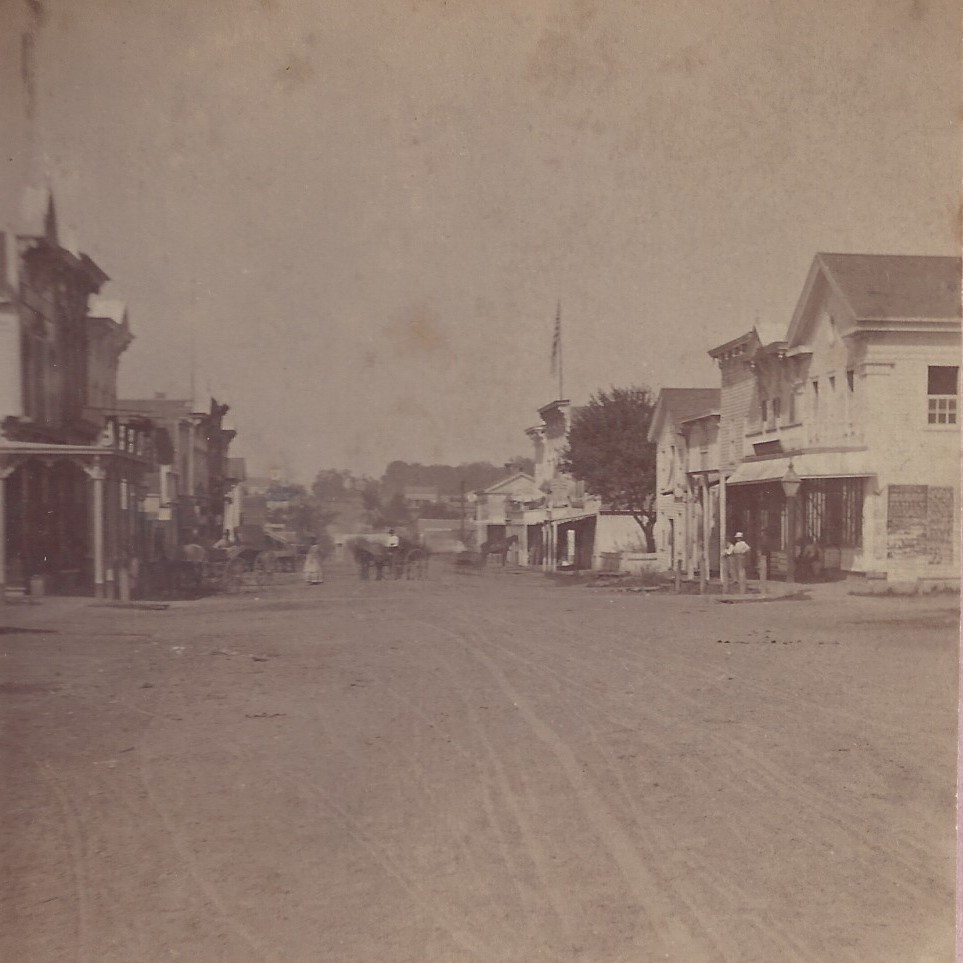
1952 in the Village of Flushing, Michigan
| Position | Name |
|---|---|
| Village President | Robert A. Sellars |
| Clerk | Arthur Gibbs |
| Treasurer | Harlan Dyball |
| Superintendent | Arthur Gibbs |
| Chief of Police | Loren "Bud" Gillespie |
| Fire Chief | Edwin B. Parks |
| Assistant Fire Chief | Theodore "Tom" Weidenhammer |
| Trustees | George Woodhouse, Ora McCartney, Norman Rossell, Chester Schillman, Robert Marsh, Harvey McQueen |
| Community Council Delegate | Robert Marsh |
Flushing, Michigan in 1952 – The Village of Flushing experienced a year of significant civic progress, marked by major infrastructure projects, administrative changes, and community engagement in the post-World War II era. The Village Council focused on launching a long-awaited sewer system, adjusting local policies and services for a growing population, managing a large philanthropic gift, and fostering active community life.
Government and Administration
In March 1952, Flushing’s village elections brought both continuity and change. **Robert A. Sellars** was elected to another term as Village President, and newcomers **Arthur Gibbs** (Village Clerk) and **Harlan Dyball** (Treasurer) joined the administration. Longtime Clerk and Village Superintendent **William Boehm** retired, and Arthur Gibbs was soon appointed to take on the dual role of **Village Superintendent** in addition to Clerk. The six-member Village Council in 1952 included re-elected Trustees **Norman Rossell** and **Chester Schillman** (2-year terms), alongside incumbents **George Woodhouse**, **Ora McCartney**, **Robert Marsh**, and **Harvey McQueen**. They convened regular monthly meetings and several special sessions to address pressing issues.
A top priority was the implementation of a comprehensive **sanitary sewer project** that had been debated for years. In March, voters approved a bond referendum of $165,000 in general obligation bonds to finance part of the sewer system’s cost. This approval set the stage for the Council’s aggressive actions on the project throughout 1952. The Council adopted **Ordinance No. 25** in early April, establishing a framework for Flushing’s new water supply and sewage disposal system. This ordinance included the initial schedule of water and sewer rates and authorized the issuance of revenue bonds to fund the remaining construction costs not covered by the general bonds. The sewer project’s financing became a significant topic of public interest and debate. To address concerns about rate fairness, the Village Council engaged professional financial consultants (the McDonald-Moore Company) and organized public forums. A **special town meeting on September 10** drew about 300 residents to discuss the sewer financing plan. In response to citizen feedback, President Sellars appointed a seven-member Citizens’ Committee (led by Marvin Ransom and other respected residents) to collaborate with Council and advisers on adjusting the rate structure. By October, the Council revised the water and sewer rate schedule, introducing a more graduated tiered system and reducing the burden on ratepayers. Under the revised plan, for example, the first 15,000 gallons of quarterly water usage cost $5.00 (flat), with per-1,000-gallon charges that decreased at higher usage levels; a flat $5.00 sewer fee and a $2.50 debt service charge per quarter were also set. The village’s largest water consumer, **Cloverleaf Dairy**, was accommodated with a capped annual fee for high-volume usage above 5 million gallons. These changes were retroactively applied to April 1, 1952, resulting in refunds for some customers who had overpaid under the original rates.
Despite the broad community support for the sewer initiative, not everyone agreed with the revenue bond financing. In late October, local resident Marvin Ransom delivered petitions seeking a referendum to overturn parts of Ordinance 25 (specifically the issuance of revenue bonds). After consulting legal timelines, the Council voted on December 1 to reject the petitions, stating that the period for a referendum had elapsed and that Ordinance 25 remained valid. By the end of 1952, the municipal government had affirmed its funding strategy and was preparing to award contracts and break ground on the sewer lines and a modern sewage treatment plant, with construction slated to begin in early 1953.
In other policy matters, the Council kept Flushing aligned with state and national trends. In February, it passed a resolution for the village to participate in the recently expanded federal **Social Security** system, authorizing payroll deductions so that village employees could receive Old Age and Survivors Insurance coverage for the first time. The Council also resolved in April to formally oppose a proposed Michigan “Intangible Tax” bill (Senate Bill 318), instructing the Village President to notify state legislators of Flushing’s stance against the tax. Additionally, the Council updated local business license fees in 1952 by amending Ordinance No. 10: for instance, the annual license for operating a taxicab service in the village was set at $25, and a theater license at $20, reflecting adjustments to post-war economic conditions and aiming for fair regulation of local businesses.
Infrastructure and Public Works
Beyond the landmark sewer initiative, Flushing undertook several other important public works projects in 1952. **Street improvements** were a continuous focus. The Council addressed a persistent flooding problem at a low-lying stretch of East Main Street known locally as “The Point.” Village Superintendent Gibbs worked with engineering consultants Pate & Hirn to design an underground storm drain for that area. Although the drain installation was delayed for further study, the village enhanced its routine street maintenance program—grading gravel roads, filling potholes, and instituting regular dust control treatments on unpaved streets. Discussions in late summer led to plans for **blacktopping** segments of Terrace, Mill, and Myrtle Streets, as well as a road near the school, to alleviate dust and mud; these paving projects were slated to proceed as funds and materials became available.
With new housing developments emerging, the Council reviewed and approved expansions of the village’s platted areas. In November 1952, the Council accepted the proposed replat of the **Labian Subdivision** (an extension of the earlier Bonnie View Gardens neighborhood), including the dedication of a lot that would become a new street—an early indication of Flushing’s suburban growth in the 1950s.
Village utilities were upgraded to keep pace with increasing demand. The Council authorized the purchase of a new **Water Department service truck** (from McNally’s Garage) in June, specifying it be painted the standard bright yellow used for village vehicles. The **water tower** was scheduled for a fresh coat of paint, and a second zeolite water softening tank was put into operation in the fall to improve water quality and capacity. On the streets, new traffic control devices and lighting were installed to improve safety: in mid-year the Council approved installing a “Stop” sign at the intersection of Emily and Terrace Streets in a growing residential area, and by December additional **streetlights** were ordered for East Park and East Henry Streets to illuminate those dark residential blocks. Earlier in the year, in March, the Council had also voted to work with Consumers Power Company to add streetlights along a previously unlit section of Coutant Street, responding to resident requests. The Council’s attention to these improvements reflected the community’s transition from a rural village to a more populous suburb.
The Village’s physical plant also saw enhancements. In April, the Council extended a rental agreement for the second-floor apartment at the Fire Hall to continue having a resident caretaker on site, a practice that provided security for the building and equipment. The Council let contracts for new concrete sidewalks, selecting local contractor A. Phillips to carry out sidewalk installations and repairs under village ordinance cost-sharing provisions. Property owners who installed sidewalks on their own were reimbursed by the village in accordance with the ordinance, in an effort to encourage pedestrian infrastructure. As winter approached, the Council worked with the Fire Department to prepare a public **ice skating rink** at the city park: in December they arranged for volunteer firefighters to flood and maintain the outdoor rink and authorized small stipends as thanks for the extra work, providing a popular cold-weather recreation spot for families.
Public Services and Safety
Flushing’s public service departments—the **Police, Fire, Water, and Sanitation** divisions—operated steadily through 1952, with the Village Council supporting modernization and improved service delivery.
Police Department
The **Flushing Police Department** in 1952 was led by Village Marshal **Loren “Bud” Gillespie**, who served as the chief law enforcement officer, and officer **James “Jim” Osterman** as his deputy. The department, though small, kept pace with the needs of a growing community. Regular reports to the Council noted typical monthly activity levels: for example, the police issued dozens of traffic tickets and warnings each month (reflecting stricter enforcement as traffic increased in post-war years), but reported very few serious crimes—occasional break-ins or public intoxication cases, and only minor thefts or accidents.
To improve law enforcement efficiency, the Council established a **Traffic Violation Bureau** in 1952. This bureau, created by ordinance in September, allowed residents to pay standard fines for minor traffic infractions at the village office without a formal court appearance. In its first weeks of operation, the bureau was deemed successful in streamlining ticket processing and encouraging compliance with village traffic laws. The Council also endorsed upgrades for the department: throughout the year they evaluated options for a new police patrol car to replace an aging vehicle, and by December they were reviewing bids with plans to purchase a modern squad car in early 1953. Other initiatives included assigning Officer Osterman to coordinate with Flushing High School and local civic groups on youth safety education; in April, the Council supported a Saginaw Valley Law Enforcement Association meeting held at the Flushing Community House, where Officer Charles Fenner and others led a discussion on public safety and student engagement in law and order issues.
Fire Department
The **Flushing Volunteer Fire Department** was an essential and community-oriented service. Longtime Fire Chief **Edwin “Ed” Parks** led the department’s operations, with **Theodore “Tom” Weidenhammer** as Assistant Chief. The department responded to routine fire calls in the village and surrounding township, such as chimney fires or minor blazes, with no major conflagrations reported in 1952. The Council maintained a contract to pay the city-owned Water Department a hydrant rental fee (approximately $594 annually) to ensure adequate water pressure for firefighting. Firefighters continued their tradition of civic involvement: in June 1952 the department held its annual **Firemen’s Carnival**, a multi-day summer fair featuring rides, games, and food stands, to raise funds for fire equipment. The Village Council officially waived the license fees for this event, recognizing its charitable nature and value to the community. The department also purchased new fire hose (500 feet of 1½-inch hose from the Bi-Lateral Fire Hose Co.) to replace older equipment and traded in an oversized rope for multiple smaller ropes better suited to rescue work and training drills.
By winter, the Fire Department’s role expanded to supporting community recreation. In December, the volunteer crew took on the task of creating and maintaining the public ice skating rink, flooding the field and keeping the ice in good condition. The Council agreed to compensate the firefighters with a nominal stipend for these extra duties, illustrating the close partnership between the village and its volunteers. The Fire Department remained a source of community pride and social activity, integrating public safety with public service.
Water and Sewer Services
The **Water Department**, managed by Superintendent Arthur Gibbs, was heavily engaged in preparations for the upcoming sewer construction while maintaining daily water service. Throughout 1952, the department connected dozens of new water services as residential construction picked up. This included extending water lines to new houses and to public facilities; for example, the Council coordinated with the Board of Education to plan water and sewer connections for a new school building under construction (which would open as Central Elementary School in 1953). Village water quality and supply remained reliable: Flushing’s water treatment plant, which used iron-removal and zeolite softening filters for the town’s well water, was carefully monitored. Monthly operating reports show consistent pumping volumes (around 3 to 5 million gallons of water supplied per month) and the regular use of chemicals like potassium permanganate, salt, and chlorine to ensure clean water.
As the future sewer system was being designed, the existing wastewater situation required attention. The village primarily relied on septic tanks and a limited storm sewer network. The Council handled occasional sewer blockages, such as commissioning a specialized “Root Master” cutting tool to remove tree roots infiltrating older sewer lines. They also confronted a recurring sewage issue in the downtown, sometimes referred to as the “bakery sewer” problem, which involved backing up of waste near a bakery on Main Street; in July, Superintendent Gibbs tested downtown sewer lines with a dye chemical (as recommended by the State Health Department) to identify the source of the problem, and the Council used those findings to plan interim repairs until the new sewer system could be built.
Meanwhile, **solid waste and sanitation services** kept up with residents’ needs. The village provided weekly trash and ash collection for households, an appreciated service in an era before regional waste authorities. In the spring, the Council organized a community “Clean-Up Week” encouraging property owners to clear debris and beautify their surroundings; the village garbage truck then hauled away large volumes of junk and brush at no extra charge. These efforts not only improved public health and appearance, but also reflected Flushing’s civic pride. The sanitation crew’s responsibilities extended to maintaining storm drains and the village dump site. In financial reports, the sanitation budget covered workers’ wages, supplies (like truck fuel and repair parts), and tipping fees for waste disposal, all managed within the tight constraints of the village’s modest revenues.
Community and Civic Life
Flushing in 1952 enjoyed a vibrant civic life, with residents participating in a blend of longstanding traditions and new post-war initiatives. The **Flushing Chamber of Commerce** played a key role in organizing community events to promote local spirit and economic activity. In the summer, the Chamber revived the popular **Flushing Homecoming Festival and Carnival**, an event featuring amusement rides, games, and a parade that welcomed former residents back to town. The Village Council supported this festival by waiving certain fees and coordinating logistics, recognizing its boost to community morale and local businesses. The festival, along with the Firemen’s Carnival, were highlights of the social calendar, drawing crowds to the downtown area.
Another important community organization, the **Flushing Community Council**, coordinated various programs for youth and families. This umbrella group, composed of representatives from civic organizations, churches, and the school district, ran a summer recreation program for children. In 1952 the Community Council requested funding from the village to support summer playground activities. While the village’s tight budget prevented a direct subsidy, the Council agreed that maintaining public parks (like the main city park by the Flint River) for summer use was a priority. Volunteers, often including parents and teachers, organized supervised sports, a “play school” day camp, and holiday celebrations in the parks, with the village providing in-kind help such as field maintenance and utility services.
Local schools were expanding to serve a growing population of young families. The Flushing Board of Education proceeded with constructing a new elementary school on Coutant Street, and coordinated with village officials to ensure the new building would tie into the forthcoming sewer and water lines. Flushing High School, the village’s only high school at the time, continued to be a center of activity. Students and parents were involved in community events, and school facilities like the **Community House** auditorium hosted important gatherings—from the September town meeting on the sewer issue to regional law enforcement workshops and various civic club meetings. The village also leased extra rooms in the Community House to the school district for classroom space in 1952, reflecting increasing school enrollment and the need for temporary accommodations.
Flushing’s spiritual and philanthropic life was evident in 1952. Churches and service clubs conducted projects such as charity drives and community betterment campaigns. The Village Council engaged with these efforts; in December it passed a resolution endorsing the county’s **Red Feather program** (a Community Chest fund drive for local charities, similar to today’s United Way), appointing Trustee Robert Marsh as the official village delegate to the Flushing Community Council for the initiative. The American Legion and Veterans of Foreign Wars (VFW) posts were active as well, with the Council granting the VFW post exclusive permission to sell remembrance poppies on Memorial Day in May. Traditional observances carried on unchanged—Memorial Day ceremonies honored veterans at the cemetery, and in November the community marked Armistice Day (Veterans Day) with solemn remembrance at the high school and American Legion Hall. Civic pride and neighborly cooperation were recurring motifs in Flushing’s communal life.
Finances and Notable Developments
Financial stewardship was a critical aspect of the Council’s responsibilities in 1952. The village maintained a balanced budget while investing in future improvements. In May, after careful review, the Council adopted the 1952–53 fiscal year budget of $95,262. This budget funded the expanding infrastructure projects and modest raises for village employees, while setting the local property tax **millage rate at 15.5 mills** (with 10.5 mills allocated for general operations and 5.0 mills for roads). Recognizing the impact of inflation in the post-war economy, the Council in September approved a 5% **cost-of-living salary increase** for all regular village employees—the first across-the-board raise since before World War II. Despite ambitious projects, Flushing’s finances remained stable. For short-term flexibility, the Council arranged a loan from the state’s Local Government War Emergency Fund to cover upfront sewer engineering costs until bond proceeds became available. Routine financial practices were also updated: the Clerk and Treasurer were authorized to open multiple bank accounts and require dual signatures on checks to safeguard public funds, and the village office acquired a new electric adding machine to improve accounting efficiency.
The most dramatic financial development of 1952 was the reception of a substantial private bequest. **Max D. Tucker**, a prominent local businessman who had passed away in 1951, left the Village of Flushing a legacy of **$100,000 in cash and a parcel of land** for public benefit. After legal processes, the funds and property were formally transferred to the village in November 1952. The Village Council convened a special meeting on November 10 to adopt a resolution accepting the Tucker bequest. Each councilman signed a receipt in triplicate under the village seal, as requested by the estate’s executor, and the check was promptly deposited into two local banks (Peoples State Bank and First State & Savings Bank) to earn interest until decisions could be made on its use. The bequest came with the stipulation that the money and land be used for “civic and public welfare purposes,” such as establishing a public playground, civic center, hospital, or library. In their resolution, President Sellars and the Council pledged to utilize Tucker’s gift in a “fitting and lasting manner” to honor his memory. The generosity of the Tucker estate instantly strengthened Flushing’s financial position and opened possibilities for major civic improvements. While no immediate decision was made in 1952 on how to spend the funds, discussions would continue into subsequent years regarding projects like a new library or community hospital, made feasible by this endowment.
Other financial decisions in 1952 aimed at protecting village assets. The Council conducted a comprehensive review of its **insurance policies** on all municipal properties, including the Community House (town hall), the Fire Hall, water plant, and village garage. In June, after soliciting quotes, the Council updated its coverage to ensure all buildings and equipment were adequately insured against fire, liability, and other risks, reflecting prudent risk management. Additionally, when a rare workers’ compensation claim arose (involving Superintendent Gibbs and former Marshal Harry Gillespie), the Council worked through the state’s process and reached a satisfactory settlement by year’s end.
In summary, **1952** was a watershed year for the Village of Flushing. The groundwork laid for the sewer system was a transformative step toward modern infrastructure, signaling an end to outhouses and septic systems and paving the way for improved public health and environmental protection. The village leadership balanced these forward-looking projects with day-to-day governance: they kept the streets lit and safe, provided essential services, and maintained fiscal responsibility. Community involvement was high, whether through spirited debates on public works or through collective celebrations and volunteerism. The events of 1952—culminating in the acceptance of the Max Tucker bequest—had a lasting impact on Flushing, enabling the community to envision and eventually realize new public amenities. The record of this year on the Flushing Area Historical Society’s wiki site serves as a snapshot of a thriving small town meeting the challenges and opportunities of the early 1950s with determination, unity, and optimism.