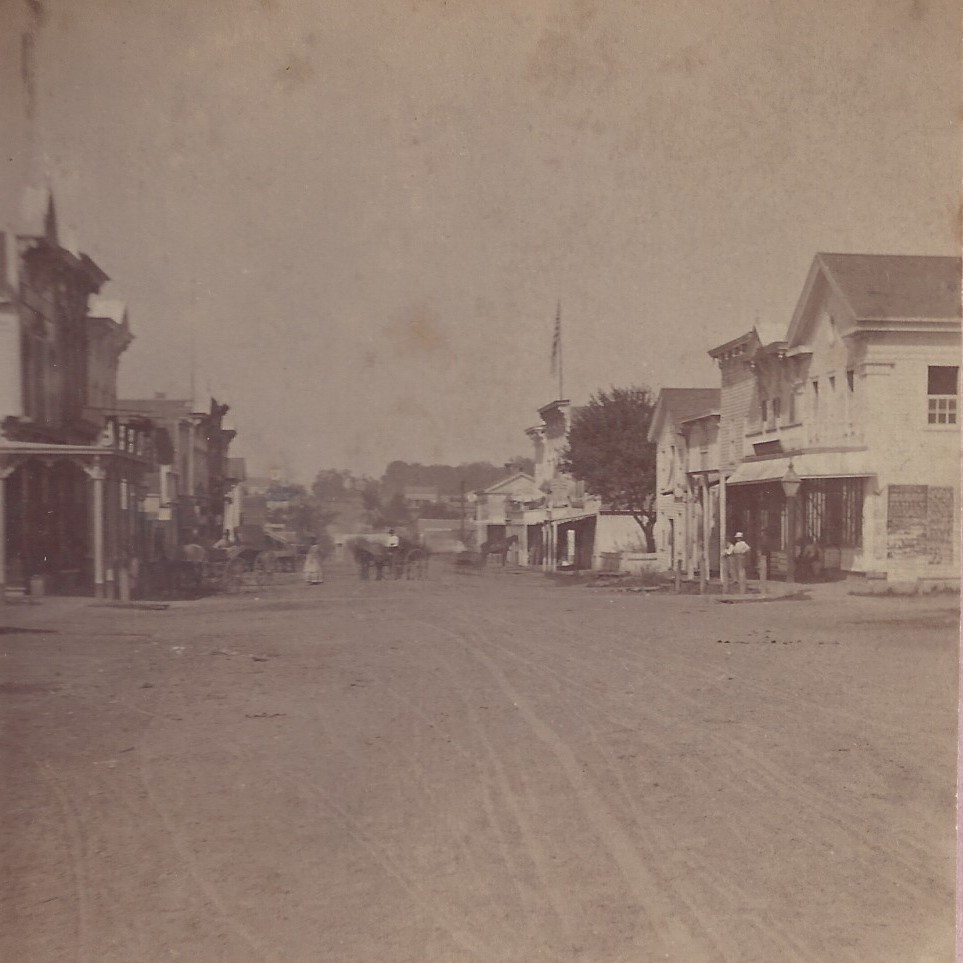
1954 in the Village of Flushing, Michigan
| Position | Name |
|---|---|
| Village President | **John Talsma** |
| Clerk | **Jane Boardman** |
| Treasurer | **Harlan Dyball** |
| Village Superintendent | **Arthur Gibbs** |
| Chief of Police | **Henry H. Beach** |
| Fire Chief | **Edwin B. "Cap" Parks** |
| Assistant Fire Chief | **Theodore "Tom" Weidenhammer** |
| Trustees | **George Woodhouse**; **Herbert Henderson**; **Harvey McQueen**; **Arthur Warner**; **Joseph Bueche**; **William Middleton** |
Flushing, Michigan in 1954 – The year 1954 was a pivotal time for the village, marked by a severe water supply crisis and the community’s determined response. It also saw significant infrastructure improvements, new traffic management measures, and the planning of major civic projects. The Village Council navigated emergency water shortages, introduced downtown parking meters, expanded streets and sidewalks, and laid groundwork for a public swimming pool – all while maintaining financial stability and engaging residents in the town’s progress.
Government and Administration
In March 1954, **John Talsma** was re-elected as Village President, continuing in leadership alongside Clerk **Jane Boardman** and Treasurer **Harlan Dyball**. The election also brought a change in the Village Council’s lineup: newly elected Trustees **Arthur “Art” Warner**, **Joseph Bueche**, and **William Middleton** joined incumbent councilmen **George Woodhouse**, **Herbert Henderson**, and **Harvey McQueen**. The Council began the year by officially adopting “**Queen of the Suburbs**” as Flushing’s slogan, reflecting pride in the village’s status as a thriving postwar community.
City planning and controlled expansion were important themes in 1954. The Council approved the annexation of the **Spring Glenn** residential subdivision in April, extending Flushing’s boundaries, and later petitioned county authorities to incorporate another adjacent tract for future housing development. To manage growth and land use, a new Village Planning Committee was established: each council member nominated citizens to a panel charged with developing a comprehensive plan and exploring the possibility of one day transitioning from village to city governance. Additionally, zoning ordinances were updated – in May, the Council amended the zoning map to reclassify two blocks near East Main Street entirely for business use, anticipating commercial expansion along the main corridor.
A major policy initiative was the regulation of downtown parking. After studying practices in nearby towns, the Council enacted **Ordinance No. 32** in August 1954, which authorized the installation of parking meters in Flushing’s business district. This ordinance established specific parking meter zones on Main Street and adjoining blocks, set time limits for parked cars, and stipulated that meter revenues would finance the system. The decision to introduce meters, debated in meetings early in the year, had support from many local merchants who hoped to increase parking turnover for customers. By late 1954 the first round of meters had been installed, ushering the village into a more orderly (if slightly controversial) era of traffic management.
Water Supply Crisis and Response
In January 1954, Flushing experienced a sudden and severe **water supply crisis** that became the year’s most urgent challenge. The village’s lone deep well abruptly dropped to a critically low level, causing water pressure in the system to collapse. Residents awoke to dry taps and empty water towers in the cold of winter. The Village Council immediately declared an emergency and coordinated extraordinary measures to restore water service. Tanker trucks were dispatched to haul water from the city of Flint, and within 24 hours enough water was pumped into Flushing’s network to provide minimal service under the supervision of state health officials. Meanwhile, residents were placed under strict rationing – all nonessential water use (such as laundry and bathing) was suspended, and neighbors helped each other conserve by hauling snow and stored rainwater for basic needs.
The community’s response was swift and united. Members of **Boy Scout Troop 103** and their leaders mobilized overnight to distribute conservation bulletins to every household, informing citizens of the emergency and urging them to cut usage. The Village Council publicly commended the Scouts for their efficient work. The **Flushing Fire Department**, led by Chief **Ed “Cap” Parks**, prepared to safeguard the village by installing a standpipe into the frozen Flint River, ready to pump river water for firefighting or limited sanitation if necessary. These efforts, combined with the water hauling operation and residents’ cooperation, prevented any health disasters during the crisis. By early February, the immediate emergency had abated, but the experience revealed that Flushing’s water system was at its limit.
Determined to secure a reliable water supply, the Village Council and engineers embarked on an intensive search for new water sources. The Layne-Northern Company was contracted to drill test wells in and around the village. Initial drilling attempts near the existing well proved disappointing – shallow wells yielded insufficient water and deeper bores encountered high mineral content. The council convened a special meeting with experts from the Michigan Department of Health and Water Resources Commission to discuss all options, from drilling multiple wells to laying a pipeline to Flint or using the Flint River as a potential source (with treatment). Guided by these experts, the village decided to continue exploring groundwater solutions before considering a river supply.
After several false starts, a breakthrough came in late summer when a high-yield aquifer was discovered on the northwest edge of town near a small airfield. In August, a new test well at this “airport site” produced a strong flow of good-quality water. The Council swiftly authorized full development of this well, ordering a larger pump and connecting it to the distribution system. With this new source coming online, water pressure gradually returned to normal and outdoor use restrictions were eased. Even as the immediate shortage waned, the Council pressed forward with a long-term **Water Expansion Program**. By fall, village engineer **Howard S. Hansen** had outlined a plan for multiple new wells, a transmission main from the wellfield to the village, and construction of a large modern water tower to replace the old 50,000-gallon tank. In November, the Council voted to finance these improvements by issuing revenue bonds, to be repaid through water fees rather than general taxes. Legal and financial advisors were engaged to prepare the bond issue for early 1955.
In the meantime, conservation practices remained in effect. A lawn-sprinkling schedule (odd/even day watering) stayed in place through summer, and no new water service connections were permitted for proposed subdivisions until the expanded system was assured. The crisis underscored the importance of water infrastructure, and it energized both officials and residents to support the planned upgrades. By the end of 1954, Flushing had turned the corner on its water emergency, transforming it into an opportunity: the village was poised to build a robust, modern water system capable of meeting future demand.
Infrastructure and Public Works
Flushing made substantial improvements to its streets and public facilities in 1954. The Village Council continued a multi-year **road paving program**, converting more gravel roads to smooth pavement. That summer, contractors laid new asphalt on key residential streets (including sections of Terrace, Hazelton, Beatrice, Henry, and Labian Drive), eliminating dust and mud and improving driving conditions in several neighborhoods. In conjunction with paving, the Council expanded the **sidewalk network**. Priority was given to areas around the newly opened Central Elementary School on Coutant Street: new sidewalks were built along Coutant and connecting streets so that children could walk to school safely. Additional sidewalks were installed on other blocks where homeowners had petitioned for pedestrian improvements, with costs shared between the village and property owners.
Downtown traffic flow and parking were major focuses. To address increasing congestion, Flushing installed its first **electric traffic signals** in 1954. Two stop-and-go lights were erected at busy intersections, including the corner of Main and Cherry Streets, to regulate the growing number of cars passing through the business district. Even more transformative was the introduction of **parking meters** in the fall. After enacting the ordinance in August, the village installed about 100 coin-operated meters on Main Street and nearby blocks. This was a significant change for drivers: for a penny one could park for 12 minutes (or a nickel for an hour) in prime downtown spots. The meters were intended to encourage turnover and open up spaces for shoppers, and time limits were enforced on weekdays by the police. To supplement the meters, the Council designated free parking areas in two municipal lots just off Main Street, with time restrictions for long-term parking. The new system initially drew some skepticism, but it quickly became part of daily life and provided a modest revenue stream dedicated to parking maintenance.
Other public works projects were also undertaken. At the start of the year, the village accepted a 27-foot strip of land donated by a local landowner to create a new public right-of-way near the water plant (a future street extension). The Council authorized the purchase of a modern centrifugal pump for the water department and later a new Allis-Chalmers WD-45 tractor for the public works crew to use in street and park maintenance. Drainage and flood control were addressed as well. After residents in the Parkview subdivision raised concerns about recurring yard flooding, the Department of Public Works improved storm drainage in that area, replacing a faulty catch basin and regrading ditches. The Council even resorted to an inventive short-term fix during the summer drought: they blocked a section of the Boman Drain to divert water into a disused gravel pit (the Parsons pit), hoping to recharge groundwater levels. While this measure was temporary and required careful negotiation with the landowner, it demonstrated the Council’s willingness to try creative solutions for infrastructure challenges.
Public Services and Safety
The demands of 1954 prompted enhancements in Flushing’s police and fire services. The **Flushing Police Department**, headed by Chief **Henry “Hank” Beach**, expanded both its personnel and capabilities. In mid-year, the Council approved hiring an additional full-time patrolman, **Jay C. “Cap” Brown**, bringing the force to three officers for the first time. This allowed for better 24-hour coverage of the village. The police car was upgraded with a state police radio receiver, connecting Flushing to a regional law enforcement network and improving emergency response coordination. Officers cracked down on traffic violations – especially with new stop signs and the parking meter system in place – and were commended for impartial enforcement. Late in the year, the Council approved procurement of new equipment for the officers (standard service revolvers and a riot shotgun) to ensure they were well-prepared for any incidents. By year’s end, the police department was both larger and better equipped, keeping pace with the village’s growth.
The **Flushing Volunteer Fire Department** continued its strong tradition of community service under Chief **Edwin “Cap” Parks**. The year’s water emergency highlighted the fire crew’s vital role beyond fighting fires: firefighters provided pumps and expertise to help maintain water pressure and stood ready to use river water for fire suppression if needed. During normal operations, the department responded to routine calls (such as chimney fires and minor blazes) with no major conflagrations reported in 1954. The Village Council supported the department with equipment upgrades. It approved funds for a new hose-drying rack, enabling fire hoses to be properly maintained, and for a long extension ladder to assist in reaching taller structures. The Council also coordinated with Genesee County to install two-way radio units in the fire trucks (partially funded by civil defense grants), which allowed direct radio communication between firefighters and the police/civil defense network. These improvements enhanced the volunteers’ effectiveness in protecting the community.
As always, the firemen remained central to Flushing’s civic activities. In June, the department held its annual **Firemen’s Carnival**, turning the grounds behind the Community Center into a lively fair with rides and games. The Council waived all license fees for the event, recognizing its value in raising funds for firefighting equipment and bringing residents together for summer fun. The department also continued to serve Flushing Township under mutual aid agreements, and village officials discussed the need to ensure daytime fire coverage (since many volunteers worked jobs during the day) – foreshadowing future considerations for bolstering the fire ranks. Overall, Flushing’s public safety services in 1954 were marked by progress and dedication, providing a solid foundation of safety during a year of rapid change.
Community and Civic Life
Throughout 1954, Flushing’s citizens and civic organizations were actively involved in the village’s well-being. The water crisis in winter illustrated the community’s solidarity: beyond the Boy Scouts’ efforts, local churches, the Red Cross, and service clubs helped distribute water, food, and information to households in need. Once the emergency subsided, attention returned to longer-term community projects. The most significant of these was deciding how to use the large bequest from the late **Max D. Tucker**, a former resident who had left $100,000 to the village in 1952 for civic improvements. A special Tucker Fund Committee (led by community members like C. P. Rowe) spent months gathering public suggestions and studying options. In mid-1954 the committee presented its recommendation: to build a modern public **swimming pool and recreation center** as a permanent benefit to Flushing’s citizens. The Village Council enthusiastically embraced this idea. By the end of the year, architects were consulted and preliminary plans were underway for what would be known as the “Tucker Memorial Pool,” to be constructed on village-owned land near Cherry Street. The project promised to provide Flushing’s first municipal pool and a community gathering space, fulfilling Tucker’s wish to enhance local recreation.
Other facets of community life remained vibrant. The Flushing **Board of Education** settled into the new Central Elementary School on Coutant Street, which had opened in late 1953. The Council cooperated with the school district on infrastructure around the school, although a minor dispute arose when the school board declined to share costs for paving and drainage improvements on adjacent streets (the village ultimately covered these costs to benefit public safety). The public library, jointly operated with Flushing Township, received continuing support: the Council approved another contribution to help the library extend its hours and services to the growing population.
Cultural and patriotic traditions were observed as usual. Memorial Day was commemorated with a parade and ceremony organized by local veterans’ groups, and the village granted the **VFW** post sole rights to its annual poppy sale for veterans’ relief. In July, the Chamber of Commerce hosted Flushing’s **Homecoming Festival**, inviting alumni and visitors for a parade and downtown festivities. At year’s end, holiday events took on special meaning: the restored water supply and planned pool were seen as reasons for optimism, and the community Christmas celebration doubled as a chance to thank volunteers and officials who had guided Flushing through a trying year. Whether facing uncommon hardship or celebrating civic milestones, the people of Flushing in 1954 demonstrated resilience and a forward-looking spirit.
Finances and Notable Developments
Financially, Flushing managed the extraordinary demands of 1954 while maintaining stability and public confidence. The village’s 1954–55 budget was set at approximately $135,000 – higher than previous years due to emergency expenses and new projects – yet the **property tax rate remained at 15.5 mills** for the third straight year. A rise in property values from new construction helped offset costs, allowing the Council to avoid any tax increase. Careful budgeting and use of reserve funds covered the costs of hauling emergency water, drilling test wells, and purchasing equipment during the water crisis. By mid-year, Treasurer **Harlan Dyball** reported that tax collections were strong and the village was meeting its obligations on time.
To fund the major water system expansion, the Council planned to issue **water revenue bonds** rather than rely on general taxation. Preparations for this bond issue began in late 1954 with legal and financial experts, ensuring the village could borrow for new wells, mains, and a water tower and pay the debt back from future water fees. This prudent approach meant that Flushing residents would gain a vastly improved water supply without an immediate burden on property taxes. In a similar vein, the Tucker bequest for the swimming pool project provided a dedicated funding source for that venture, so the Council could move forward on the pool in 1955 without straining the village’s general fund.
Village officials also invested in human resources. In September, the Council approved a roughly **5% cost-of-living raise** for all full-time employees – including police, public works staff, and office personnel – acknowledging their hard work (especially during the water emergency) and the inflation of the era. By now, Flushing had fully integrated its employees into the federal Social Security system (as of 1953), reflecting a modern approach to worker benefits. There were also a few legal and administrative matters resolved quietly. The village’s brief dispute with a landowner (over using a private gravel pit for emergency water storage) was settled amicably once the rains returned and the procedure was halted. Additionally, the Council hired **Howard Bueche** as Village Attorney on a part-time basis to provide legal counsel for the increasing complexities of ordinances, contracts, and annexations.
In summary, **1954** stands out as a year of both crisis and progress for Flushing. The water shortage tested the village’s resourcefulness and unity, ultimately leading to critical improvements in infrastructure. At the same time, the local government pressed ahead with enhancements in transportation, safety, and recreation that would shape the community’s future. By year’s end, Flushing had emerged from adversity stronger than before – with plans for a secure water system, better roads and parking, and a new public pool on the horizon. The events of 1954 became a defining chapter in Flushing’s history, demonstrating the village’s ability to overcome challenges through cooperation, innovation, and prudent planning.```