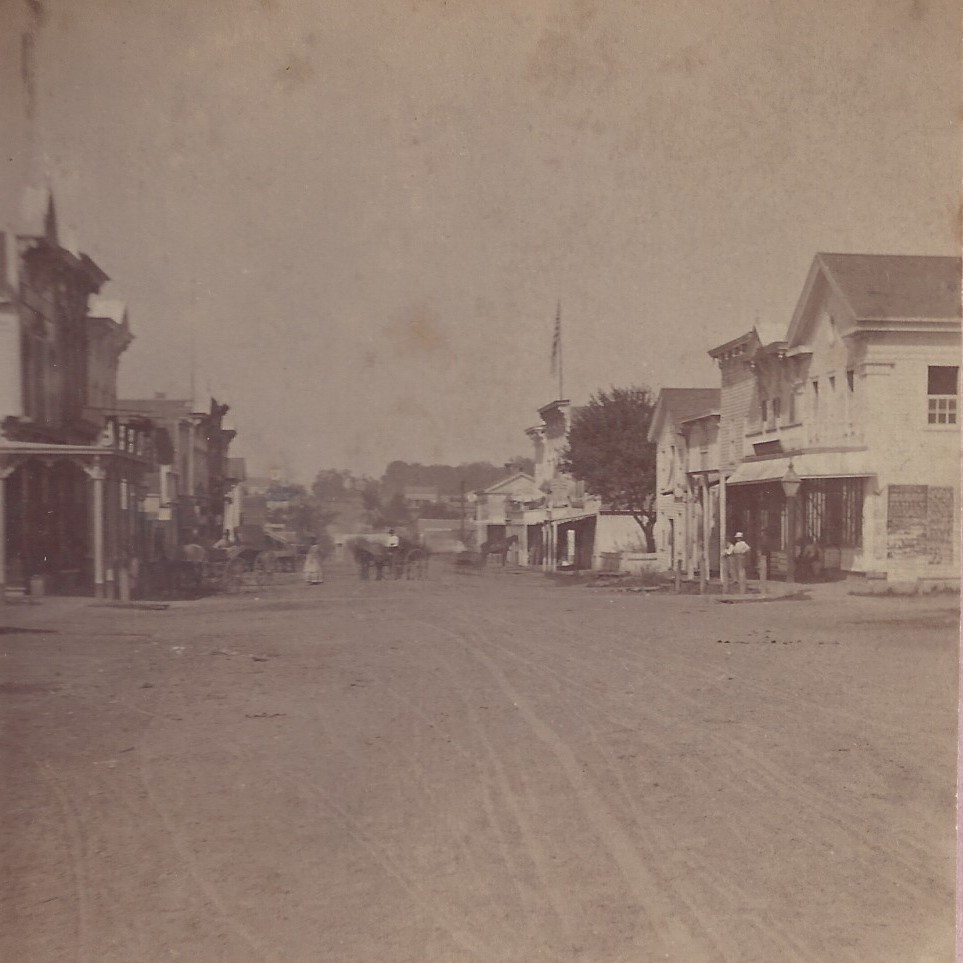
Jacob Kimmel Building
Jacob Kimmel Building (Flushing, Michigan)
The Jacob Kimmel Building, also historically known as Kimmell Building or Corinthian Hall, is a two-story commercial and civic structure located at 137 East Main Street, Flushing, Michigan. Built circa 1848, it is one of the oldest surviving buildings in downtown Flushing and has played a significant role in the town’s civic, commercial, and social history.
History
The building was constructed around 1848 by Jacob Kimmell, a prominent local harness maker and civic leader. Kimmell purchased the two-story wooden structure located at the northwest corner of Main and Cherry Streets. The second floor was converted into a public meeting space known as Corinthian Hall, which became the town’s first public hall. It hosted numerous civic events, including the organization of Flushing’s first fire department and the village’s first elections. In 1878, the hall was the site of the first high school commencement ceremony in Flushing.Template:Cite book In 1891, the building was brick veneered, encasing the original wooden structure. Additional repairs were made in 1931 to the east side of the building. Despite these updates, the original 1848 wooden store remains intact beneath the brick exterior.Template:Cite book The building’s civic role diminished in the late 19th century as newer venues such as Davie’s and Cronk’s Opera Houses were constructed. The second floor was converted into residential space, while the ground floor continued to house various commercial tenants. By 1930, the building was home to Fred A. Goyer’s Barber Shop.Template:Cite book
Architecture
The Jacob Kimmel Building is a rectangular, two-story structure originally built of wood and later brick veneered. It features a modest commercial façade typical of mid-19th-century small-town architecture. The building’s original roofline was altered during renovations, but its core structure remains a rare example of early wooden commercial construction in Michigan.
Civic Use
The building served as a central hub for early Flushing governance. In 1877, the Flushing Village Council rented space in the building for meetings at a rate of $40 per year. Kimmell was responsible for providing heat, lighting, and storage for fire equipment in the rear of the building.Template:Cite book
Preservation Status
Although the building is not currently listed on the National Register of Historic Places, it is recognized by the Flushing Area Historical Society as a significant historical structure. Local historians have noted that the building may one day be restored to reveal its original wooden frame, making it a candidate for future preservation efforts.
References
External Links
Flushing Area Historical Society
See Also
Flushing, Michigan National Register of Historic Places listings in Genesee County, Michigan