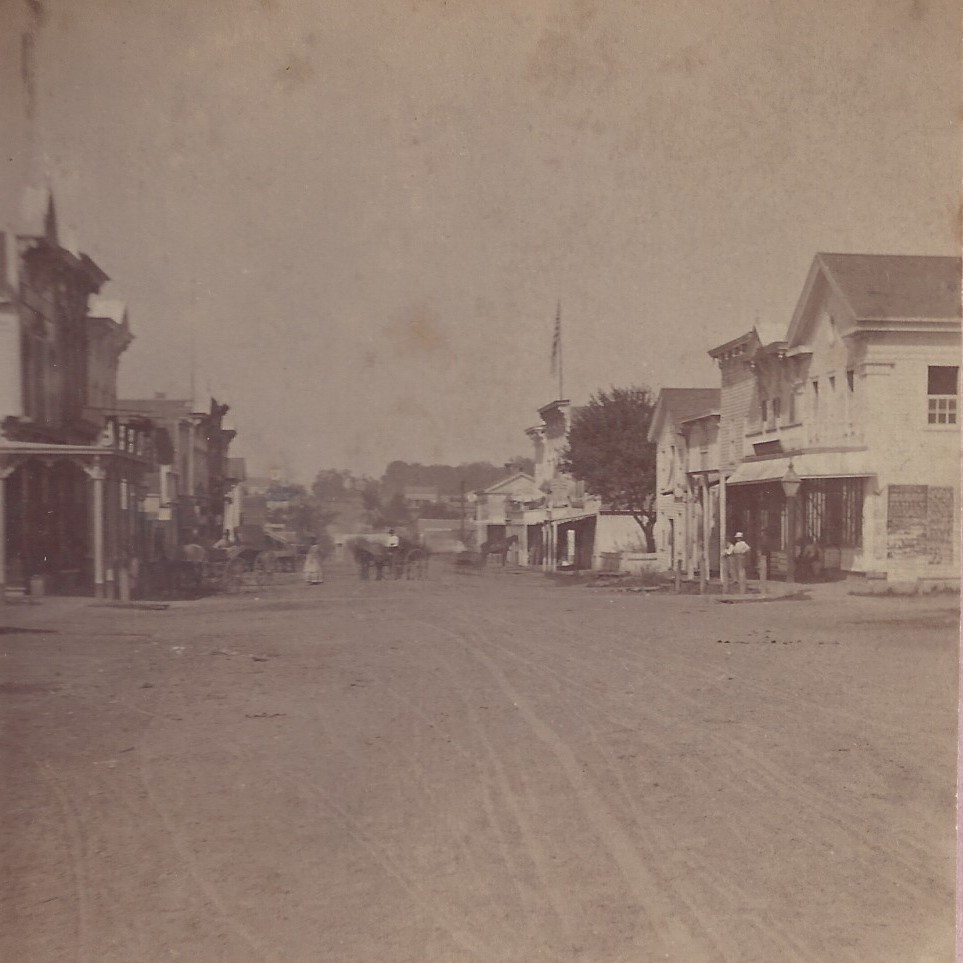
1953 in the Village of Flushing, Michigan
| Position | Name |
|---|---|
| Village President | Robert A. Sellars (until March 1953); John Talsma (from March 1953) |
| Clerk | Arthur Gibbs (until March 1953); Jane Boardman (from March 1953) |
| Treasurer | Harlan Dyball |
| Village Superintendent | Arthur Gibbs |
| Chief of Police | Loren "Bud" Gillespie (until June 1953); Henry H. Beach (from June 1953) |
| Fire Chief | Edwin B. Parks |
| Assistant Fire Chief | Theodore "Tom" Weidenhammer |
| Trustees | George Woodhouse; Ora McCartney; Norman Rossell; Chester Schillman; Herbert Henderson; Harvey McQueen |
Flushing, Michigan in 1953 – The year 1953 was a pivotal period for the Village of Flushing, marked by leadership transitions, major infrastructure decisions, and community growth in the postwar era. The Village Council navigated the complexities of building modern utilities (especially a much-debated sewer system), launched significant road and sidewalk improvements, updated local laws, and engaged citizens in shaping the village’s future. Key events included a change in village administration following the March election, the repeal of a controversial sewer ordinance and introduction of a comprehensive water system ordinance, progress on street paving and public works, enhancements in public safety services, and careful planning for a large civic bequest to benefit the community.
Government and Administration
In March 1953, Flushing’s governance underwent notable changes due to the annual village election. **John Talsma** was elected Village President, succeeding **Robert A. Sellars** who had served the previous two years. The election also brought **Jane Boardman** into office as Village Clerk, replacing Arthur Gibbs (who remained Village Superintendent), while **Harlan Dyball** continued as Treasurer. **Herbert Henderson** joined the six-member Village Council as a new Trustee, alongside re-elected Trustees **George Woodhouse** and **Harvey McQueen**; continuing members **Norman Rossell**, **Chester Schillman**, and **Ora McCartney** rounded out the council. After taking office, President Talsma appointed council committees and key municipal officers for 1953. Notably, in September the council named **W. C. Kasson** as Flushing’s Civil Defense Director, reflecting national civil defense efforts at the local level.
A top priority for the new Council was resolving the village’s long-standing **sanitary sewer project**. Early in 1953, before the election, bids had been solicited and opened for constructing a sewer system and treatment plant under the financing plan established in 1952. However, once in office, President Talsma and the Council took a different approach. They moved to **repeal Ordinance No. 25** – the prior year’s sewer financing law that relied on revenue bonds and user fees – in response to public concerns about its cost distribution. In a special meeting on April 15, the Council unanimously passed **Ordinance No. 30**, a comprehensive new water system ordinance, and scheduled the formal repeal of Ordinance 25 to take effect once the new law was enacted in May. Ordinance 30 updated regulations for Flushing’s waterworks and laid groundwork for future sewer connections. It set rules for protecting water infrastructure, standardized hookup procedures, and codified the village’s water rate schedule. Under Ordinance 30, the quarterly water rates established in late 1952 were maintained – a base fee of $5.00 for the first 15,000 gallons, with tiered per-1,000-gallon charges for higher usage, and double rates for any customers outside village limits. The ordinance also formalized fees for new service connections and disconnections. Importantly, the Council ordered the **discontinuation of the sewer debt service charges** that had appeared on utility bills and arranged refunds for any such fees collected in early 1953. By taking these actions, the Council effectively put the sewer construction on hold and reset the plan to make it more acceptable to residents.
The village leaders did not abandon the sewer initiative; instead, they sought a revised path forward. Councilman Rossell worked with engineers and a State Health Department consultant to explore scaled-down or rerouted sewer plans that might reduce costs. The Council decided to draft a new sewer ordinance and financing proposal for consideration in 1954, giving time to incorporate citizen input and secure more favorable financing (possibly through increased general obligation bonds or state aid). In the interim, attention shifted to ensuring the **water supply** could meet current and future demand. In August, the Council hired **Hansen Engineering** to conduct a detailed water supply survey for $750. By year’s end, village officials were conferring with state experts and companies like Layne-Northern to locate additional well sites and increase water production. This was driven by reports that the existing water plant was nearing capacity on peak days. The careful, staged approach to the sewer and water projects in 1953 demonstrated the Council’s responsiveness to public opinion and its commitment to planning infrastructure thoughtfully.
The Village Council also pursued modernization of local government and modest expansion of its jurisdiction in 1953. In April, it established a **City Charter Study Committee** to investigate the process of converting Flushing from a village to a city. Treasurer Dyball and several residents reviewed other Michigan city charters and discussed potential benefits such as home-rule powers and expanded boundaries. By November, the committee’s findings inclined the Council to give favorable consideration to city incorporation in the future, and the Council formally thanked the members for their work. Meanwhile, the Council approved the **annexation of the Parkview Subdivision No. 1** (a new residential development adjacent to the village) in April, extending village limits for the first time in years and ensuring that municipal services would cover the growing neighborhood. Later in the year, additional annexation proposals were tabled for further study, indicating a cautious but open stance on expansion.
At the same time, the Council dealt with local planning and zoning matters. Early in 1953, a proposal to build a new gas station (Bailey’s Shell service) on East Main Street in a residential zone became a minor controversy. In response, the Council formed a **Zoning Board of Appeals** – comprising two councilmen (McCartney and Schillman) and three citizens – to hear the case. After neighborhood petitions and hearings, the Board recommended upholding residential zoning, and the Council temporarily revoked the gas station’s building permit pending further review. By mid-year, a compromise was reached to allow the station under stricter conditions, illustrating Flushing’s effort to balance development with community wishes. The Council also updated traffic and public safety ordinances: it extended “through street” designations with new stop signs at several intersections, refined downtown parking rules, and in November passed an ordinance prohibiting unattended iceboxes (requiring doors to be removed) as a safety measure to protect children. These actions, though less headline-grabbing than infrastructure debates, were important for day-to-day governance and quality of life.
Infrastructure and Public Works
Infrastructure improvements accelerated in 1953 as Flushing invested in better streets, sidewalks, and water facilities. Even though the sewer construction was postponed, the village moved ahead with a broad program of **street paving and sidewalk installation**. In July, the Council opened bids and awarded contracts for asphalt surfacing of roads, concrete sidewalk construction, and even the widening of a portion of Main Street. B&L Paving Company was hired for asphalt work at a competitive unit price, and contractor R.H. Smith was engaged to pour new sidewalks at $0.40 per square foot (with Blackford Brothers Inc. as an alternate contractor if needed). Blackford Brothers also won the job of widening East Main Street through the downtown business block for about $4,975. This project added pavement width on one side of Main Street to improve traffic flow and parking in the village’s commercial center, a significant upgrade for the busy intersection of Main and Saginaw Streets.
Throughout the summer and fall, residents witnessed orange construction barricades and fresh pavement in many parts of Flushing. Crews laid new **asphalt pavement** on sections of key streets: for example, portions of South Cherry Street, Hazelton Street near the new school, parts of Terrace Drive and Mill Street, and the east end of Beatrice Street were blacktopped to eliminate dust and mud. At the same time, the village built **concrete sidewalks** in areas that previously lacked pedestrian paths. Priority was given to routes near schools and high-traffic pedestrian areas. After a well-attended public hearing in October, the Council approved a plan to install sidewalks leading to the new elementary school on Coutant Street – specifically along the north side of Coutant and connecting down Hazelton Street – with costs split between the village (40%) and adjacent property owners (60%) via special assessments. Other neighborhood sidewalk petitions were also considered; many homeowners were eager to add sidewalks for safety and convenience. By the end of 1953, Flushing had greatly expanded its sidewalk network, improving walkability and modernizing the look of its residential streets. The combination of paved roads and new sidewalks was a visible sign of progress and responded to citizens’ calls for better infrastructure.
Ensuring an adequate **water supply** for Flushing was another critical task. The water system, originally built in the 1930s, was straining under increased demand as the population grew. In 1953 the Council authorized several steps to boost water capacity and reliability. Early in the year, new water mains were extended to serve developing areas, including an extension along Flushing Road and into the newly annexed Parkview subdivision. Later, Superintendent Gibbs oversaw looping dead-end water lines (for example, connecting Gerald Street’s main into McKinley Road) to improve flow and eliminate stagnant spots. Fire hydrants were added in newly built neighborhoods, with the village agreeing to pay an annual hydrant rental fee for each new installation under the provisions of Ordinance 30. A pivotal move came in December when engineers warned of a “critical water situation” looming if new sources were not secured. Acting quickly, the Council contracted Layne-Northern to drill test wells in search of additional groundwater. They also negotiated a short-term lease on a tract of land owned by the Parsons family, giving the village an option to buy the property if it proved suitable for a new well field or water tower site. By taking these proactive measures, Flushing positioned itself to meet future water needs and support any eventual sewer system with ample water pressure.
Smaller-scale improvements in public works also continued. The municipality purchased a new **police patrol car** in January – a 1953 Chevrolet outfitted with a siren and spotlight – replacing an older cruiser to improve policing effectiveness. In the Water Department, the elevated storage tank (“water tower”) was scheduled for repainting and maintenance to preserve its integrity. The Department of Public Works acquired tools to maintain infrastructure, such as a mechanical root-cutter for clearing tree roots from sewer lines and a serviced road grader for street maintenance. There was also attention to smoother traffic management: a flashing caution light was installed at Main and Seymour, one of Flushing’s busiest corners, to reduce accidents. Finally, to eliminate confusion and duplicate street names (an increasing issue for mail delivery and emergency response), the Council approved several **street name changes**. Most prominently, the portion of Saginaw Street within the village was renamed **McKinley Road** (to avoid confusion with Saginaw Street in Flint), and other small streets were renamed or clarified, such as Roman Road becoming Chestnut Street and the eastern segment of Henry Street being designated as **Wakeman Street** near the new school. These changes, though requiring residents to adjust, were part of organizing the village for future growth.
Public Services and Safety
Flushing’s public safety and municipal services were strengthened in 1953. The **Police Department** saw significant reorganization. Village Marshal **Loren “Bud” Gillespie** continued as the de facto police chief through the first half of the year, but with Flushing’s population and traffic increasing, the Council decided to expand and professionalize the force. In June, they hired **Henry H. “Hank” Beach** as the new Chief of Police. Chief Beach, a veteran law enforcement officer, assumed command and brought fresh energy to the department. Under his leadership, the village began utilizing auxiliary police officers more regularly, especially for busy events like parades and festivals. In December, Flushing made a technological leap by installing a **State Police radio receiver** in the police car and at the station. This linked Flushing’s officers with the statewide police communications network, vastly improving response times and coordination with neighboring agencies. By the end of 1953, the police department consisted of Chief Beach, officer **James Osterman**, newly hired patrolman **John Fitzgerald** (who replaced a departing officer and started at $3,500 per year), and a few part-time or reserve officers. They focused on enforcing traffic rules (with the Traffic Violation Bureau continuing to handle minor tickets efficiently) and community policing in what remained a low-crime village. The additions of personnel and modern equipment in 1953 ensured that Flushing’s police could effectively serve and protect a growing community.
The **Flushing Volunteer Fire Department**, led by Chief **Edwin “Ed” Parks**, also kept pace with the times. In 1953 the department responded to routine fire calls (no major fires occurred in the village that year) and continued its mutual aid relationships with surrounding townships. Firefighters trained for both firefighting and civil defense scenarios; the Council obtained a new two-way radio system for the fire engine with funding assistance from Genesee County and federal Civil Defense grants. This radio, installed mid-year, allowed the fire crew to communicate directly with police and civil defense headquarters during emergencies – a significant upgrade from relying on telephone or siren alerts alone. The department remained a volunteer unit, but the village recognized their value by providing insurance and covering expenses for training. As usual, the firefighters hosted the popular **Firemen’s Carnival** in June 1953, a multi-day summer fair that drew crowds for rides and games behind the Community House. The Council waived all license fees for the event and many residents turned out, knowing proceeds would help buy fire equipment. Another boost to emergency services came from the generosity of a local resident: in October, **Hiles B. Martin** donated a fully equipped ambulance to Flushing’s Civil Defense program. The Council formally accepted the ambulance and entrusted it to the Fire Department’s care. This new vehicle began serving the community immediately for first-aid runs and patient transport, as Flushing had no hospital of its own. By the end of 1953, President Talsma praised both the police and fire services, urging the Council to consider further expansion in the next budget to meet the needs of an “expanding community.”
Public utilities and sanitation operated smoothly through the year, with a few improvements. The village’s weekly garbage collection continued under contractor Frank Dunning, and the Council petitioned the state for an exemption from a newly enacted law that would have imposed costly licensing on small-town garbage haulers (an exemption that was typically granted in these cases). The Street Department managed a heavier-than-usual snowfall in winter 1952–53, keeping roads passable, and in spring the Council organized its customary **Clean-Up Week** to encourage residents to clear yard waste and junk, which the village then hauled away for free. The Water Department, aside from its expansion efforts, was formally consolidated under Superintendent Gibbs’s authority when the Council passed a code amendment clarifying that the Village Superintendent had direct oversight of the water and street operations. This affirmed the managerial structure and Gibbs’s role as a key figure in daily operations. One brief controversy arose in December when President Talsma requested Superintendent Gibbs’s resignation due to unspecified performance issues; the Council, after deliberation, unanimously refused to act on this request, demonstrating confidence in Gibbs’s continued leadership. This incident aside, the year was marked by cooperative relations among village staff, elected officials, and volunteers who together maintained Flushing’s public services effectively.
Community and Civic Life
Flushing’s community life in 1953 was vibrant and forward-looking, boosted by civic improvements and citizen involvement. Early in the year, the village received a generous **donation of riverfront land** from local residents Bernard and Margaret Bueche, intended to expand the village park system. The Council gratefully accepted the deed to this scenic Flint River property (near today’s Riverview Park) and began initial cleanup, envisioning it as a future public park. Meanwhile, one of the most significant opportunities came from the large financial bequest left by the late **Max D. Tucker** in 1952. Throughout 1953, various ideas circulated on how to utilize Tucker’s $100,000 gift for the public good. In August, the Flushing Community Council (an umbrella group of civic organizations) presented a comprehensive proposal for the **“Tucker Legacy” projects**. Key suggestions included developing the new riverside park with amenities, constructing a community bandshell or memorial structure, and possibly establishing a new library or civic center building. To study these ideas, President Talsma formed a special **Tucker Memorial Committee** of citizens (announced in September) to make recommendations on using the bequest. By the end of the year, the committee was considering options like a modern library or a combined community center and was coordinating with the Community Council. The Tucker bequest remained untouched in the bank, accruing interest, as the village took a deliberate approach to ensure it would be spent on a “fitting and lasting” legacy.
Youth and educational initiatives were strongly supported in 1953. The Flushing School District opened the new **Central Elementary School** on Coutant Street in September. This modern school building was a response to the postwar baby boom and relieved crowding at existing facilities. The Village smoothed the way by providing water hookups and arranging for new sidewalks (as mentioned earlier) so students could walk safely to the school. Flushing High School students and staff participated in civic events too: for example, the school band marched in the Memorial Day parade, and student groups took part in an October program planting trees in the parks. The Village Council made its first-ever direct appropriation to support the public library, voting in August to contribute **$300 to the Flushing Township Library** to help extend hours and services (a close 3–2 vote signaled the start of village financial support for the library, which primarily served village residents). Local scouting organizations and youth clubs also approached the Council with projects—such as a Boy Scouts civic pride campaign—and received enthusiastic backing. These efforts underscored the community’s commitment to investing in its younger generation.
Flushing’s civic organizations and businesses remained very active in 1953, often in partnership with the village government. The **Chamber of Commerce** hosted the annual Flushing Homecoming Festival, which included a parade, carnival rides downtown, and class reunions. The Council supported this by providing facilities and waiving certain fees, recognizing the festival’s value in boosting community spirit and local commerce. A group of south-end merchants, noticing increasing automobile use, petitioned for a public parking lot to serve the Main Street shops. The Council responded by approving the grading of a new **municipal parking lot** behind the south side of Main Street, with costs shared between the village and adjacent store owners. This project, completed before the holiday shopping season, made it easier for shoppers and relieved some congestion on Main Street.
Voluntarism and neighborly cooperation were evident throughout the year. The American Legion and VFW organized the Memorial Day ceremonies and a Veterans Day observance, with strong attendance and participation from officials and schoolchildren. Churches and service clubs collaborated on charity drives; for instance, the council-endorsed **Red Feather campaign** (an early form of United Way) raised funds for local health and welfare charities, and Flushing exceeded its suggested goal. Holiday traditions were kept modest yet meaningful: the Christmas decorations downtown were few (electricity was conserved due to limited wiring capacity), but the community held a well-attended Christmas Eve carol sing downtown and ensured that the new Civil Defense ambulance was symbolically parked with a big bow as a “gift” to the town. These stories of community life in 1953 show a village that, while rapidly modernizing, cherished its close-knit, cooperative character.
Finances and Notable Developments
Financially, Flushing maintained stability and even growth in 1953, while laying groundwork for major expenditures ahead. The Council approved a 1953–54 budget of approximately $102,000, slightly higher than the previous year, to account for street and utility projects. Impressively, the property tax **millage rate was held at 15.5 mills**, unchanged from 1951 and 1952, thanks to new properties added to the tax rolls and prudent spending. The village’s assessed valuation increased due to annexations and new construction, allowing the same tax rate to generate more revenue. Regular financial reports showed the village meeting its obligations on time, paying for the infrastructure contracts and ongoing services without incurring deficits. In September, the Council granted a 5% **cost-of-living raise** to all full-time village employees, reflecting the improved fiscal situation and recognizing inflation pressures. This raise – the second modest wage increase in as many years – helped retain skilled staff in the police, water, and street departments.
One of the most significant financial developments was the careful stewardship of the **Tucker estate bequest**. The $100,000 gift received in late 1952 remained in reserve throughout 1953 as the Council and community deliberated on its use. By keeping the principal invested in local banks at interest, the village not only honored the promise to use the funds wisely but also slightly boosted its interest income. The Tucker Memorial Committee’s work, as mentioned, would shape plans for this money in the coming year, meaning that a major capital project (such as a new library, park, or civic building) loomed on the horizon backed by this funding. In the meantime, the Council used traditional financing for other projects: for example, the street paving and sidewalk work was paid partly from the village’s Act 51 highway funds and partly from a small bond anticipation note (short-term loan) that was repaid once property tax and state revenue-sharing money came in.
The Council also continued to protect the village’s assets and future finances through prudent measures. In June, it renewed comprehensive **insurance coverage** on all municipal buildings (Community House, Fire Hall, water plant, and garage) and vehicles, adjusting policies to ensure full coverage value. The village’s debt remained low; aside from the still-unused sewer bonds, Flushing had only minor outstanding loans. The decision to pause the sewer project meant delaying major expenditures, which in turn kept the village’s financial position strong in 1953. At the very end of the year, the Council did authorize preliminary spending on water system expansion, such as the test well drilling and land option, viewing those as urgent investments.
In summary, **1953** was a transformative year for Flushing. The new village leadership demonstrated responsiveness by revisiting the sewer plan and involving citizens in major decisions, thereby preserving public trust. In place of immediate sewer construction, the year saw tangible improvements in roads, sidewalks, and water capacity that enhanced everyday life for residents. Public services were modernized with additional staffing, better equipment, and integration into broader networks (police radio, civil defense). The community’s social capital – exemplified by volunteerism, local philanthropy, and active civic groups – remained robust. The village also began to envision bigger changes, from the possibility of becoming a city to creating lasting memorials with the Tucker funds. All these developments in 1953 laid a strong foundation for Flushing’s continued progress. The events of the year are remembered as a time when the village balanced prudent governance with forward-looking action, adapting to growth while maintaining the cooperative spirit that defined its small-town character.