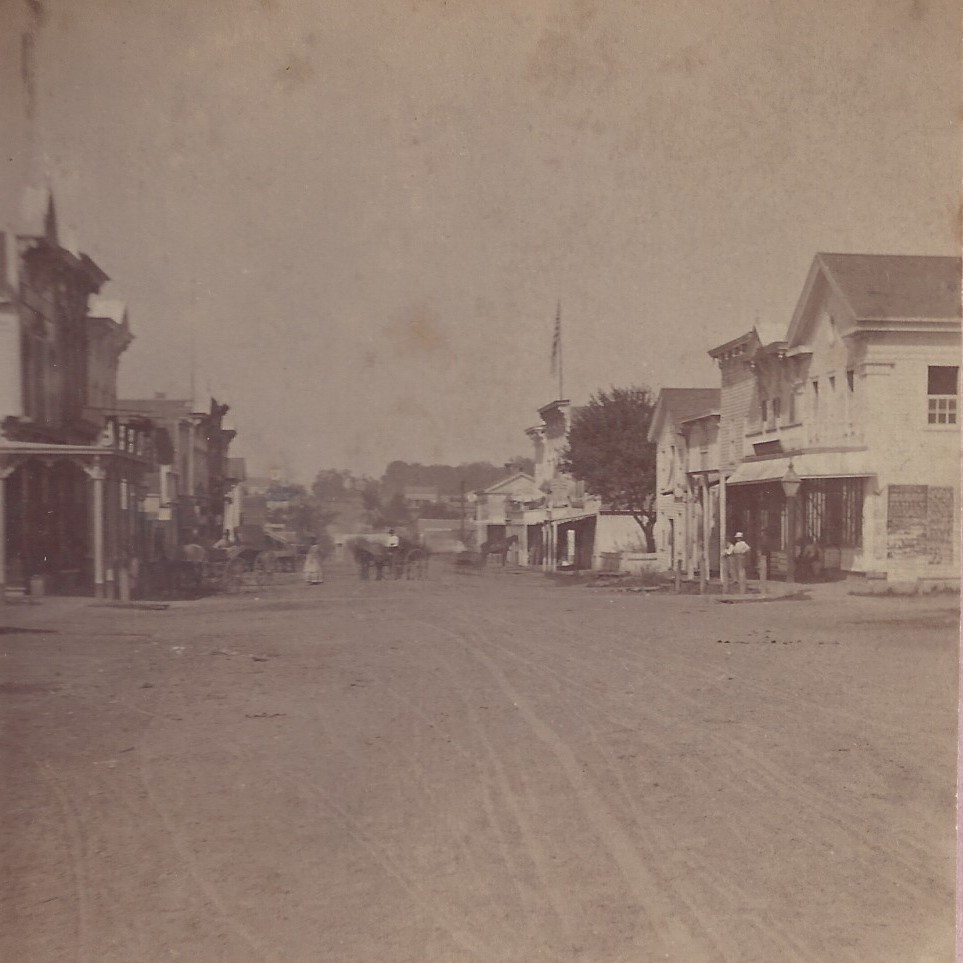
1956 - 1957 in the Village of Flushing, Michigan
| Position | Name |
|---|---|
| Village President | Frederick W. "Fred" Hertrich |
| Village Manager | Richard D. Riley (appointed Jan. 1955) |
| Clerk | Jane Boardman (became Jane Price in Oct. 1955) |
| Treasurer | Harlan Dyball |
| Chief of Police | Henry H. Beach |
| Fire Chief | Edwin B. "Cap" Parks |
| Trustees (1956–57) | George Woodhouse; Evart Scott; Harvey McQueen; Bernard "Barney" Bueche; Chester R. Todd; Harold O’Brien |
Overview
The period **1956–1957** was transformative for the Village of Flushing. It witnessed the culmination of vital infrastructure projects to support the village’s rapid postwar growth. Flushing expanded its water supply system to full capacity and made a decisive commitment to construct a long-awaited sanitary sewer system, aided by a substantial federal grant. The Village Council navigated complex decisions, including whether to join a county-run sewer network or build an independent treatment plant. Administratively, Flushing continued modernizing its government after hiring its first village manager in 1955, and updated local ordinances to manage new development. The village boundaries were extended through annexation of adjacent subdivisions, and a range of community initiatives – from the opening of a public swimming pool to inter-governmental exchanges – marked these years as a dynamic era for Flushing.
Government and Administration
Village President **Fred Hertrich** led the Council through 1956–57, supported by an experienced team of officials. **Richard D. Riley**, appointed in January 1955, continued as Flushing’s first **Village Manager**, overseeing day-to-day operations and coordinating capital projects. Under this council–manager system, all department heads reported to Manager Riley, bringing efficiency and professionalism to village administration. Clerk **Jane Boardman** (who became **Jane Price** after her marriage in late 1955) and Treasurer **Harlan Dyball** remained in office, ensuring continuity in record-keeping and finances.
The Village Council focused on strategic planning and regulatory updates to guide Flushing’s growth. In 1956, it established a formal **Planning Commission** to advise on long-term development issues, including the possibility of converting Flushing from a village to a city. With input from the Chamber of Commerce and visiting municipal experts, the Council explored city incorporation, though it tabled the matter to concentrate on pressing infrastructure needs. To manage a surge of new construction, Flushing enforced its **Subdivision Control Ordinance** (passed in 1955 as Ordinance No. 36) requiring developers to provide paved streets, sidewalks, and utilities in new subdivisions. In 1956–57, the Council further strengthened these regulations by requiring developers to post bonds or financial guarantees for public improvements, and by adopting **Ordinance No. 37** which allowed the village to levy special assessments for water main extensions in developing areas. In late 1956, **Ordinance No. 39** was enacted to regulate street and sidewalk excavations, mandating permits and proper restoration of any cuts in public rights-of-way.
Flushing’s boundaries expanded significantly during this period. Early in 1956, the village petitioned Genesee County to annex nearby residential areas to accommodate new housing demand. By mid-1956, the Council approved the annexation of **Granrich Estates Nos. 1 & 2** after negotiating infrastructure agreements with developer Granville “Red” Auker. (Auker even offered to donate a well site in the subdivision if a suitable water source were found on his property.) The village also agreed to annex a 20-acre tract east of Deland Road (the future **Green Meadows** subdivision) at the owner’s request, and to incorporate an individual parcel on George Street whose owner sought to connect to village utilities in exchange for joining the village. The village attorney was directed to prepare the necessary petitions and legal descriptions, and these annexations were subsequently approved by the Genesee County Board of Supervisors. By extending village limits, Flushing added dozens of new homes and future taxpayers, solidifying its status as a growing suburban community.
Water System Expansion
Having resolved the immediate water shortage in 1954–55, Flushing devoted 1956–57 to fine-tuning and expanding its water supply infrastructure to meet future demand. The new 500,000-gallon **elevated water tower**, completed in 1955, proved its worth by maintaining strong pressure even during peak summer usage. In 1956, the village brought a second deep well online on the east side (on the Dalton property) to augment its primary well. A brick wellhouse was constructed at the Dalton site, and high-capacity pumps and chlorinators were installed, effectively doubling Flushing’s water production capacity. With these improvements, the village could comfortably serve existing residents and new subdivisions being annexed, while also providing greater fire protection (the number of fire hydrants in the system significantly increased, with hydrants placed in newly developed streets and near schools).
To finance additional enhancements, Flushing cleverly utilized surplus bond funds. The water system expansion, funded by $350,000 in revenue bonds (Ordinance No. 35 of 1955), had come in under budget. In February 1957, President Hertrich obtained permission from the Michigan Municipal Finance Commission to reallocate $30,000 of unspent bond proceeds toward further improvements. The Council promptly applied these funds to priority projects: extending a 6-inch water main to the newly platted **Labian Terrace** subdivision (honoring a prior commitment to partially refund the developer’s costs), drilling and testing two more **test wells** in outlying areas to search for additional water sources, securing options on prospective well sites, and purchasing new pumps and materials for future water main extensions. By the end of 1957, Flushing’s water supply system was not only substantially complete but had resiliency and room to grow. The village’s foresight in using bond surpluses for proactive improvements meant that residents enjoyed an uninterrupted supply of clean water, and the water utility’s finances remained healthy with all bond obligations being met from user fees.
Sewer System Development
The years 1956–1957 were a watershed for Flushing’s **sanitary sewer** initiative. After decades of reliance on septic tanks and intermittent debates over sewers, the village moved decisively to establish a municipal sewer system. Early in 1956, Flushing received word that it was eligible for a significant federal grant under the new Water Pollution Control program – an award of **$136,646** earmarked for the construction of sewage treatment facilities (this sum represented roughly 10% of all sewer grant funds allocated in Michigan, reflecting the urgency of Flushing’s need). However, the grant came with a strict condition: the village had to complete all planning, secure local funding, and start construction contracts by mid-1957.
Faced with this opportunity and deadline, the Council weighed two options: build an independent Flushing sewage treatment plant or participate in a proposed **Genesee County regional sewer system**. Throughout 1956, President Hertrich and the Council engaged in extensive discussions with the County Metropolitan Sewer Committee and neighboring townships. They attended county-led meetings and invited county representatives to Flushing to debate the merits of a regional plan versus a village plan. County officials argued that a larger regional plant (potentially serving Flushing, Flint Township, and western Flint) might achieve economies of scale, but they could not guarantee when such a facility would be built or how costs would be shared. Meanwhile, Flushing was under a State Health Department order to stop dumping raw sewage into the Flint River and have a treatment system operational by **January 1, 1958**.
In January 1957, the Council formally resolved that if a timely regional solution was not forthcoming, Flushing would “go it alone” using the federal grant. They instructed the village engineer (Pate & Hirn, with local engineer Arne Hustvedt) to finalize plans for a Flushing sewer system with a treatment plant, and retained bond attorneys (Miller, Canfield, Paddock & Stone) and financial consultants to prepare the necessary bond issues. On February 19, 1957, a special public forum was held at the Community Center where Council members, county officials, and citizens discussed the costs and feasibility of the two approaches. The engineer presented a cost comparison showing that—with the federal grant covering about one-third of the expense—Flushing could build its own sewer **interceptor lines and treatment plant** for a similar or lower cost than joining a distant county system. The Council also noted that waiting on the county could jeopardize the federal funds due to the tight May 15, 1957 grant deadline. By the end of that meeting, the Council reached a consensus: Flushing would proceed with its **own sewer system**, but keep the door open to connect with a regional network in the future if it became available.
The Council moved quickly to meet the grant requirements. At a special meeting on February 25, 1957, it passed a resolution formally committing to construct a sewage treatment system utilizing the federal grant and pledged “every effort” to file the complete application by May 15, 1957. The village engineer was directed to submit final sewer plans to the State Health Department for approval, and bond advisors were authorized to structure the financing plan. On March 8, 1957, Flushing held a well-attended **town hall meeting** to inform residents of the sewer project and financing. Later that spring, village voters overwhelmingly approved the issuance of sewer bonds (as a legal formality), demonstrating public support for the project. By May 1957, Flushing had completed its grant application with all required elements: engineering plans, a Council resolution, evidence of voter approval, and a financing strategy. The State Water Resources Commission approved the project just in time, allowing Flushing to secure the $136,646 federal grant.
While these preparatory steps were underway, Flushing also tackled interim sewer improvements and set up the financial mechanism to pay for the new system. In late 1955 and early 1956, the village had installed short sanitary sewers in two downtown alleys (to serve commercial buildings) and made storm drainage improvements on **Vickery Drive** and **Sayre Street**. The costs of these localized projects—about $32,000 for sanitary sewers and $21,000 for storm drains—were assigned to the benefiting properties via **Special Assessment Districts**. In January 1957, after public hearings, the Council confirmed the special assessment rolls for these initial projects and decided to borrow against the future payments. In April 1957, Flushing issued **Special Assessment Bonds** totaling **$31,900** (sanitary sewer) and **$21,000** (storm sewer) with a 4.25% interest rate, maturing in five years. These bonds, backed both by the special assessment revenue and the full faith and credit of the village, provided immediate funds to reimburse the village treasury. The successful sale of these bonds (at par and a reasonable interest rate) reflected confidence in Flushing’s fiscal management and ensured that interim sewer work did not hamper the village’s cash flow.
By the end of 1957, Flushing had awarded contracts for its comprehensive sewer system. The plan included miles of sanitary sewer mains laid under village streets and the construction of a primary **sewage treatment plant** on village-owned land along the Flint River. (The plant was designed as a primary treatment facility with settling tanks and chlorination, with capacity to be expanded or connected to a future regional plant if needed.) Groundbreaking occurred in late 1957, and the project entered full construction in 1958. The Council’s bold actions in 1956–1957 – securing a federal grant, choosing the independent path, and arranging innovative financing through revenue and assessment bonds – finally brought Flushing into the modern era of wastewater management. This accomplishment addressed both public health concerns and the needs of a growing population, ending the long struggle to provide sewers for the village.
Streets and Public Works
Flushing made steady improvements to its streets, lighting, and other public works in 1956–57, keeping pace with expanding development. The village continued its annual cycle of road maintenance and upgrades. In 1956, the unpaved portion of **Coutant Street** (particularly near the new Central Elementary School) was paved and outfitted with sidewalks, completing a safe route for students walking to school. Sections of **South Cherry Street** were widened and resurfaced to handle heavier traffic connecting to the south end subdivisions. Other residential streets that had recently come into the village – such as parts of **Terrace Drive, Hazelton Street, Beech Street,** and **Henry Street** – were graded and treated with calcium chloride or freshly blacktopped to reduce dust and mud. The village’s 1947 road grader continued to maintain gravel streets, and in late 1957 the Council began exploring options with the Genesee County Road Commission to acquire a newer model or partner on road projects.
To enhance road safety, Flushing upgraded its **traffic control and street lighting**. The flashing traffic signal at Main and Cherry, installed in 1954, was supplemented in 1956 by a second signal at Main and Seymour Road (M-13) – one of the village’s busiest and most accident-prone intersections. These signals operated as full stop-and-go lights during peak hours and flashed caution late at night. Responding to concerns about nighttime visibility, the village worked with Consumers Power to install modern mercury-vapor **streetlights** in areas of new construction, including **Labian Street, Warren Avenue, and Mill Street**. By the end of 1957, nearly all of Flushing’s developed neighborhoods had street lighting, a marked change from a decade earlier. The Council also approved new “No Parking” and directional signage where needed – for instance, implementing a no-parking zone along Main Street by the former golf course (used by residents for winter sledding) and posting “No Dumping” signs to deter vandalism in public parks.
In late 1956, the Council passed **Ordinance No. 39**, a comprehensive regulation requiring permits and proper restoration for any excavation in public streets or sidewalks. This ordinance was prompted by the flurry of utility work (water and sewer line installations) that risked leaving roads in poor condition. Under the new rules, contractors and utility companies had to post a bond, obtain a permit before digging in the right-of-way, and restore pavement to village standards or bear the cost of the village doing so. This policy protected the substantial investment in new pavement and helped ensure that freshly improved streets were not immediately degraded by uncoordinated trenching.
Another aspect of public works during 1956–57 was the modernization of **waste collection and disposal**. The village’s experiment with contracted weekly garbage pickup (started in 1955) was continued and expanded. By 1957, nearly all Flushing households were being served by a private garbage hauler under village contract, at a cost of about 10 cents per week per home. This service greatly reduced backyard trash burning and illegal dumping, contributing to cleaner alleys and a healthier environment. The old open dump site on Seymour Road, which had been closed and covered, was monitored and the Council explored establishing a more sanitary landfill site outside the village or collaborating with the county for regional refuse disposal.
The Department of Public Works also dealt with routine issues: clearing snow (with new equipment making for faster snow removal in the winters of 1956–57), trimming trees overhanging streets, and repairing village buildings. In 1956, the DPW repainted the interior of the Community House (village hall) and improved heating in the fire station and water plant. The Council even discussed an “amusement tax” and a local liquor-by-the-glass ordinance as potential revenue sources for public projects (though these ideas were only exploratory). Fundamentally, Flushing’s approach to public works in 1956–57 was proactive and preventative – ensuring that infrastructure quality kept up with growth and that new problems (like increased traffic or utility cuts) were managed before they turned into crises.
Community and Civic Life
In addition to physical infrastructure, 1956–57 saw advancements in Flushing’s community amenities and civic engagement. The crown jewel was the completion and opening of the **Tucker Memorial Pool** in 1956. After a year of construction funded by the $100,000 bequest of Max D. Tucker, the outdoor swimming pool and its adjacent bathhouse were officially dedicated in July 1956. Hundreds of residents turned out for the opening ceremony, and a bronze plaque was unveiled commemorating Mr. Tucker’s generosity. The pool immediately became a focal point of summer life in Flushing. The Flushing Community Council sponsored free children’s swimming lessons, and the pool hosted school swimming classes and community “family swim” nights. By 1957, the Tucker Pool had logged thousands of visits and was credited with providing local youth a safe, supervised place for recreation. In the fall of 1957, the remaining balance of the Tucker fund was used to pave the pool’s parking lot and add landscaping, completing the project as a lasting legacy to the donor and the community.
Flushing’s civic organizations remained very active. The **Flushing Chamber of Commerce** in 1956 partnered with the village to launch the “**Avenue of Flags**” program: on national holidays and special occasions, veterans from VFW Post 5666 placed dozens of American flags on holders along Main Street, a patriotic display that became a beloved tradition. The Chamber also revived the annual **Homecoming Festival** – an August event featuring a parade, live music, and alumni reunions that drew former residents back to town. In 1957, Homecoming included a historical exhibit at the Community Center marking the 80th anniversary of Flushing’s incorporation (1877–1957), organized by the Flushing Area Historical Society. Flushing’s volunteer **Fire Department** continued to host its summer carnival in late June each year, using the proceeds to buy new equipment (in 1956 they purchased additional hose and in 1957 set aside funds for two-way radios in fire trucks). The carnival, complete with ferris wheel, cotton candy, and bingo games, was a highlight for families and raised the firemen’s public profile.
The village also participated in inter-governmental outreach. On May 21, 1956, Flushing took part in Michigan’s “**Mayor Exchange Day**.” President Hertrich swapped places for a day with the president of the Village of Kingsley, Michigan. Flushing welcomed Kingsley’s officials, showing off local institutions like the new water plant and high school, while President Hertrich spent the day in Kingsley observing their operations. This exchange, covered by the local press, allowed both communities to share ideas and foster goodwill.
Another focus was improving public safety and administration. The police department, led by Chief **Henry “Hank” Beach**, expanded to three full-time officers in 1956 to provide round-the-clock coverage. The Council purchased a new Ford police cruiser in 1957 (trading in the old one) and equipped it with a state police radio receiver, linking Flushing’s patrolmen to county and state law enforcement communications. Chief Beach, who had moved into the village to meet residency requirements, instituted more rigorous traffic patrols in response to resident complaints about speeding on neighborhood streets like Park Street and Stanley Road. The Council’s Police Committee clarified department expectations in a written directive to the Chief in early 1957, the first time such a formal communication was issued, outlining duties ranging from traffic enforcement to property checks. Additionally, the village updated its civil defense preparations: in 1957, the Council purchased a 300-watt portable generator and auxiliary radio equipment for use in emergencies, and it reorganized the local Civil Defense board with new appointments and training drills (these measures were partly funded by state and federal civil defense grants during the Cold War era).
Overall, the spirit of community in 1956–57 was one of progress and pride. From infrastructure achievements to vibrant civic events, the people of Flushing worked together to improve their quality of life. The completion of crucial water and sewer projects was celebrated not only for its practical benefits but also as a reflection of Flushing’s ability to accomplish big goals through cooperation and forward-thinking. These years laid the groundwork for Flushing’s continued prosperity and transformation, as the village grew in population, modernized its services, and strengthened its sense of identity as a close-knit yet progressive community.
Financial Highlights
Flushing managed its finances judiciously through 1956–57, balancing ambitious capital investments with stable fiscal policies. The **1956–57 budget** was set at $204,440.50 – the largest in village history to that point – and the property tax rate was **raised from 15.5 to 16.5 mills** (the first millage increase in over a decade). This modest hike, coupled with a growing tax base from annexations and new construction, generated sufficient revenue to cover expanded services (such as the new Village Manager’s salary and additional police patrols) and increased operating costs. By mid-1957, the village’s taxable valuation had climbed significantly, easing pressure on individual taxpayers even with the higher rate.
For capital projects, Flushing made heavy use of bonds and grants to avoid overburdening local finances. The water system expansion was funded by revenue bonds repaid by water fees, and as of 1957 those bonds were being serviced on schedule with robust income from the larger customer base. In fact, strong water revenue allowed the village to pre-pay interest and still have surplus funds for reinvestment in the system. The town’s judicious bond management was evident in the State Finance Commission’s consent to repurpose surplus water bond funds for new improvements in 1957 – a rare approval that underscored Flushing’s reliability in project execution.
The sewer initiative required creative financing. Anticipating the need for local matching funds alongside the federal grant, the Council planned a **revenue bond issue** for the sewer project (to be repaid from future sewer user charges) and interim **special assessment bonds** for initial components. In April 1957, Flushing successfully sold $31,900 in sanitary sewer special assessment bonds and $21,000 in storm sewer special assessment bonds at a favorable 4.25% interest rate. These short-term bonds, maturing in 1961 and backed by the full faith and credit of the village, provided immediate capital to cover the alley sewers and drain improvements that were assessed to property owners. The sale drew multiple bids, indicating investor confidence in Flushing’s creditworthiness. Later in 1957, once sewer construction contracts were ready, the village prepared to issue approximately $320,000 in general sewer revenue bonds (Ordinance No. 38 and related resolutions outlined this plan). Voters had already authorized these bonds in principle, and the Michigan Municipal Finance Commission gave preliminary approval, contingent on the federal grant. By aligning federal aid, special assessments, and bond financing, Flushing ensured that the sewer project’s costs were spread out over time and across various funding sources, minimizing immediate impact on taxpayers.
In day-to-day operations, the village maintained a healthy financial position. Annual audits for 1956 and 1957 reported that Flushing was living within its means, with all departments remaining near or under budget. The village even managed to boost its general fund reserves slightly by the end of 1957 despite the flurry of project expenditures, thanks to diligent cost control and the infusion of grant money. Furthermore, the Council anticipated future expenses by setting aside dedicated reserves – for example, creating a “Fire Equipment Replacement Fund” in 1957 fed by a portion of hydrant rental fees, and segregating the new sewer Tap-In fees (once Ordinance No. 38A on connection fees was passed) to help maintain the sewer system.
In summary, 1956–1957 exemplified Flushing’s balanced approach to progress: the village boldly invested in infrastructure and improvements, while carefully managing debt, securing outside funding, and planning for long-term financial sustainability. These prudent fiscal practices, combined with community support for necessary tax increases and bond issues, left Flushing well-prepared to handle the rapid growth and civic enhancements that characterized the late 1950s.