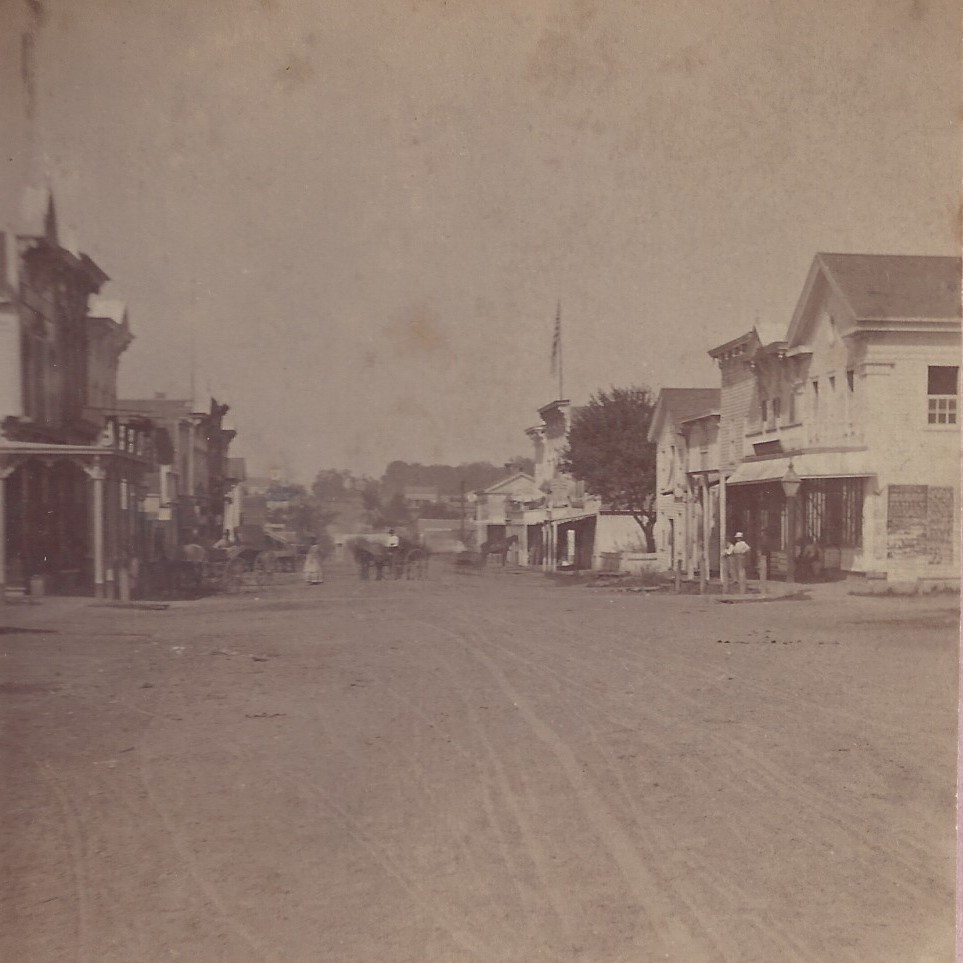
1957 - 1958 in the Village of Flushing, Michigan
| Village President | Frederick W. Hertrich (until death, January 2, 1958) Harvey McQueen (January 1958–March 1958) |
|---|---|
| Village Clerk | Janet G. McGuigan (appointed June 1, 1957) |
| Village Treasurer | Harlan Dyball |
| Village Attorney | Howard Bueche |
| Village Engineer | Anders O. Hustvedt |
| Fire Chief | Edwin Parks |
| Police Chief | Henry Beach |
| Village Assessor | Jean Henry (appointed July 19, 1957) |
| Board of Trustees | Harvey McQueen Philip Gundlach Evart Scott John McIntosh Walter Todd Joseph Bueche |
The Village of Flushing during the years 1957–1958 experienced a period of substantial infrastructure development and municipal transformation. This era was marked by the construction of a major sewage disposal system, significant zoning reforms, and continued expansion of the village through annexation. The period also saw the tragic death of Village President Frederick W. Hertrich in January 1958, a leader who had guided the community through its most ambitious public works project to date.
Major Infrastructure Projects
Sewage Disposal System
The most significant undertaking of 1957–1958 was the construction of a comprehensive Sewage Disposal System, which represented the largest public works project in the village's history. On June 24, 1957, the Village Council accepted bids and awarded contracts for both the Sewage Treatment Plant and Interceptor Sewers. The Treatment Plant contract was awarded to Detroit Underpinning Company, while the Interceptor Sewer contract went to D'Agostini Construction Company.
The project was financed through a combination of bond issues and federal assistance. On July 8, 1957, the council awarded the sale of $165,000 in General Obligation Bonds to First of Michigan Corporation and Kenower-McArthur Co. of Detroit. One week later, on July 15, 1957, $220,000 in Sewage Disposal System Revenue Bonds were sold to McDonald-Moore & Co. and H.V. Sattley Co. Inc. The village also received a Federal Grant (WPC Mich.-36) totaling $136,646 from the Water Pollution Control program to support the sewage treatment works.
Construction faced several challenges throughout 1957 and 1958. In November 1957, the council approved a payment of $20,230.86 to D'Agostini Construction Company for work completed through November 19, representing partial completion of the $101,517.35 estimated total at that stage. A significant obstacle emerged on East Chamberlain Street, where the location of an existing 10-inch water main greatly complicated sewer installation. The council negotiated an agreement with D'Agostini Construction whereby the contractor would perform trenching and backfilling for relocating the water main to the northerly side of the street, while the village would furnish all materials and make valve connections. The contract completion date was extended to February 1, 1958, to accommodate these complications.
Additional sewer construction occurred in multiple subdivisions. In March 1958, the council authorized construction of two sanitary sewers in the Spring Glen Subdivision on the north and south lot lines off Thomas Street to connect with Leland Street interceptors. Sewer work also proceeded on Chestnut Street, with a bid of $17,272.12 accepted from Bedford & McIntosh for construction.
Ordinance No. 41, adopted on March 25, 1957, established the regulatory framework for sewer connections and charges. The ordinance set a monthly sewer charge of $2.50 and required property owners to connect to the public sewer system by August 1, 1958. A total connection charge of $300 per property was established, and the ordinance stipulated that water service could be shut off for failure to pay sewer bills.
Water System Improvements
The village's water infrastructure received considerable attention during 1957–1958. In March 1958, the council approved a contract for electrolytic rustproofing of the village water tank with Electro Rustproofing Corporation under "Plan A" to provide ongoing maintenance and protection against corrosion.
A major water main extension was authorized in January 1958 to serve the proposed new high school site. On January 16, 1958, following negotiations with the Flushing School Board (represented by President Luther and Superintendent Crouse), the council agreed to extend a water main north along Deland Road for a distance of 2,050 feet. The school board financed this extension, with the terms formalized in an agreement prepared by the village attorney.
Water exploration efforts continued throughout this period as the village sought to secure adequate long-term water supplies. The council appointed a committee consisting of Trustees McIntosh, Todd, and Bueche in September 1957 to investigate further water exploration options. Test wells were drilled, and electrical resistivity surveys were conducted on various properties, including the Ott property, though exploration at that site was eventually halted.
An iron removal unit was ordered for the Water Department in August 1957, as the existing unit had become worn out and ineffective.
Street and Sidewalk Improvements
The village undertook several street improvement projects during this period. In February 1958, the council authorized President Hertrich to sign a contract with D'Agostini Construction Company for sewer and street work on the north side of Main Street from Hazelton Street extending 1,200 feet eastward.
In July 1957, the council approved paving Park Avenue for 250 feet, starting at the intersection of Circle Drive west to the Auker Subdivision. The council also authorized construction of catch basins and underdrains on Circle Drive and Park Avenue to improve drainage.
A comprehensive sidewalk improvement program was initiated in July 1957, when the council directed that notices be sent to property owners whose sidewalks were in poor condition, requiring them to make necessary repairs. Special assessment rolls were created for sidewalk improvements and weed cutting, totaling $342.92 in assessments.
In November 1957, the council approved installation of a sidewalk at Dale and Gerald Streets, with the village paying 25 percent of the cost.
Utility Infrastructure
A significant milestone occurred with the granting of a 30-year franchise to Consumers Power Company for electric and gas service. The franchise ordinance was adopted by the Village Council on June 10, 1957, and submitted to voters at a special election held on July 24, 1957. The proposition was overwhelmingly approved, with 50 votes in favor and 0 votes against (Precinct 1: 26 yes, 0 no; Precinct 2: 24 yes, 0 no). The franchise was officially ratified by the council on July 25, 1957.
The village also negotiated a favorable municipal pumping rate contract with Consumers Power Company, resulting in an estimated savings of approximately $383 per year for village operations.
Street lighting improvements were implemented in several areas. In September 1957, the council ordered street lights installed on Dale Street as recommended by Consumers Power Company. In October 1957, lights were requested for Labian Terrace in the vicinity of Cynthia Drive, Mark Drive, and River Road, as well as Schillman Place. Additional lighting was approved for Crescent Drive in August 1957. In January 1958, the council accepted a Consumers Power layout showing eleven 2,500-lumen lights for the Labian Terrace subdivision.
Zoning and Land Use Regulation
Comprehensive Zoning Amendments
The village undertook a major rezoning initiative to bring recently annexed lands under proper zoning regulation. On February 10, 1958, the council instructed Village Attorney Howard Bueche to take necessary legal steps to update the zoning map and add new parcels of land that had been annexed to the village since the original zoning ordinance was adopted on March 28, 1949.
A public hearing was scheduled for April 2, 1958, to consider amendments to Ordinance No. 22 (the village's zoning code). Notice of the hearing was published in the Flushing Observer and mailed to affected public utilities and railroad companies, including Consumers Power Company, Michigan Bell Telephone Company, Grand Trunk Western Railroad Company, Valley Coach Lines, and Western Union Telegraph Company.
The proposed zoning amendments designated eight newly annexed parcels into appropriate districts. The Advisory Planning Commission conducted a comprehensive survey of these areas in February 1958, examining existing land uses, neighborhood character, and development patterns. Seven parcels were designated as Residential Districts, characterized by single-family homes and residential subdivisions including Flushing Orchards, Flushing Orchards Replat, Tawemar Heights, and Locappi Gardens. One parcel—Lot 12 of Supervisors' Plat No. 27—was designated as an Industrial District for the sewage disposal plant site. No new commercial districts were created in these amendments.
The Planning Commission's report noted several non-conforming uses requiring attention, including a wood-cutting and storage operation creating noise and unsightly conditions in a residential area, an outdoor privy, open sewers, and garages converted to business uses without proper authorization.
Zoning Enforcement Actions
The village actively enforced its zoning ordinances during this period. In March 1958, the council addressed two zoning violations involving home-based businesses in residential districts:
DeMoss Dance Studio: Mr. and Mrs. Darrell DeMoss operated a dance and music studio at 816 Coutant Street in a residential zone. The Advisory Planning Commission recommended denial of their request to continue operations. After extensive discussion spanning multiple council meetings (February, March, and a special meeting on March 5, 1958), the council ordered the DeMosses to cease operations within 30 days for violating Article V, Section 3 of the Flushing Zoning Ordinance. The commission noted that suitable downtown facilities were available, including the Community Building and the basement of the First State and Savings Bank.
Karasek Beauty Shop: Mrs. Karasek requested permission to open a beauty shop at 410 East Main Street in a residential zone. At a special meeting on March 5, 1958, the Advisory Planning Commission recommended denial, and the council voted to deny the request.
The council also addressed non-conforming signage. In March 1958, following a report from the Planning Commission citing numerous sign violations in the village, the council voted to communicate with violators and require compliance with the zoning ordinance.
In October 1957, the council condemned an unsafe cement garage on Main Street owned by Byerley-Market, giving the owners 30 days to demolish the structure.
Planning Commission Establishment
In October 1957, the council formally established the Advisory Planning Commission to guide future development. The commission consisted of six members: Clayton Fraser (Chairman), Arthur Gibbs (Secretary), Dr. M. Bigelow, Ernest Wheeler, Herman Eller, and Dr. H. Baker. The commission immediately began active work, conducting surveys of annexed areas, reviewing subdivision plans, and making recommendations to the council on zoning and development matters.
Board of Appeals
In February 1958, the council appointed members to the Board of Appeals as required by the zoning ordinance. Appointees included Trustee Todd, Trustee Gundlach, Ralph Morrish (1-year term), Lyle Chadwick (2-year term), and Harry Wodtke (3-year term). Village Attorney Bueche clarified that the Board of Appeals had no power to rezone property or grant specific uses; its authority was limited to hearing appeals from building inspector decisions regarding interpretation of the zoning or building ordinances.
Ordinances and Regulations
Driver's License Ordinance
In March 1958, the council adopted an amendment to Ordinance No. 9, Section 9-20 regarding driver's licenses. The amendment made it unlawful to operate a motor vehicle within the village with a revoked or suspended driver's license, as defined under Act 300 of the Public Acts of 1949 of the State of Michigan. Violations constituted a misdemeanor punishable by imprisonment in the county or village jail for a period of 2 to 90 days and/or a fine of up to $100. The amendment became effective 20 days after adoption.
Fire Prevention Ordinance
Ordinance No. 45, adopted on April 2, 1958, established fire prevention regulations. The ordinance required property owners to obtain a $10 permit before burning waste or grass, with the deposit refundable upon proper completion of the burn. Violations carried penalties of up to $100 in fines and/or 90 days in jail. The ordinance became effective on April 22, 1958.
Alley Vacation
The council addressed a petition to vacate alleys in Smith's Subdivision. At the December 9, 1957 meeting, the council passed a resolution to vacate two alleys: one located north of and adjoining Lots 15-24, and another east of and adjoining Lots 11-14. A public hearing was scheduled for January 13, 1958, with notices mailed to adjoining property owners at least 14 days before the hearing. The matter was complicated by objections from Mr. George Kozan, owner of Lot 18, who stated the closure would interfere with access to his property. The hearing was subsequently adjourned to the February 10 meeting to allow the parties to reach an understanding, and then tabled again until the March meeting. The issue remained unresolved through the March 1958 meetings.
Parking and Traffic Regulations
In February 1958, the council authorized Michigan Bell Telephone Company to relocate a telephone booth from Main Street (just west of Park Restaurant) to the corner of Main and Cherry Streets, contingent on adequate visibility at the new location.
The council also addressed parking concerns raised by the Flushing Methodist Church regarding parking on Hazelton Street near the church. After considerable discussion in August 1957, the council agreed to study the matter and determine what accommodations could be made for church attendants.
Annexations and Development
The village continued its territorial expansion through several annexation petitions during 1957–1958. In August 1957, the council petitioned the Board of Supervisors to annex a 5-acre plot owned by Charles W. Browning and his wife. Additional annexation requests were processed for various residential parcels, including properties in the Valleyview Subdivision, Meadowview Estates, and East Flushing Estates.
The council worked closely with developers on subdivision plans. In March 1958, the Planning Commission reviewed and approved subdivision lots on Coutant Street and replatting of Wilcox Street lots. The commission also addressed infrastructure requirements for new developments, including the need for Schroeder Drive to be improved and brought up to village standards as a public street to serve school property in one developing area.
An ongoing concern in newly developed areas was the open sewer flowing to the Boman Drain north of Dale Street. The council instructed developers of Dale Street to take action in spring 1958 to eliminate this health and environmental hazard.
Government Administration
Death of President Hertrich and Succession
The village government experienced a significant leadership transition when Village President Frederick W. Hertrich died on January 2, 1958. President Hertrich had led the village through its most ambitious infrastructure development period, including the sewage disposal system project. Harvey McQueen, serving as President Pro Tem, assumed the presidency following Hertrich's death. The council later authorized a memorial plaque to honor President Hertrich's service to the community.
Elections
The village held its annual election on March 10, 1958. The election was canvassed at a special council meeting on March 13, 1958, with the following results:
- Village President: Frederick Hertrich, 79 votes
- Village Clerk: Janet G. McGuigan, 77 votes
- Village Treasurer: Nellie Dyball, 78 votes
- Trustees: Joseph Bueche (77 votes), Harvey McQueen (78 votes), Walter Todd (78 votes)
- Assessor: Jean Henry, 78 votes
All candidates were declared elected to office.
Board Appointments
Throughout 1957–1958, the council made numerous appointments to village boards and commissions:
Board of Review: In February 1958, the council appointed James Ottoway to replace Robert Marsh, who was unable to continue serving. In March 1958, Ernest Wheeler was appointed to replace Larry Winters, who was unable to serve.
Planning Commission: Established in October 1957 with six members.
Board of Appeals: Appointed in February 1958 with five members serving staggered terms.
Village Assessor: Jean Henry was appointed on July 19, 1957, replacing Helen Clark, who resigned.
Administrative Changes
Janet G. McGuigan was appointed Village Clerk on June 1, 1957, replacing the previous clerk, Mrs. Jane Price. In January 1958, the council set the Village Clerk's salary at $500 per year for the 1958–59 term.
A contentious issue arose regarding vacation pay for the former clerk and her deputy. The council determined that while two weeks of vacation pay for 1957 was justified, a third week of vacation pay that the former clerk (Mrs. Jane Price) and deputy (Mrs. Helen Clark) had paid to themselves during their employment was not authorized. The council instructed the bonding company to take necessary steps to recover one week's salary from each individual. When they refused to accept the council's compromise, the matter was pursued through the bonding company in September 1957.
Office Modernization
The council approved purchase of modern office equipment to improve efficiency. In October 1957, the council authorized purchase of a Burroughs Sensimatic Machine and a Burroughs Cash Register for village office work. In January 1958, the council approved purchase of a Burroughs Cash Register Machine for the sum of $1,291.25.
Community Facilities and Services
Community Center Improvements
At the request of the Delta Theta Tau Sorority in January 1958, the council agreed to make improvements to the kitchen at the Community Center to make it more functional and usable for community events. The sorority members appeared before the council to request specific modifications, which the council approved.
Tucker Memorial Pool
Planning and construction continued on the Tucker Memorial Pool, a significant recreational facility for the village. The pool was scheduled to open in June 1958, representing a major addition to the village's parks and recreation offerings.
Fire Department
The Fire Department, under the leadership of Fire Chief Edwin Parks, continued to serve the village and surrounding areas. The council maintained a mutual aid agreement with Clayton Township, charging $25 per call for fire services provided outside village limits. Equipment maintenance was addressed, including furnace repairs at the Fire Hall in 1957.
Police Department
Under Police Chief Henry Beach, the village police department modernized its fleet. In June 1958, the council approved a lease for a Plymouth police car at $115 per month from Lee Coy Motor Company, effective June 1, 1958, through June 1, 1959. The council also established compensation of $2.50 to $3.00 per shift for officers using personal vehicles for police duties. In addition, Donald Plumb was appointed as an Auxiliary Police Officer.
Telephone answering service for police and fire calls was continued through Rossell Funeral Home, ensuring 24-hour emergency response capability.
Parks and Recreation
The village added land to its park system when a portion of the Labian Terrace Subdivision south of the Flint River was given to the village for park purposes. The council also developed plans for a footbridge to improve park access.
The Flushing Recreation Commission gained approval to hold teen dances at the Community Center, and the Lions Club donated tables for community use.
Financial Management
Budget and Tax Levy
The village adopted its 1958–59 budget with total expenditures of $208,227.50. The tax levy was set at 23.0 mills, broken down as follows:
- General operating: 12.5 mills
- Highway: 4.5 mills
- General Obligation Bonds: 5.5 mills
- Alley sewer: 0.5 mills
The village's assessed property valuation for 1958 totaled $4,280,100, representing an increase of $321,660 over the 1957 valuation of $3,950,240.
Banking Relationships
The council designated multiple depositories for village funds. In October 1957, the Citizens' Commercial & Savings Bank of Flint was appointed as Paying Agent for the $220,000 Sewer Bond Issue and designated as the depository for the Bond & Interest Redemption Fund and Bond Reserve Account. All cancelled bonds, coupons, and account statements were to be forwarded to the Village Clerk.
In October 1957, the council also voted to transfer the General Fund from People's State Bank to First State Bank of Flushing. In January 1958, the council approved transfer of $5,000 from the Water Receiving Account to the Water Operation & Maintenance Fund.
Special Assessments
Special assessment rolls were created for various improvement projects, including:
- Sewer Improvement #1: $7,875.82
- Sewer Improvement #2: $5,361.71
- Sidewalks and weed cutting: $342.92
- Total special assessments: $13,580.45
Property Acquisitions
The village purchased land for public purposes. In October 1957, the council approved payment of $1,999.00 to Mrs. Mazie E. Keeler for land purchased from her and the late Harry D. Keeler for village use.
Insurance and Risk Management
The village maintained comprehensive insurance coverage. In September 1957, the council renewed automotive equipment insurance with Rowe Insurance Company, which offered the best rates. In December 1957, the council renewed Workmen's Compensation Liability Insurance with Mutual Liability Company. In June 1958, a premium of $896.22 was paid to Michigan Mutual for workmen's compensation coverage.
Community Activities and Events
Michigan Week
The village actively participated in Michigan Week celebrations in May 1958. A special committee was appointed by the council to organize activities, with Trustee McQueen serving as the council's representative. The celebration highlighted community pride and Michigan's heritage.
Mayor Exchange Day
The village participated in Mayor Exchange Day (scheduled for May 18, 1959 in the planning stages), a program designed to promote inter-community understanding and cooperation among Michigan municipalities.
Chamber of Commerce Activities
The Flushing Chamber of Commerce worked collaboratively with the village on various improvement projects. The chamber supported downtown sidewalk improvements and parking lot development to enhance the business district.
Junior Chamber of Commerce
The Junior Chamber of Commerce contributed to community improvement by painting crosswalks throughout the village, enhancing pedestrian safety at key intersections.
Religious and Civic Organizations
The village worked cooperatively with local churches on infrastructure needs. The Trinity Episcopal Church negotiated a lease agreement with the village for a parking lot. The Flushing Methodist Church worked with the council to address parking needs on Hazelton Street and to connect the church and its addition to the village sewer system, requiring approximately 130 feet of 10-inch tile.
Challenges and Controversies
Construction Delays
The sewer construction project faced significant delays due to weather and ground conditions. In January 1958, frost conditions held up the sewer contractor on East Chamberlain Street, requiring the council to discuss alternatives for thawing the ground. The relocation of the existing water main on Chamberlain Street also caused substantial delays and required contract modifications.
Sewer Connection Compliance
The council addressed compliance issues with the requirement that properties connect to the public sewer by August 1, 1958. Numerous property owners on Terrace Street attended the October 1957 council meeting with questions about sewer installation on their street and individual properties. The council worked to provide information and clarify requirements under Ordinance No. 41.
Dale Street Open Sewer
An ongoing environmental and health concern was an open sewer flowing north of Dale Street to the Boman Drain. The council repeatedly directed the developers of Dale Street to eliminate this unsanitary condition, but the problem persisted through the spring of 1958.
Zoning Disputes
Home-based businesses in residential zones created conflicts between property owners seeking to operate commercial enterprises and neighbors concerned about maintaining residential character. The DeMoss Dance Studio case required multiple council meetings and Planning Commission reviews before resolution.
Water Supply Concerns
The village faced ongoing challenges in securing adequate long-term water supplies. Various exploration efforts, including test wells and resistivity surveys, were conducted with mixed results. The poor quality of some test water (high iron and hardness levels) necessitated continued search for better water sources.
Regional Cooperation
Genesee County Sewage Disposal District
The village's decision to construct its own sewage treatment facility represented a departure from earlier plans to join the Genesee County Sewage Disposal District. The village formally cancelled its agreement with the county district, choosing instead to build and operate an independent system better suited to local needs and providing greater control over operations.
School District Collaboration
The village worked closely with the Flushing School Board on infrastructure to support educational facilities. The January 1958 water main extension to the proposed high school site demonstrated effective cooperation between the village and school district, with costs and responsibilities clearly delineated through a formal agreement.
Township Fire Protection
The village fire department's agreement to provide fire protection services to Clayton Township at $25 per call represented practical regional cooperation that generated revenue for the village while providing essential services to neighboring areas.
Road Maintenance
In October 1957, the council voted to assume maintenance responsibility for Rever Road between McKinley Road and the East Village Line. The Village Clerk was instructed to notify the Genesee County Road Commission of this decision, representing an expansion of village responsibilities for local road infrastructure.
Conclusion
The years 1957–1958 represented a transformative period in the Village of Flushing's history. The construction of the comprehensive sewage disposal system, financed through $385,000 in bonds and $136,646 in federal grants, fundamentally modernized the village's infrastructure and positioned it for continued growth and development. Extensive zoning reforms brought newly annexed areas under proper land use regulation, while the establishment of the Advisory Planning Commission provided institutional capacity for guiding future development.
The village government demonstrated effective financial management, securing favorable interest rates on bond issues and negotiating beneficial contracts with utilities and contractors. Administrative modernization through office equipment purchases and updated procedures improved efficiency and service delivery.
The tragic loss of President Hertrich in January 1958 marked a significant transition in village leadership, yet the continuity of council membership and administrative staff ensured ongoing progress on major initiatives. The successful completion of the Tucker Memorial Pool, expansion of street lighting, sidewalk improvements, and enhanced community facilities reflected the council's commitment to quality of life improvements alongside essential infrastructure development.
Community engagement remained strong, with active participation by civic organizations, churches, and residents in village affairs. The Planning Commission's work on zoning issues balanced property owners' interests with neighborhood character preservation, while the council's responsive approach to citizen concerns maintained public confidence in village government.
By the end of 1958, the Village of Flushing had emerged as a modern, well-governed community with comprehensive infrastructure, effective land use planning, and a solid foundation for future growth. The sewage disposal system, in particular, removed a critical constraint on development and positioned the village for the suburban expansion that would characterize subsequent decades.