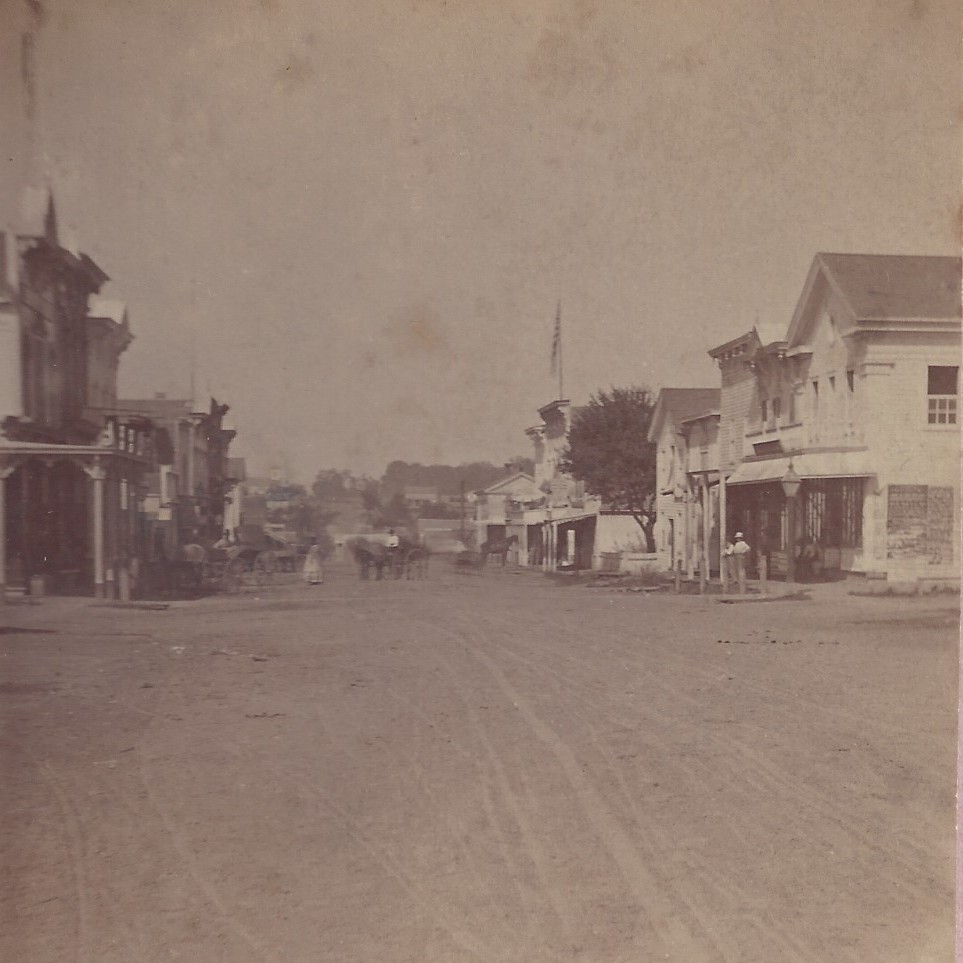
1959 - 1960 in the Village of Flushing, Michigan
Village of Flushing, Michigan (1959-1960)
| Village Officials | |
|---|---|
| Village President | Harvey J. McQueen |
| Village Clerk | Doris Schmoak |
| Village Treasurer | Harlan W. Dyball |
| Village Assessor | Arthur Gibbs |
| Village Attorney | Howard Bueche |
| Village Superintendent | Russell McIntosh |
| Marshall / Police Chief | Henry Beach |
| Street Commissioner | Boyd Burnett |
| Building Inspector | Ray Leland |
| Water Superintendent | Clayton Hatchew |
| Sewage Plant Superintendent | Archie Mark |
| Civil Defense Director | Robert White |
| Village Trustees | |
| Leland Furse Gundlach Scott McIntosh Todd Paul Bueche | |
| Engineer | |
| Anders O. Hustvedt | |
The Village of Flushing in Genesee County, Michigan experienced significant growth and development during the 1959-1960 period. Under the leadership of Village President Harvey J. McQueen, the Village Council addressed numerous infrastructure improvements, rapid residential expansion through subdivision development, zoning challenges, and modernization of village services.
Infrastructure Development
Sewer System Expansion
The village undertook major sewer infrastructure projects to accommodate growing residential areas. In November 1959, the Council awarded a contract to Harry Bedford Excavating for $3,427.00 to construct the north side of the Thomas Street sewer, with completion required by December 15, 1959. The project was part of the village's ongoing efforts to extend sanitary sewer service to newly developing subdivisions. A significant lift station project was initiated in East Flushing Estates to handle sewage collection in the eastern portions of the village. The Council also addressed ongoing settlement issues on Chamberlain Street, where constant sewer line settling prevented permanent paving. Village Engineer Anders O. Hustvedt recommended temporary grading and graveling until the sewer lines stabilized sufficiently for blacktop or paving.
Water Supply Improvements
The village pursued expansion of its water system to meet increasing demand from residential growth. The Council sought approval from the Michigan Department of Health for Test Well 58-A, which required a formal resolution demonstrating the village's commitment to pursuing reliable water sources. A supplemental agreement with Flushing Community Schools, dated August 1959, detailed the construction of an 8-inch water line from the intersection of Coutant Street and Deland Road north to school premises. The agreement specified that the village would provide materials including fittings and pipe for 1,300 feet of line, while the school would be responsible for the remaining costs and labor. The project included provisions for fire hydrant connections and was constructed under village supervision according to plans by Mitchell Engineering Company. Water line extensions were also constructed to serve Consumers Power Company facilities, with a formal contract amendment in August 1959 adding a water pumping plant located at G-7110 West Kelly Road to the village's service agreement.
Streets and Paving
The North Alley Paving project proceeded in July 1959 after the Council opened bids from multiple contractors. Flint Asphalt & Paving Company and S & B Paving submitted competitive proposals for the downtown alley improvements. Significant attention was devoted to street conditions in Flushing Orchards subdivision. In October 1959, residents of Flushing Orchards Replat presented a signed petition requesting that the subdivider, Beebe-Schillman Builders, improve streets and sidewalks in the subdivision. The Council ordered the developer to make necessary repairs and extend streets past existing houses. Engineer Hustvedt reported in November that weather conditions and unsuitable ground prevented paving north of Melody Court, recommending deferral until spring 1960.
Street Lighting
The village expanded its street lighting system in partnership with Consumers Power Company. In October 1959, the Council approved installation of additional street lights in Tawamar Heights #1, Chestnut Acres #1, and East Flushing Estates subdivisions, utilizing 6,000 lumen fixtures at an annual cost of $44.00 per light. In March 1960, Paul Bueche requested street lights at the entrance to the Super Market on West Main Street, and Superintendent McIntosh was authorized to coordinate with Consumers Power for planning and recommendations.
Subdivision Development and Annexation
The period saw rapid residential expansion through multiple subdivisions. The Council reviewed and approved plats for:
Chestnut Acres (multiple phases and replats) - presented by Arleigh Beebe and Carlson Engineering East Flushing Estates - annexed to the village in April 1959 with the provision that property owners would release the village from obligations to carry off sewage at the property line at village expense Flushing Orchards Replat - ongoing development with street improvement disputes Bonnie View Gardens - established subdivision with defined boundaries Tawamar Heights - new development area
Kapp Builders presented a request for annexation of East Flushing Estates Subdivision in April 1959. The Council approved the annexation on the condition that owners would release the village from sewage transport obligations at village expense beyond the property line.
Zoning and Land Use Regulation
Zoning issues dominated much of the Council's attention during this period. The village worked extensively on amendments to Ordinance #22 governing zoning regulations. Public hearings were held in February 1960 to receive input on proposed zoning changes. Residents of Flushing Acres #1 protested the commercial (C-1) zoning designation for Lot #15, leading to appeals and special meetings. In March 1960, after lengthy discussion, the Council voted to accept the zoning ordinance amendments as prepared by the Planning Commission, with modifications to the "essential service" clause requested by Consumers Power Company. The vote initially resulted in a 3-3 tie among trustees, with President McQueen casting the deciding vote in favor of adoption. The complete ordinance was published in the Flushing Observer on March 17, 1960. The Council also processed Specific Use Permits, including approval in April 1959 for Cecil Blackmore to operate an insurance office at 323 East Main Street for one year, subject to renewal, after property owners within 300 feet granted written consent.
Police and Public Safety
In February 1960, the Council approved purchase of a rebuilt police radio for $315.00 from Leon Bayko for installation in the police car. The radio used the revised State Police split frequency system. The existing radio was to be repaired and used as a receiver in the Police Department offices. Police Chief Henry Beach reported in April 1959 on safety concerns regarding school students walking in streets during lunch hour and after school, creating traffic hazards. The Council recommended a cooperative program between the school and Police Department to stress dangers to drivers and students and request their cooperation in correcting the situation. The village also addressed the expiration of the police car lease in April 1959, with the Council advertising for new bids for police car rental, to be opened April 23, 1959.
Municipal Operations and Appointments
Village Superintendent
In November 1959, the Council appointed Russell McIntosh as Village Superintendent for a six-month period at a salary of $500.00 per month. This appointment filled a critical administrative position overseeing village operations and infrastructure projects.
Council Committee Appointments
On April 13, 1959, President McQueen announced Council committee appointments for the year:
Police Committee: McIntosh, Furse, Bueche Water Committee: Bueche, McIntosh, Todd Sanitary Committee: Gundlach, Bueche, Furse Building & Equipment Committee: McQueen, Gundlach Fire Committee: Bueche, Todd, Gundlach Street Committee: Todd, McIntosh, Gundlach Finance Committee: McQueen, Scott, Gundlach, Furse Park & Pool Committee: Scott, McQueen, McIntosh Community Council: Scott, McQueen
Board Appointments
Board of Assessors: Howard Bueche, Mrs. Donald Henry, Clayton Fraser Board of Review: Ernest Wheeler, Clyde Fruchey
Equipment and Purchases
In November 1959, the Council opened bids for a new half-ton pickup truck for village operations. Two bids were received:
Jacobs & Miller: $1,890.00 Frank McNally Inc.: $1,690.00
The Council accepted the low bid from Frank McNally Inc., subject to reasonable delivery terms. Discussion also occurred regarding sale of a used fire truck, with the Council deciding to advertise it for sale.
Community Events and Recognition
In February 1960, President McQueen proclaimed the week of February 7-13 as Boy Scout Week in observance of the 50th anniversary of the founding of the Boy Scout movement in America. The Flushing Fire Department received commendation in a letter from Roy C. McDermitt, recognizing the department's service to the community.
Banking Development
The Genesee Merchants Bank pursued construction of a new building on Cherry Street during this period. In February 1960, the Council reviewed multiple plans submitted by Mr. Ragan and Daniels Associates of Ann Arbor. The Council initially did not approve a plan that included a parking lot on the southwest corner of Main and Cherry Streets and proposed changing the south alley to two-way traffic for drive-in window access. The Council advised reconsideration of an alternative plan. By late February, a revised Plan "B" dated February 26, 1960, was approved by the Council.
Insurance and Liability
In April 1959, the Council accepted a comprehensive commercial liability policy from Auto-Owners Insurance Company covering village operations (excluding vehicles, which had separate coverage) for one year beginning April 13, 1959, at a cost of $143.29. The Council also reviewed insurance requirements for contractors, recommending that all drainlayer policies be for $25,000.00 after approving the Ragnone Construction Company's coverage.
Financial Settlements
The Council accepted a settlement offer from Michigan Surety Company on behalf of City Excavating Company and the City of Flint for supplies purchased from the village for which payment had not been received. The settlement waiver was signed by the Village President and Clerk.
1960 Village Election
On March 14, 1960, village elections were held for various offices. The results, certified by the Election Inspector on March 17, 1960, were:
Village President: Clayton Fraser - 112 votes Village Clerk: Doris Schmoak - 112 votes Village Treasurer: Harlan Dyball - 112 votes Assessor: Arthur Gibbs - 111 votes Trustees (2-year terms): Leland Furse - 110 votes; Dr. Russell Phillips - 111 votes; James Bersinger - 111 votes
The election results indicated a transition in leadership, with Clayton Fraser succeeding Harvey J. McQueen as Village President for the 1960-1961 term.
Cooperation with Other Entities
The village maintained cooperative relationships with various government and utility entities. Formal agreements were executed with:
Consumers Power Company - for electric service to water and sewage pumping plants Flushing Community Schools - for water line construction and service Michigan Department of Health - for water supply approval and sewage system oversight Detroit Bank and Trust Company - as cremation agent for bonds and coupons of Village General Obligation Sewage Disposal System bonds
Legacy
The 1959-1960 period represented a time of significant growth and modernization for the Village of Flushing. The Council's focus on infrastructure expansion, particularly sewer and water systems, laid the groundwork for continued residential development. The attention to zoning regulations and subdivision platting reflected the village's transition from a small rural community to a growing suburban municipality within the greater Flint metropolitan area. The administrative structures and committee systems established during this period would guide village governance in subsequent years.