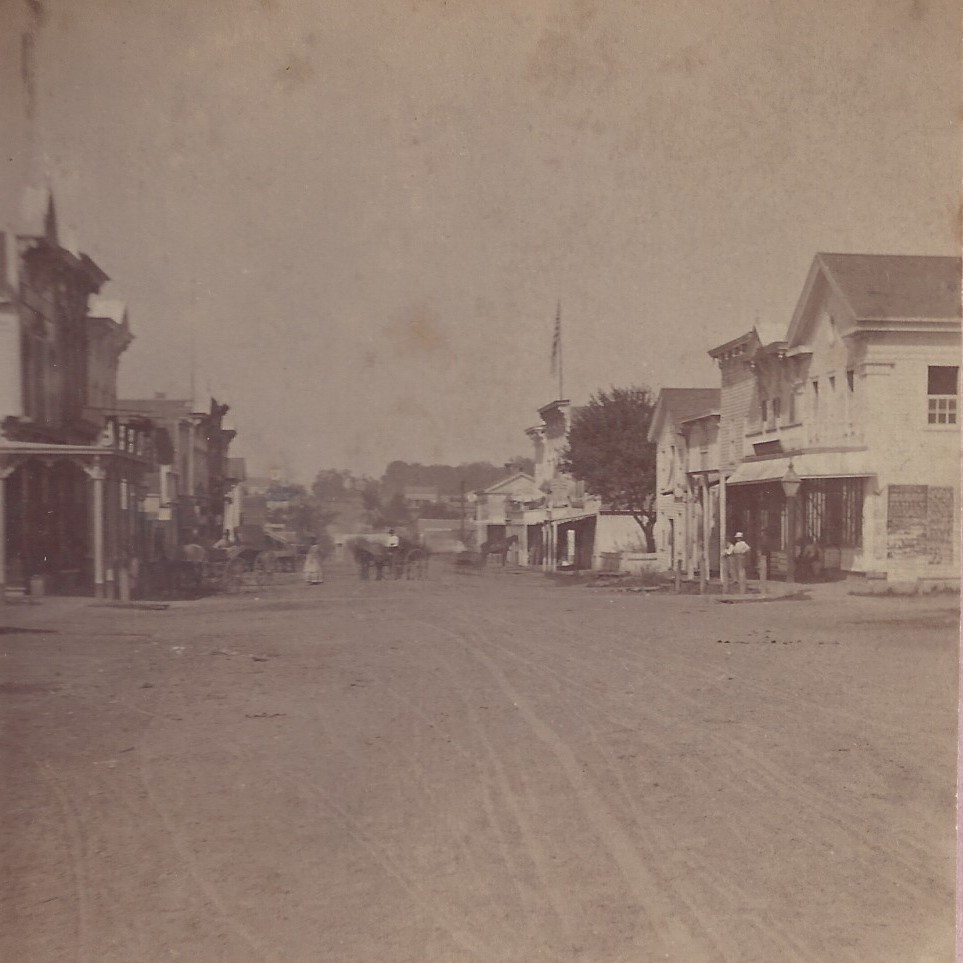
1962 - 1963 in the Village of Flushing, Michigan
| Position | Officeholder |
|---|---|
| Village President | Clayton A. Fraser |
| Village Clerk | Doris Schmoak |
| Village Treasurer | Harlan W. Dyball |
| Village Assessor | George Woodhouse |
| Chief of Police | Edwin "Ed" Parks |
| Fire Chief | Henry Beach |
1962–1963 in the Village of Flushing, Michigan was a pivotal period marked by continued infrastructure development, proactive planning, and community engagement. Under the leadership of Village President Clayton A. Fraser, the Council completed major sewer projects, launched new initiatives to secure water supply, enacted significant zoning changes to accommodate growth, and fostered local civic life. In these two years, Flushing’s government also modernized services – from updating public safety regulations to removing downtown parking meters – all while maintaining sound fiscal management and exploring potential cityhood.
Infrastructure and Public Works
- **Sewer System Projects:** By late 1962, Flushing successfully completed the sewer construction funded by bonds approved in 1961. The new storm sewers and the central sanitary interceptor line were finished, and a final report from the contractor confirmed the project’s completion and full payment. Building on this progress, the Council moved to extend sewer service into additional neighborhoods. Residents on Thomas Street and in the “Luekappa Gardens” area (Kapp Court, Sunnymede Drive, and Crestview Street) petitioned for lateral sanitary sewers in 1962–63. The Council agreed to proceed if homeowners shared costs through special assessments. Engineering plans were prepared and bids solicited for these extensions, though one project was temporarily delayed in early 1963 when several petitioners withdrew, prompting the Council to pause construction until consensus could be reestablished. Overall, the village remained committed to expanding modern sewer infrastructure to all sections of Flushing.
- **Storm Drainage Improvements:** To alleviate flooding and improve drainage, the village embarked on a major storm sewer installation on George, Henry, and Mary Streets (Phase I of a broader project). In a special meeting on October 1, 1962, multiple bids were opened for this project, with Lanphear & Smith submitting the lowest bid at about $17,859. The Council promptly awarded the contract to that firm, and Phase I of the storm sewer project moved forward. These new drains were designed to handle stormwater runoff more effectively in residential areas. The Council also addressed isolated drainage concerns; for example, a resident on Coutant Street requested a storm sewer to stop yard flooding, which the Superintendent of Public Works agreed to study and address in a future phase.
- **Street Paving and Sidewalks:** Road improvement was another focus. In mid-1962 the Council undertook a cooperative paving project on **River Road**, partnering with the Genesee County Road Commission and Flushing Township to split the cost three ways. The project paved a stretch of road from the village limits at the top of Terrace Street hill eastward to McKinley Road, with work commencing by September 1962. At the same time, the Council approved paving **Terrace Street** from Main Street up to the hill crest with new concrete (approximately 1,250 feet, at a cost of $11,050) and an additional 150-foot section of blacktop at the hill’s summit for about $504. The planned paving of **Chamberlain Street** (estimated at $15,400) was deemed a lower priority and postponed until funding became available. In the realm of pedestrian infrastructure, the village initiated a sidewalk replacement program. In August 1962, property owners on the 100 block of East Main Street petitioned for new sidewalks, and the Council solicited bids and awarded a contract to a local firm (Johnson & Kinder of Flushing, at roughly $2,144) to replace the deteriorating section. The Superintendent was also directed to systematically identify and notify other property owners with unsafe sidewalks, requiring them to repair or replace slabs as needed. As an incentive, the Council agreed to reimburse homeowners for a portion of costs in cases where residents took the initiative, as seen when the village paid 25% of the expense for a new sidewalk at 915 Gerald Street. These efforts greatly improved pedestrian safety and neighborhood appearance.
- **Water Supply Development:** Ensuring an adequate public water supply was an ongoing challenge during 1962–63. The village pursued multiple strategies to increase water production. In 1962, the Council entered into several **option agreements** with local property owners to secure potential new well sites. One such agreement was with Alford and Mazie Keeler for a tract of riverside land, giving the village the right to purchase up to four acres for a future well field at a set price per acre. Another agreement with Frederick and Eleanor McCarthy provided a 90-day option to buy land and test for a suitable well; the village paid $25 for the option, and later extended it to 180 days for an additional $25. The Council ultimately decided not to exercise the McCarthy option after test results showed an insufficient water supply. Instead, in January 1963 they shifted focus to a new 90-day option on land owned by Art Fay as a prospective well site. Meanwhile, to bolster the existing water works, the village invested in reactivating an old “pond intake” well. In December 1962, the Council approved a $1,733 proposal from Layne Northern Company to construct a new pumping well adjacent to a water-filled quarry pond and to retrofit an existing deep-well turbine pump for use in this intake. By early 1963, Superintendent R.J. McIntosh reported that the project was underway to increase the water supply by drawing from the pond aquifer. Additionally, the village negotiated with a private landowner, John Popovits, to use water from his gravel pits to recharge the municipal **Ott Well**. Under a November 1962 agreement, Flushing paid the Popovits family $100 per month in exchange for the right to pump water from one of their water-filled pits into the village’s nearby well, helping maintain its level during dry periods. The Council also considered intergovernmental solutions to water needs: in February 1963 a representative from Michigan Consolidated Gas/Utilities discussed the possibility of the village purchasing treated water from the City of Flint as an emergency backup. The idea of connecting to Flint’s water system prompted extensive discussion and was left for further study. These combined efforts illustrate Flushing’s proactive approach to prevent water shortages, using both local well expansion and regional cooperation.
- **Equipment and Facilities:** Flushing continued to upgrade its municipal equipment. In April 1962, the village purchased a new **½-ton panel truck** (a Ford Econoline van) for the Water Department to improve maintenance operations. The Police Department also replaced its patrol car; after reviewing bids, the Council accepted the lowest qualifying bid and acquired a new police cruiser in spring 1962. To support public works, the Council approved buying a heavy-duty **welder** in March 1963 for $650, enabling village crews to perform metal repairs on maintenance equipment and infrastructure. Earlier, in August 1962, the village bought an industrial air pump from Ingersoll Rand for $225, improving the DPW’s tool roster. In parks maintenance, a new power lawn mower was authorized for the Village Park to keep grounds in good condition. Village facilities themselves saw improvement: Mutton Park, the central municipal park, was enclosed with new fencing in 1962. At a special meeting on April 23, 1962, the Council awarded Genesee Fence Company the contract to fence approximately 795 feet of the park’s perimeter with 6-foot chain-link fencing, enhancing safety and security at the park and adjacent Tucker Memorial Pool. These investments in equipment and facilities ensured that Flushing’s services could meet the needs of a growing community.
Zoning and Planning
- **Residential Zoning Changes:** One of the most significant planning decisions was the **rezoning of a portion of Assessor’s Plat No. 3** (in the southeast part of the village) to accommodate higher-density housing. A public hearing initially convened on April 16, 1962 to consider changing this area – bounded by Chamberlain, Boman, Main, and Hazelton Streets – from single-family Residential (R-2) to Multiple Family Residential (R-3). The hearing drew around two dozen nearby residents who voiced both support and concerns. After extensive discussion, the Council voted to continue the hearing to its next regular meeting to allow further input. On May 14, 1962, with no remaining objections from the public, the Council formally adopted an amendment to Zoning Ordinance No. 22 reclassifying the specified Plat No. 3 area as an R-3 Residential District. This change permitted the development of apartments or other multi-family dwellings in the neighborhood, reflecting Flushing’s careful effort to manage growth and provide a mix of housing options. Notably, this rezoning had been requested by local property owners and was recommended by the Village Planning Commission after study.
- **East Main Street Commercial Use:** Another key issue was the proposed use of a residential property at 720 East Main Street for commercial purposes. In early 1963, **Elite Enterprises** (led by local developer Doyal “Dan” Walling) sought to remodel a house at that address into offices for a real estate agency, construction firm, and apartment management company. The property’s zoning (R-1 residential) did not allow such business use, leading to a multi-step process. In February 1963, the Planning Commission suggested amending the zoning code by creating a new “C-1a” classification that would expand the range of permitted office uses under the existing Neighborhood Commercial (C-1) zone. The Village Council embraced this approach. At the March 11, 1963 meeting, it voted to amend Zoning Ordinance No. 22, broadening the C-1 zoning definition to include the additional office uses recommended by the Commission. Following this ordinance change, the Council granted Elite Enterprises a one-year specific use permit for 720 E. Main (approved at a special meeting on March 14, 1963). This permit allowed the building to be used for the proposed offices under the updated zoning rules, with the understanding that the situation would be reviewed after a year. These actions demonstrated the village’s flexibility in balancing economic development with neighborhood zoning standards.
- **Planning Commission and Building Controls:** Throughout 1962–63, the Flushing Planning Commission remained active in guiding land use and advising the Council. In one case, local builder Neil Hoover petitioned to construct a house on an unusual lot at the end of Joyce Drive. The Commission noted that while the lot met minimum size requirements, it lacked proper street, water, and sewer access. Acting on the Commission’s recommendation, the Council in January 1963 denied Mr. Hoover’s request until he could ensure full compliance with infrastructure extension policies. This decision underscored the village’s insistence that new homes be built only where municipal services and streets were properly in place. The Council also approved the final plats for new subdivisions that year. **East Flushing Estates No. 1** was officially annexed into the village in September 1962 (15 lots in a former township section), and its development plans were given conditional approval by the Council, pending adherence to all village ordinances and confirmation of water availability when homes were constructed. Meanwhile, the Council periodically renewed annual “Specific Use” permits for home-based businesses and community institutions, such as a beauty salon on East Main Street and the DeMoss Dance Studio, to ensure these special uses remained in compliance with zoning and did not negatively impact their residential neighborhoods.
- **Resolution of Zoning Litigation:** A carryover issue from the previous year was a lawsuit filed by property owner Floyd Smith, who had challenged the village’s 1961 decision to rezone Lot 15 of East Flushing Acres from commercial to residential. That case concluded in late 1962 when Genesee County Circuit Court Judge Stewart Newblatt dismissed the complaint, effectively upholding the village’s zoning authority. The Council was informed of this legal victory in December 1962, allowing Flushing to move forward confidently with its land-use plans following the court’s validation of the rezoning.
Public Safety and Services
- **Police Department Updates:** The Flushing Police Department, headed by Chief Beach, continued to modernize and professionalize during 1962–63. In spring 1962, the department acquired a new patrol car, improving the reliability of police transportation. Chief Beach also requested and received authorization to outfit the force with updated uniforms (a process begun in 1961 and completed with a budget of $500). In March 1963, Chief Beach presented a set of formal **Police Department Rules and Regulations** – essentially an official policy and procedures manual – to govern conduct and operations. The Council referred this document to its Police Committee for review and refinement, a step toward ensuring consistent, professional law enforcement standards. Traffic safety remained a point of emphasis; the Traffic Safety Commission, a citizen advisory body working with the village, was engaged to examine potential hazards such as the busy intersection where a new Masonic Temple was proposed (Maple and Main). At the Council’s request, the Traffic Safety Commission studied the area, and the Council approved installing a “Stop” sign at the alley and Maple Street corner to improve safety once the temple was built. Other traffic-related measures included discussing resident complaints of a persistent sewer gas odor near the Post Office (the DPW was directed to replace a catch basin cover there with a solid lid to trap odors), and considering a request for an additional stop sign at Circle Drive and Park Street (forwarded to the Traffic Commission for evaluation). The Council also addressed internal matters like holiday pay for police officers, referring those requests to the Police Committee to ensure fair and fiscally responsible compensation policies.
- **Fire Department Activity:** Flushing’s volunteer Fire Department, led by Chief Ed Parks, experienced a busier year in 1962. In his annual report to the Council (delivered in early 1963), Chief Parks noted the department responded to **75 fires** during 1962 – an increase from the previous year – plus one false alarm, for a total of 76 calls answered. These incidents included house fires, automobile fires, grass and brush fires, and other miscellaneous blazes. The total fire loss for the year was reported in the tens of thousands of dollars (over $20,000 in property damage across buildings and contents), highlighting the importance of the fire service to the community. The causes of fires ranged from common issues like overheated stoves, faulty wiring, and children playing with matches to lightning strikes; the department also responded to several mutual aid calls and minor rescue or assist calls. During this period, Flushing continued its agreement (established in 1961) to provide fire protection to the nearby **Dalton Subdivision** in Mount Morris Township, using one of the village’s pumper trucks and personnel for any calls in that area. In October 1962, the Council was confronted with a dispute involving a local well-owner, Mr. Dalton (unrelated to the subdivision’s name), who demanded reimbursement for a water main extension he had installed and claimed the village was using (sometimes referred to as the “Dalton Well” issue). The Council, after a special meeting on October 29, 1962, concluded that it had no legal obligation to pay Mr. Dalton’s $20,828 claim for watermain costs and declined his request, upon which Mr. Dalton threatened an injunction to bar the village from using that well. This dispute underscored the complexities of securing water infrastructure and was handled with legal counsel’s guidance. In more routine matters, the Fire Department participated in regional firefighter trainings and requested that the village cover annual membership dues in the Genesee County Firemen’s Association (at $1 per firefighter). The Council tabled that funding request until the next budget cycle, but did approve paying a $5 membership for Superintendent McIntosh to join the Michigan Civil Defense Directors Association to strengthen local emergency preparedness efforts.
- **Public Health Measures:** The village government took steps to safeguard public health and safety. During the summer of 1962, facing a mosquito infestation, the Council debated methods of mosquito control. Rather than rely solely on periodic aerial spraying by contractors (which was authorized and carried out in June 1962), Trustee Donald Morrish suggested investigating the purchase of ground-spraying equipment so the village could conduct its own mosquito abatement. The Superintendent was asked to research costs of a pesticide sprayer, though immediate action was still to hire a company for prompt aerial spraying charged to the general fund. The Council also directed that a notice be published reminding residents of the seasonal lawn watering restrictions under Ordinance No. 47 (the annual sprinkling ban in effect from May 1 to October 1 to conserve water). In another proactive move, the Council adopted a policy in April 1962 requiring all new village employees to undergo a physical examination (paid by the village) prior to hiring. This policy was implemented after a review of worker’s compensation claims indicated increased costs due to on-the-job injuries, and it aimed to ensure employees were fit for duty and to reduce workplace accidents. These actions illustrate how village officials in 1962–63 were attentive to preventative measures in public health, from pest control to employee safety.
Community and Civic Life
- **Downtown Revitalization – Parking Improvements:** A landmark decision during this period was the removal of parking meters in the downtown business district to encourage local commerce. In the first half of 1962, the Flushing Chamber of Commerce (also known as the local merchants’ association) advocated for more shopper-friendly parking. After a successful trial of free two-hour parking in spring 1962, the Chamber’s president, Edward Bejcek, and other business owners urged the Village Council to eliminate the meters permanently. On June 11, 1962, the Council voted unanimously to honor this request. By summer, all parking meters were taken out at the village’s expense, and Main Street parking became free of charge, with time limits enforced to ensure turnover. This move was very popular with both residents and shopkeepers: it improved goodwill, drew more shoppers downtown, and demonstrated the Council’s responsiveness to local economic concerns. The Chamber of Commerce continued to organize promotions such as a downtown **Sidewalk Sale Day** on July 13, 1962 (during which a block of Main Street was closed to traffic for a day of outdoor shopping). The Council readily approved these events and even coordinated with merchants on street closures and signage, signaling strong cooperation between the village government and the business community.
- **Youth and Recreation Initiatives:** The years 1962–63 saw a push to provide more activities for Flushing’s young people. In late 1962, a group of teenagers submitted a petition asking for help in starting a **Teen Club** in the village. The Council responded positively by appointing two councilmen, Frank McCarty and Leland Furse, to work with the youths on the idea. By December 1962, an organizational meeting for the Flushing Teen Club was held at the Community Center, and plans were made to involve the Flushing Board of Education for additional support (since school facilities might be used for teen events). Councilman McCarty gave progress reports on this effort, indicating that by early 1963 the Teen Club was taking shape, offering supervised social gatherings for local teenagers. In another youth-oriented gesture, the Council continued the tradition of recognizing **Boy Scout Week** each February: although not detailed in the 1963 minutes, it was customary for Boy Scouts to be invited to a Council meeting and for a proclamation to be issued commending the Scouts’ service to the community (as had been done in 1962). The village also supported recreational facilities—particularly the **Tucker Memorial Pool** and Mutton Park. The Flushing Junior Chamber of Commerce (Jaycees) volunteered to undertake improvements at Mutton Park as a community project. The Council, appreciative of this offer, asked the Jaycees to present a master plan. After review, officials approved the Jaycees’ master plan in July 1962 and gave immediate permission to proceed with installing new **basketball courts** at the park. Combined with the new fencing and other enhancements, these upgrades turned Mutton Park into a more attractive venue for families. A separate civic improvement involved the **Flushing Township Library**, which shared space in the Village Community Center. In May 1962, the library requested additional room to expand. The Council agreed to let the township library use the balcony area of the Community Center to create a larger reading room, and instructed the village attorney to draft a suitable agreement detailing this cooperative arrangement. This allowed the library to increase its offerings to residents, illustrating the community’s commitment to education and quality of life.
- **Public Events and Celebrations:** Flushing’s Council continued to facilitate community events. For instance, the Flushing Kiwanis Club’s spring circus, a popular fundraiser and entertainment event, took place in May 1962 at Mutton Park as planned. In fall 1962, a local sports car enthusiasts’ club (SCCA) was granted permission to hold an auto show in the south municipal parking lot, on condition they provide liability insurance and clean up afterward. The Council also voted to participate in Michigan’s annual **Mayor Exchange Day** in 1963, a program where local officials from different cities swap places for a day to share ideas – reflecting Flushing’s engagement in statewide municipal initiatives. Additionally, in March 1963 the Council passed a resolution supporting the City of Detroit’s bid to host the 1968 Olympic Games, symbolically demonstrating Flushing’s sense of connection to broader state and national civic pride.
Governance and Finance
- **Municipal Leadership and Elections:** Stability and experience characterized Flushing’s leadership during 1962–63. In the village elections of March 1963, incumbent President Clayton A. Fraser was re-elected, as were long-serving Clerk Doris Schmoak and Assessor George Woodhouse. (The position of Village Treasurer saw a change: Harlan W. Dyball, who had ably served as Treasurer, did not stand for re-election in 1963; **Nellie M. Dyball** was elected to succeed him, ensuring continuity in financial oversight.) The six-member Council of Trustees continued to include familiar names like Lee Furse, Herbert Gundlach, Ralph Morrish, Frank McCarty, Russell Phillips, and Douglas Goss, with minor adjustments due to staggered terms and appointments. President Fraser in April 1962 appointed standing committees (Finance, Streets, Water, Police, etc.) and key staff for the 1962–63 administrative year, keeping veteran officials such as Howard Bueche as Village Attorney, Russell McIntosh as Village Superintendent of Public Works, and Ed Parks as Fire Chief. He also re-appointed members of the Planning Commission, Zoning Board of Appeals, and other advisory roles, maintaining experienced personnel in governance. This continuity in personnel helped Flushing pursue long-term projects with confidence.
- **City Incorporation Efforts:** During this period, village leaders took the first steps toward possibly becoming a city. By late 1962, a citizen-led “Flushing City Committee,” chaired by Gail Cheney, was actively studying the process of incorporation to transition Flushing from a village (under township oversight) to a self-governing city. The committee made periodic reports to the Council. In December 1962, Attorney Bueche informed village officials that a formal **Petition for Incorporation** had been submitted to the Genesee County Board of Supervisors, who would review it and likely refer it to a committee in early 1963. In January 1963, after a discussion on how to proceed, the Council instructed Clerk Schmoak to contact the County Clerk for details on the election procedures required for village residents to vote on incorporation. This indicates that Flushing was moving toward a public referendum on becoming a city, a milestone that would, if approved, grant the community greater autonomy (e.g., home-rule city status). Although the actual vote and outcome were still to come, the groundwork laid in 1962–63 demonstrated local leadership’s foresight in planning for Flushing’s future governance.
- **Financial Management:** The Village of Flushing remained on solid financial footing through careful management and transparency. In September 1962, Treasurer Harlan Dyball reported that **92.6% of the summer property taxes** had been collected – a high rate of compliance that provided the bulk of revenue for village operations. The total receipts for the 1962 tax levy exceeded $114,000, which were distributed into the General Fund, Highway Fund, and other accounts according to budget. The Council publicly commended the Treasurer and Deputy Treasurer for their effective tax collection efforts. The village continued its practice of prudently managing debt and cash flow. For example, in September 1962 the Council approved a temporary transfer of $25,000 from the General Fund to the Sewer Construction Fund to cover immediate construction bills, rather than prematurely cashing out certificates of deposit (which would have incurred lost interest). Once the bank certificates matured in late November, the loan was repaid. Similarly, in December 1962 the Council chose to pay off a special assessment to Flushing Township for improvements near the Ott Well site in one lump sum of $2,001 rather than in installments, thereby saving approximately $1,800 in interest charges. After the sewer projects were done, the remaining balance of about $3,070 in the 1961 bond construction account was transferred into the Sewer Receiving Fund and the account was closed out, simplifying the village’s ledgers. The Council also created the new position of **Building Inspector** in late 1962, hiring Mr. Claude Wood at a salary of $50 per month (not to exceed $600 a year). This move provided regular inspection of construction and code enforcement, reflecting the village’s progression toward more professional management of building safety and standards.
- **Intergovernmental Involvement:** Flushing’s officials remained active beyond the village’s borders, staying current on regional and state affairs. Representatives from the village regularly attended Michigan Municipal League (MML) meetings and training sessions. Superintendent McIntosh was authorized to travel to the MML annual conference, and in January 1963 council members planned to attend the MML Regional Meeting in Warren, Michigan. Clerk Doris Schmoak participated in the Michigan Association of Municipal Clerks conference in Sault Ste. Marie in July 1962, with the Council covering her travel expenses as part of her professional development. Such engagement helped Flushing’s leaders bring back new ideas and stay informed about municipal best practices and legislative changes. The Council also kept in communication with state agencies: they coordinated with the Michigan Department of Health on water system improvements and corresponded with the State’s Municipal Finance Commission regarding seminars on public finance. By networking with other communities and state officials, Flushing’s government ensured it was not operating in isolation but rather benefiting from broader knowledge and resources.
- **Labor and Governance Policies:** In day-to-day operations, the Council dealt with various administrative matters, from approving monthly expenditures after Finance Committee review to updating local ordinances. They passed resolutions as needed, such as one in March 1963 raising the stipend for members of the Board of Review from $10 to $15 per day to attract and compensate those who handle property tax appeals. They also expressed appreciation through official channels; when longtime Michigan Municipal League Director John Huss passed away suddenly in January 1963, the Council sent a message of sympathy to his family. These actions, though routine, indicate the village’s attention to good governance and community values.
Summary
The 1962–1963 era was marked by progress and preparation in Flushing. The village completed crucial infrastructure upgrades in sewer and water systems while planning new expansions to meet future demand. Zoning and development decisions balanced growth with the community’s small-town character, enabling new housing and businesses under updated regulations. Public safety services were strengthened, and new equipment and procedures improved the efficiency of the police and fire departments. The Village Council fostered a friendly environment for economic activity by removing parking meters and supporting local events, and it partnered with civic groups to enhance parks, libraries, and youth programs. Financially, Flushing demonstrated prudent management, retiring obligations and saving money on interest as it invested in capital improvements. In addition, the groundwork for transitioning from a village to a city was set in motion, showing an eye toward the long-term governance needs of a growing population. Overall, the accomplishments of 1962–1963 reflected a community in the midst of positive change – modernizing its infrastructure and services, encouraging civic involvement, and positioning itself for the future while maintaining the responsive, cooperative spirit that defined the village of Flushing.