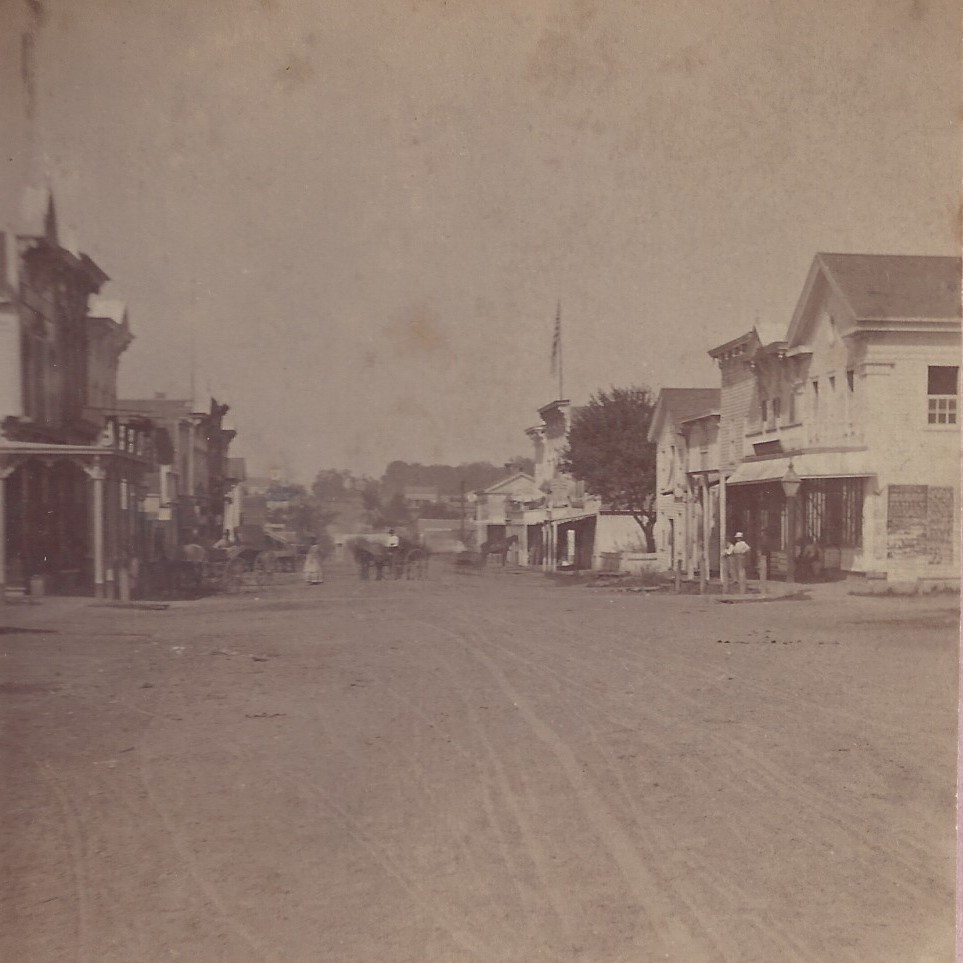
1973 - 1974 in the City of Flushing, Michigan
City of Flushing Government (1973–1974)
| Position | Name |
|---|---|
| Mayor | Gary L. Blackmore (until late 1973), succeeded by Dr. Russell M. Phillips |
| City Clerk | Shirley A. Clark |
| City Manager | William M. Costick |
| City Attorney | Robert M. Ransom |
| Fire Chief | Edwin “Ed” Parks |
| Chief of Police | Not documented |
Overview
The early 1970s were a period of active civic development and community engagement in the City of Flushing, Michigan. During 1973–1974, the city government navigated a transition in leadership, initiated significant public works projects, passed key local ordinances, and fostered community spirit through events and new organizations. In late 1973, Flushing’s longtime Village President (mayor) Gary L. Blackmore was succeeded by Dr. Russell M. Phillips, reflecting a change in the city’s leadership. Under the council–manager form of government, daily administration continued under City Manager William M. Costick, with legislative decisions made by the elected City Council. The Council’s priorities in 1973–74 included modernizing infrastructure (such as water, sewer, and roads), improving public safety facilities, and enhancing quality of life through community events and services. Notably, a local Historical Society was founded in 1973 with city support to preserve Flushing’s heritage. The period also saw Flushing join the National Flood Insurance Program and implement several ordinances to guide development and infrastructure expansion. Civic pride and engagement were evident in events like parades, holiday celebrations, and volunteer initiatives. By the end of 1974, Flushing had laid important groundwork for future growth while celebrating its history and community spirit.
City Government
In 1973–1974, Flushing’s government consisted of a mayor (officially titled the Village President) and a six-member City Council, with a professional city manager handling day-to-day operations. Gary L. Blackmore served as mayor through most of 1973, presiding over City Council meetings and representing the city. Following the November 1973 municipal election, Dr. Russell M. Phillips was elected as the new mayor and took office, presiding over the Council throughout 1974. The City Council during this period included Barbara M. O’Brien, John A. Rowe, Harvey M. Workman Jr. (Mayor Pro Tem), Frank McCarty, Phillip D. Bueche, and (beginning in 1974) Robert C. Wonderlic (who filled the vacancy created when Dr. Phillips became mayor). Longtime City Clerk Shirley A. Clark kept official records, organized elections, and certified Council actions and resolutions. The city’s legal affairs were handled by City Attorney Robert M. Ransom, who drafted many of the ordinances and contracts of the era. City Manager William M. Costick oversaw municipal departments and coordinated public services, implementing policies set by the Council. Public safety was maintained by the Flushing Police Department, led by a Chief of Police (though council records of the time refer to this position without naming the individual), and the Flushing Fire Department, under the leadership of Fire Chief Edwin “Ed” Parks, a veteran who had served as chief since the 1950s. Together, Flushing’s elected officials and staff focused on improving infrastructure, managing growth, and responding to citizens’ needs during 1973–74.
Major Events and Council Actions
Leadership Transition (1973 Election): A significant political event was the November 6, 1973 city election, in which Flushing voters elected Dr. Russell M. Phillips as the new mayor, succeeding Gary Blackmore. After a brief interim period (during which the City Clerk called a Council meeting to order in the mayor’s absence), Dr. Phillips assumed office as mayor by the end of 1973. This election brought new leadership while ensuring continuity in policy, as Dr. Phillips had been a Council member and mirrored many of the city’s ongoing priorities. Under Mayor Phillips and the continuing Council, Flushing pushed forward with a robust agenda of civic improvements in 1974. National Flood Insurance Program Participation: Responding to flooding concerns along the Flint River and surrounding areas, the Council took action to better protect residents from flood damage. On October 29, 1973, the City Council unanimously approved a resolution to concur with Genesee County’s program making federally subsidized flood insurance available under the National Flood Insurance Act of 1968. By agreeing to enforce appropriate land-use controls in flood-prone areas, Flushing qualified its residents for coverage under the National Flood Insurance Program (NFIP). In early 1974, the Council reinforced this commitment by adopting flood-hazard management policies (in an April 8, 1974 resolution) directing the City Building Inspector to review all proposed construction in designated flood zones for compliance with flood-protection standards. These measures aimed to assure that affordable flood insurance would be obtainable for Flushing property owners and that new development would be safeguarded against flood risks. Infrastructure Improvements and Public Works: City leaders in 1973–74 devoted significant attention to upgrading infrastructure. Key among these efforts was the planning of a new Fire Station. After determining that the existing fire hall was outdated, the Council placed a bond proposal on the November 1973 ballot to fund a modern fire station. The bond issue for $275,000 was approved by voters, reflecting strong public support for improved fire protection. By March 1974, the city had sold the bonds and accepted a low bid of $267,300 from Gordon Construction Company to build the fire station, and construction was slated to begin on the new facility. In the realm of transportation, the Council authorized engineering plans for widening East Pierson Road (from Flushing Road to Elms Road) to alleviate traffic congestion. This project was to be part of a federally aided Urban Systems Program, and the city signaled intent to issue bonds for its local share while seeking a federal grant to cover approximately 72% of the cost. The city also partnered with Genesee County on expanding municipal utilities: Flushing agreed to participate in the county’s Water Distribution Expansion Program, including proposed water main extensions along Potter and Elms Roads to improve water supply on the south side of the Flint River. Likewise, the Council explored solutions for long-standing drainage issues, working with county officials on a Shiawassee Flats inter-county drain/flood control project that could affect Flushing’s Shiawassee River basin in the future. Municipal Services and Equipment: The improvement of city services was another theme of the time. The Council approved purchase of new equipment for the Department of Public Works, including snowplow blades, an asphalt roller, and a pickup truck (with bids opened on September 10, 1973). Street maintenance was ongoing, highlighted by the 1973 River Road paving project (a major street reconstruction financed by special assessments and state highway funds) and routine re-graveling of local streets in cooperation with the Genesee County Road Commission. Traffic safety received attention through Traffic Control Orders establishing new speed limits on streets like Seymour Road (with a 35 MPH zone near the city limits) and installing stop and yield signs at various intersections to improve neighborhood safety (Orders No. 16, 17, and 18 were adopted on September 10, 1973). The city also invested in utility infrastructure: significant upgrades to the Wastewater Treatment Plant were undertaken (with improvements to the treatment process and plant equipment), and the Council applied for additional federal reimbursement for sewer plant construction under new provisions of the Water Pollution Control Act. In October 1973, Flushing enacted updated water and sewer connection fees (see below) to help finance expansions. Additionally, the city ensured reliable power for public facilities by approving a Consumers Power Company plan in September 1973 to install new underground electrical service lines to City Hall and the public library building, improving electrical capacity for municipal operations. Intergovernmental Collaboration: During this period, Flushing’s officials worked closely with regional and state agencies on issues affecting the city. They coordinated with the Genesee County Drain Commissioner on water and sewer expansions and environmental regulations, and with the Genesee County Metropolitan Planning Commission on regional transportation plans (including expressing the city’s support for the timely completion of the I-475 expressway project in Flint due to its indirect effects on Flushing’s traffic patterns). The city also maintained an agreement with Genesee County to host the 68th District Court in the Flushing City Hall building, and in September 1973 the Council directed that the County be notified of the upcoming District Court lease expiration to renegotiate terms for the court’s continued presence in Flushing. Flushing’s elected officials were active in organizations like the Small Cities Association of Michigan, and in December 1973 the Mayor and Council members attended regional gatherings (such as a holiday meeting of the Genesee County Small Cities group) to exchange ideas with neighboring communities.
Community Life
The years 1973–1974 were marked by vibrant community activities and citizen involvement. Flushing’s City Council regularly partnered with civic groups to host and support local events:
Parades and Celebrations: Time-honored traditions continued to flourish. The Council approved the route and arrangements for the annual Homecoming Parade in the fall of 1973, allowing Flushing High School to hold its parade downtown on October 13, 1973, with police assistance to block off streets for the marching band and floats. In 1974, the Flushing Chamber of Commerce expanded summer festivities by organizing an additional “Kiddies Parade” (held on June 22, 1974 at noon) in conjunction with the June 19 Homecoming Parade, giving children a parade of their own. The Council readily granted permits for these events. The city also supported veterans’ organizations in their patriotic observances: in 1974 the Council proclaimed Loyalty Day (May 5, 1974) in Flushing and authorized the local VFW Post 5666 to conduct its annual Poppy Sale (May 16–18, 1974) to benefit veterans, as well as to hold the Memorial Day parade on May 27, 1974. These events drew residents together to celebrate civic pride and national heritage. Holiday Decorations: In late 1973, Flushing’s leaders worked with the Chamber of Commerce to enhance downtown’s holiday atmosphere in a cost-effective way. Rather than installing extensive overhead lighting (which the City Manager warned would strain the budget), the Chamber offered to donate a flagpole and an enclosed city map display for Cornwell Park, and proposed placing decorated Christmas trees with lights on the downtown islands. The Council agreed to this plan in October 1973. The resulting Christmas decorations in 1973 were well-received, making the business district festive for the holidays while keeping expenses modest. Youth and Senior Engagement: Flushing sought to involve all ages in community life. In 1973, the city participated in the Neighborhood Youth Corps program in cooperation with Genesee County, employing local teenagers (ages 16–21) in summer jobs like park maintenance, funded by federal grants. The city also encouraged senior citizen participation in new initiatives – for example, special invitations were sent to members of the Flushing Senior Citizens group to attend meetings about forming the Historical Society in 1973. The Flushing City Council responded to citizens’ concerns as well: when a resident, Thomas H. Purcell, complained in September 1973 about noise and nuisances at a self-service car wash on South Maple Street, the Council directed the City Manager to investigate and find a remedy, showing responsiveness to neighborhood issues. Public Safety and Volunteerism: The Flushing Fire Department remained a volunteer force deeply integrated with the community. Council agendas routinely included authorizing stipends for firefighters’ training meetings and fire runs, and in 1974 the city celebrated a safety milestone when the Michigan Water Pollution Control Association recognized Flushing’s wastewater treatment staff with a No Lost Time Accident award for operating a full year without any job-related injuries. The Flushing Fire Department also hosted public education events; an Open House was held on November 14, 1973 at the Flushing Youth Center, where residents and city officials were invited to view firefighting demonstrations and equipment. These activities helped maintain strong support for the volunteer fire service, which translated into the successful bond passage for the new fire station.
Infrastructure and Development
City leaders in 1973–74 implemented a range of projects to upgrade infrastructure and accommodate growth:
Water and Sewer Systems: The Council recognized the need to expand utility services for a growing population. In 1973 they coordinated with Genesee County’s Drain Commissioner on a county-wide water expansion plan, specifically requesting inclusion of Flushing in new water mains along Potter Road and Elms Road to improve water supply on the city’s outskirts. They also approved extending a 10-inch South McKinley Road water main by 820 feet to reach areas south of the Flint River, authorizing bids for the project in late 1973. To support these projects, Flushing updated its fee structure: new ordinances were introduced to increase the water connection and expansion fees (with a standard $400 hookup fee for new connections to city-financed mains, plus additional charges per unit) and to establish a $600 sewer lateral connection fee (with installment payment options and 6% annual interest for residents connecting to sanitary sewers). These measures ensured that new developments contributed to the costs of water and sewer infrastructure. In addition, the city’s wastewater treatment facilities were improved and expanded; the Council pursued state and federal funds under the amended Water Pollution Control Act to help reimburse Flushing for recent sewage treatment plant construction, and it approved Change Order No. 3 for the ongoing Wastewater Treatment Plant improvement project in 1974. The city also addressed stormwater issues, tasking the Planning Commission to study requirements for developers to dedicate park land or fees for recreation (in part to manage runoff and preserve green space) and collaborating on regional flood control studies (the Shiawassee Flats drainage project). Streets and Transportation: Flushing invested in better roads and traffic management. The East Pierson Road widening emerged as a major transportation project: in October 1973, the Council authorized design engineering for the widening of East Pierson Road (between Flushing Rd. and Elms Rd.) and a segment of Flushing Road, aiming to add lanes and improve traffic flow through a federally-assisted Urban Systems grant. Locally, the city completed the resurfacing of River Road in 1973 and undertook other street improvements – such as intersection upgrades at Main & Maple (to add turn lanes and new curbing) and safety enhancements on Hut-West Drive and other residential streets via the installation of new stop signs, yield signs, and speed limit zones. Regular street maintenance continued as well: the Council designated funding for hot-mix asphalt patching on city streets, contracted with the County Road Commission to re-gravel shoulders and unpaved road sections, and proclaimed Fall Clean-Up Week (October 8–12, 1973) to allow residents to dispose of large trash items with city assistance. Parks and Recreation: Recognizing the importance of recreation and green space, Flushing officials took steps to expand and improve parks. In mid-1973 the Council reviewed grading plans for developing two new public parks – one on East River Road and another in the Somerset Park area – using federal revenue sharing funds, state grants, and local donations. Bids were solicited for earthwork to create proper drainage and prepare these park sites for future amenities. To increase neighborhood parkland, the city also made arrangements with a developer in July 1973 to acquire Lot 1 of Meadowview Subdivision No. 2 for use as a playground, agreeing to pay roughly $586 in back taxes and paving assessments on the lot in exchange for its dedication as a small park. The Council further contemplated using an adjacent unused strip of city-owned land (part of a cemetery) to enlarge this potential park. These initiatives were early efforts to ensure that new residential areas included recreational facilities for families. Additionally, at the urging of residents, the city examined the creation of a city-wide bikeway system. Although the bike path network was still in the conceptual stage, the Council forwarded the proposal to the Recreation Commission in March 1974, suggesting a joint study committee to plan safe bicycle routes, a reflection of the era’s growing emphasis on outdoor recreation and alternative transportation.
Notable Ordinances and Resolutions
The City Council enacted several important ordinances and resolutions in 1973–1974 to manage growth, finances, and public safety:
Utility Fee Reforms (1973): On October 29, 1973, Flushing’s council adopted ordinances to update municipal utility fees. Water connection fees were standardized – requiring written application for new hook-ups and setting a base fee of $400 for connection to city-funded water mains (plus additional charges per dwelling unit for larger developments, and a reduced $100 initial fee for connecting to privately funded mains). A related sewer ordinance set a flat sewer use charge of $4 per month for residences and businesses, and established a $600 sanitary sewer lateral fee for properties newly receiving sewer service (with an installment payment option of $150 down and $5 monthly payments at 6% interest). These fees were designed to ensure that new customers bore the cost of expanding water and sewer capacity, aligning with Section 21 of the Revenue Bond Act regarding liens for unpaid utility charges. Subdivision Improvement Requirements (1973): To maintain public infrastructure standards in new housing developments, the Council amended the subdivision regulations (City Code §§4-2006H–L) in late 1973. The new rules mandated that subdividers bear the cost of certain improvements: installing street lights, street name signs, and two-car off-street parking spaces for each residence; planting street trees per city specifications (at a fee of $25 per lot); and funding the inspection of all new streets and utilities by a city-approved engineer. These requirements, effective November 1973, ensured that growing neighborhoods were equipped with necessary amenities without burdening existing taxpayers. Parking and Traffic Enforcement (1973–74): The Flushing City Council revised parking regulations to improve compliance. In October 1973 an ordinance was introduced (and subsequently passed) to amend the traffic code so that fines for parking violations would double if not paid within 10 days. The Council also approved various Traffic Control Orders to address local safety concerns, such as establishing new speed limits on certain roads and placing no-parking zones on parts of residential streets where visibility was poor (e.g., on Hut-West Drive) to reduce hazards. These measures were part of a broader effort to keep Flushing’s streets safe and orderly as traffic volumes increased. Cross-Connection Control (1974): In early 1974, Flushing implemented a cross-connection ordinance in compliance with state public health requirements. The ordinance, adopted by the Council on February 11, 1974, required that any potential cross-connections between the drinking water system and non-potable water sources be eliminated or protected with backflow prevention devices. This safeguard was meant to protect the city’s water supply from contamination. The ordinance took effect in April 1974, and the City Manager reported to the Council that publicity and letters to known swimming pool owners were being used to inform the public of the new safety requirements (since private swimming pools were a primary concern for cross-connections). Land Use and Environmental Resolutions (1974): Flushing’s Council used resolutions to express the city’s stance on wider issues. In January 1974, the Council passed a resolution opposing a proposed Michigan state law that would have shifted local land-use control to the state level; instead, Flushing joined other municipalities in urging the legislature to preserve local zoning authority. On April 8, 1974, the Council unanimously approved a resolution protesting a 27.4% increase in Consumers Power Company’s utility rates for municipal water and sewer pumping. The resolution argued that such a sharp rate hike in one year was excessive and would force burdensome costs onto residents; the City Clerk was directed to send this resolution to the Michigan Public Service Commission and state representatives. These actions demonstrated Flushing’s advocacy for its citizens’ interests regarding development and public utilities. Street Vacation (1974): As new housing complexes were built, the city addressed necessary changes to local roads. In March 1974, developers of the Village East Townhouses requested the city vacate an unused portion of Cedarwood Drive that bisected their property. After scheduling a public hearing and notifying the community, the City Council passed a resolution in April 1974 officially vacating a segment of Cedarwood Drive that had never been opened to traffic. This allowed the townhouse development to proceed with a better site plan, while the city ensured that utility access and future connectivity needs were met.
Historical Society and Cultural Initiatives
The mid-1970s saw a renewed emphasis on local history and cultural programs in Flushing, with the city playing a supportive role:
Founding of the Flushing Area Historical Society: In 1973, community members came together to form the Flushing Area Historical Society, dedicated to preserving local history. The effort began with a public meeting on September 17, 1973, where interested residents – including members of the Flushing Senior Citizens group – discussed creating a historical society. The City Council actively encouraged this initiative: Mayor Blackmore and the Council helped publicize the meeting and invited Frank L. Wilhelme of the Historical Society of Michigan to speak about forming a local chapter. A follow-up organizational meeting on October 18, 1973 was held at City Hall, resulting in the formal establishment of the Flushing Area Historical Society. By November 1973, the Society had drafted and ratified a constitution and by-laws, electing officers and thereby becoming fully organized. Recognizing the value of this group, the City Council unanimously passed a resolution on March 11, 1974 officially designating the Flushing Area Historical Society as the city’s historical agency and pledging cooperation. The Society immediately became involved in plans for the upcoming Bicentennial celebrations (1976) and took an interest in local landmarks. One area of focus was the Michigan Central Railroad Depot on East Main Street – a Victorian-era train station that had been sold in 1973 to private developers. The Council received updates on the depot’s conversion into a “Depot Restaurant” (a project by local businessmen Harry M. Herman and Robert W. Myers to adaptively reuse the historic building). The existence of the Historical Society ensured that Flushing’s heritage – from its railroad legacy to its founding families – would be documented and celebrated going forward. Cultural and Civic Engagement: The city supported various cultural initiatives beyond the Historical Society. For example, Mayor Russell Phillips issued a public “Realtors Week” proclamation in April 1974 to acknowledge the role of real estate professionals in Flushing’s growth, demonstrating City Hall’s engagement with the business and civic community. Flushing also coordinated with the local school district and service clubs to promote cultural events. In early 1974, city officials and the school board discussed sites for a new warehouse for school materials, with the Council voicing neighborhood concerns and asking the school district to consider alternate locations to preserve residential character – a reflection of balancing development with community wishes. Throughout 1973–74, Flushing’s leadership encouraged volunteerism and community improvement projects. Whether it was tree-planting requirements for new neighborhoods, cleanup campaigns, or allowing the American Legion and VFW to use city resources for charitable activities, the city cultivated a strong partnership with its citizens. This spirit of cooperation and cultural pride culminated in a busy calendar of events and projects that both recognized Flushing’s past and prepared it for the future.
By the end of 1974, the City of Flushing had achieved a great deal: it modernized its infrastructure, broke ground on a new fire station, updated local laws to manage growth, and saw its residents unite to preserve local history and community spirit. The achievements of 1973–1974 provided a snapshot of a vibrant small city moving forward while honoring its heritage – a legacy that would benefit Flushing for years to come.