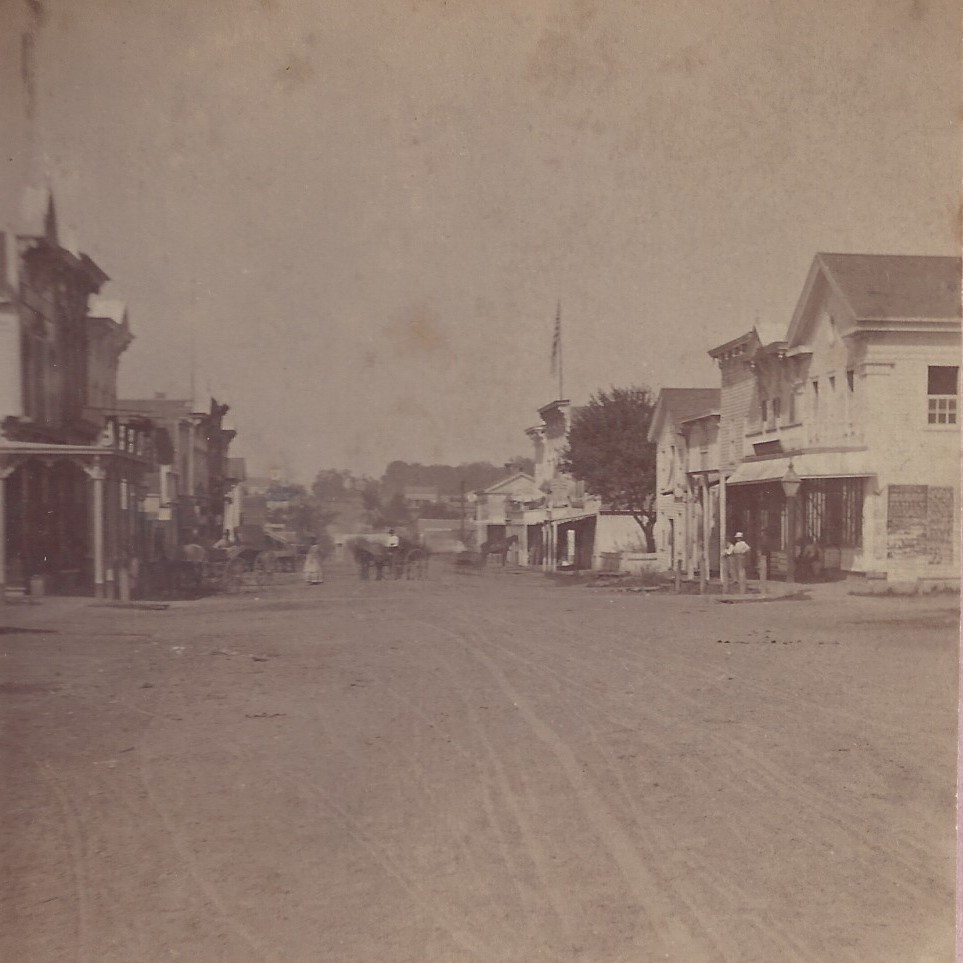
Timeline of Key Events
Introduction
This page has been prepared by the Flushing Area Historical Society to provide a concise, source-based timeline of key events in the history of Flushing, Michigan, and its immediate surroundings. Drawing on community histories such as the 1985 Flushing Sesquicentennial History, Volume One, the later local narrative and photo collection commonly referred to as Vol2, and C. O. Hart’s centennial compilations and notes, the table below brings together dates, places, and topics that are otherwise scattered across many different books and files.
The entries span from the first Euro‑American settlement in the 1830s through township and village organization, the coming of the railroad, the rise and decline of local mills and hotels, the development of schools and churches, the appearance of electric light and paved streets, and the long story of the Grand Trunk depot and its eventual restoration as a museum. Each row is tagged by category (such as “Bridge”, “Hotel”, “Education”, “Fire Dept.”, “Railroad”, or “Depot”) and anchored with an exact date whenever that information can be verified from the sources.
Because the Historical Society is committed to transparency about where our information comes from, every event is accompanied by a “Source” field naming the principal volume used (for example, Vol1.pdf, Vol2.pdf, Hart – Flushing & Clayton Historical Compilation, Centennial Chronicles 1835–1935, or Flushing – Sesquicentennial History Vol. 3) and a page reference to help researchers and family historians go back to the original context. Wherever different sources preserve different perspectives or related incidents for the same year, multiple rows are included rather than forcing the record into a single summary.
The Society intends this master table to serve as a working reference tool: it can be used to date historic photographs, interpret old business records, locate the original context of newspaper clippings, or simply follow how one small Michigan community grew from a river‑mill settlement into a modern town. As new research is completed and additional primary sources are examined, further rows and refinements may be added, but all updates will continue to follow this same documented, page‑cited format.
| Year/Date | Category | Major event | Source | Page |
|---|---|---|---|---|
| 1835 | Settlement | First settlers arrive in Flushing (Rufus Harrison and Henry French). | Vol2.pdf | 82–83 |
| 1836 | Industry/Milling | Horace R. Jerome acquires water‑power site at future village. | Hart – Flushing & Clayton Historical Compilation, 1925_Part1.pdf | 16–18 |
| 1837 | Industry/Milling | First sawmill frame raised by Charles Seymour & Horace Jerome. | Hart – Flushing & Clayton Historical Compilation, 1925_Part1.pdf | 17–18 |
| 1838-03-06 | Government | Flushing Township created by Act of the Michigan Legislature. | Hart – Centennial Chronicles 1835 – 1935 pt1.pdf | 31 |
| 1838-04-02 | Government | First Flushing Township election held at the house of Ezekiel R. Ewings. | Hart – Flushing & Clayton Historical Compilation, 1925_Part1.pdf | 16–17 |
| 1838-10-18 | Education | First formal school district boundaries (Districts 1–8) recorded. | Vol2.pdf | 15 |
| 1839 | Bridge | First wooden Main Street bridge across the Flint River built at the present crossing, providing the earliest permanent wagon bridge between east and west banks of the future village. | Vol1.pdf | 64 |
| 1840 | Industry | First grist mill built by Seymour & Bowers on future Hart Mill site. | Hart – Flushing & Clayton Historical Compilation, 1925_Part1.pdf | 17–18 |
| 1840 | Church | First Methodist class meetings and preaching services held at the Seymour saw mill on the west side of the river—considered the first organized worship in the Flushing area. | Vol1.pdf | 29–31 |
| 1842 | Church | Methodist Episcopal Society at Flushing formally organized and attached to the Flint Circuit, with services held at mill, homes, and schoolhouse. | Hart – Flushing Through the Years, Vol. II – 1904 to 1924_Part2.pdf | 5–8 |
| 1842 | Education | First framed school built on Chamberlain & Hazelton hill. | Vol2.pdf | 14–15 |
| 1844 | Education | Lyons School established on Lyons land in Clayton Township. | Hart – Flushing & Clayton Historical Compilation, 1925_Part1.pdf | 120 |
| 1845 | Education | First west‑side village school erected on high bank near Seymour Road. | Vol2.pdf | 15 |
| 1846 | Hotel | Exchange Hotel (Langdon’s) built at Main & Cherry. | Vol2.pdf | 42, 85 |
| 1847-03-03 | Church (Baptist) | Baptist believers meeting as a branch of the Flint church organize the “Baptist Church of Flushing” with about 22–25 charter members. | Vol2.pdf; Vol1.pdf | Vol2: 93–94; Vol1: 34–35 |
| 1848-02 | Church (Union/West Side) | Baptists vote to join with Presbyterians to build a shared “Union Church” on the west side of Flushing—later widely remembered as the West Side Church. | Vol2.pdf; Vol1.pdf | Vol2: 93–94; Vol1: 34–35 |
| 1848 | Church (Methodist) | First Methodist church building—a wooden chapel—erected at NW corner of Main & Hazelton on land from James Seymour, using locally cut pine and oak. | Vol2.pdf; Vol1.pdf | Vol2: 51; Vol1: 29–31 |
| 1848-05-24 | Civic | Federal road notice for Chamberlain Street mailed from Washington, D.C. | Vol2.pdf | 16 |
| 1852 | Industry | Hunter’s sawmill noted in county poor‑relief abstracts. | Hart – Flushing & Clayton Historical Compilation, 1925_Part1.pdf | 212 |
| 1854 | Foundry | Flushing listed with an iron foundry in state gazetteer. | Hart – Flushing & Clayton Historical Compilation, 1925_Part1.pdf | 101 |
| 1856 | Bridge | Second wooden bridge constructed at the Main Street crossing, replacing the original 1839 span as traffic and milling activity increase on both sides of the river. | Vol1.pdf | 64 |
| 1859 | Education | Rural schools such as Kent, Hurd, and Paton appear on township maps. | Vol2.pdf | 15 |
| 1860-03-17 | Church (Presbyterian) | Presbyterian Society of Flushing organized; elders include John Paton, Alanson Niles, James Seymour, Jacob Rezeau, Amos Woodruff, and Alexander Duff. | Vol1.pdf | 30–32 |
| 1860-06-13 | Church (West Side Baptist) | Baptists purchase the Union Church building at Main & Seymour, which becomes known as the West Side Baptist Church serving the west‑side neighborhood. | Vol1.pdf; Vol2.pdf | Vol1: 34; Vol2: 93–94 |
| 1860s–1870s | Church (Catholic) | First St. Robert’s Catholic Church built as a wooden country church west of Flushing in Hazelton Township (Gaines parish). | Vol1.pdf | 36, 48 |
| 1861–1864 | Church (Presbyterian) | Presbyterians construct their brick church at 309 E. Main; building completed in 1864 with a tall steeple added in 1865. | Vol1.pdf | 30–33 |
| 1863 | Church (English Settlement) | Methodist class at the English Settlement completes a frame church in the northwest part of the township. | Vol1.pdf; Hart – Centennial Chronicles 1835 – 1935 pt1.pdf | Vol1: 60; Hart – Centennial Chronicles 1835 – 1935 pt1.pdf: 83–84, 120 |
| 1863 | Commerce | Early Niles & Co. mercantile activity documented in business lists. | Hart – Flushing & Clayton Historical Compilation, 1925_Part1.pdf | 100 |
| 1866 | Commerce/Niles Building | Arza Niles appointed postmaster at his Main Street store. | Vol2.pdf | 17 |
| 1869 | Education | Brick Union School era begins on Chamberlain & Hazelton hill. | Vol1.pdf | 84 |
| 1871 | Education | Two‑story brick schoolhouse completed for Union District No. 2. | Vol1.pdf | 84 |
| 1872 | Bridge | Third wooden Main Street river bridge built at the same site; this structure carries wagons and pedestrians until it is replaced by a new iron double‑span about 1880. | Vol1.pdf | 64 |
| 1872 | Education | Brick high school constructed on Chamberlain & Hazelton hill. | Vol1.pdf | 84 |
| 1875 | Commerce | A.N. Niles & Co. general store active as a major merchant. | Hart – Flushing & Clayton Historical Compilation, 1925_Part1.pdf | 100 |
| 1875 | Foundry | James Sammer’s foundry operating near the west end of the river bridge. | Hart – Flushing & Clayton Historical Compilation, 1925_Part1.pdf | 103 |
| 1877 | Education | English School District votes building fund and reorganizes operations. | Vol2.pdf | 93 |
| 1878 | Hotel | Original wooden Laurel House burns; hotel later rebuilt in brick. | Vol2.pdf | 43 |
| 1879 | Hotel | Eggleston House brick hotel constructed at Main & Cherry. | Vol2.pdf | 44, 86 |
| c. 1880 | Bridge (Iron) | Double‑span iron bridge erected on Main Street over the Flint River, replacing the 1872 wooden span; the bridge has solid wood planking, later remembered for its loud clatter under wheels and footsteps and for children dropping stones through the deck to “plink” into the water below. | Vol1.pdf; Vol2.pdf | Vol1: 62, 64; Vol2: 63 |
| 1880s–1890s | Bridge (Iron) | Traffic sign posted on the iron Main Street bridge warns of a ten‑dollar fine “for driving on this bridge faster than a walk, or for driving more than 25 head of cattle on the bridge at one time,” reflecting heavy use by drovers moving herds to the railroad stockyards south of the depot. | Vol2.pdf | 19–20 |
| 1884 | Fire Dept. | First brick fire hall built on Maple Street. | Vol1.pdf | 41, 75 |
| 1884-06-29 | Church (Methodist) | New brick Methodist church at Main & Hazelton dedicated during the pastorate of Rev. Joel B. Goss. | Hart – Flushing Through the Years, Vol. II – 1904 to 1924_Part2.pdf | 3–4 |
| 1886–1890 | Education | Warner School constructed and operating on donated Warner land. | Vol2.pdf | 72 |
| 1887 | Industry | Niles & Cotcher woolen factory, ashery, and foundry active in the village. | Hart – Flushing & Clayton Historical Compilation, 1925_Part1.pdf | 101 |
| 1887-12-11 | Church (Baptist) | First Baptist Church at Beech & Elm dedicated with a massive steeple and bell tower, becoming an east‑side landmark. | Vol2.pdf; Vol1.pdf | Vol2: 93–94; Vol1: 34–35 |
| 1888-12-20 | Railroad | First passenger train of the Toledo, Saginaw & Mackinaw reaches Flushing. | Flushing – Sesquicentennial History Vol 3_Part1.pdf | 18–19 |
| 1889 | Commerce | Chatters Block built at Main & Maple, replacing earlier wooden stores. | Vol1.pdf | 62, 70 |
| 1889 | Industry | Ottaway Elevator at Terrace & Emily burns and is rebuilt. | Flushing – Sesquicentennial History Vol 3_Part1.pdf | 19 |
| 1890-09-21 | Hotel | Major fire at Laurel House; building rebuilt as a 2‑story hotel. | Vol2.pdf | 43 |
| 1891 | Commerce | Kimmell/Corinthian Hall at Main & Cherry brick‑veneered. | Vol2.pdf | 28, 138 |
| 1895 | Utilities | Village replaces kerosene and gas lamps with electric streetlights. | Vol2.pdf | 22, 104 |
| 1895 | Bank | Peoples State Bank organized as an early local bank. | Flushing – Sesquicentennial History Vol 3_Part2.pdf | 376–377 |
| 1896 | Utilities | Electric Light & Water Works plant dated “1896”. | Vol2.pdf | 22 |
| 1901 | Industry | West‑end Seymour sawmill ceases operation at dam site. | Vol2.pdf | 42 |
| 1903 | Infrastructure | Major flood surrounds Hart Mill and threatens its foundation. | Vol2.pdf | 20 |
| 1904 | Bridge (Railroad) | Ice pack destroys first railroad bridge east of downtown; replacement will be built in 1906. | Flushing – Sesquicentennial History Vol 3_Part1.pdf; Vol1.pdf | Vol3_Part1: 95; Vol1.pdf: 95 |
| 1905 | Library | Peoples Bank Building upper floor used as community library. | Vol1.pdf | 85 |
| 1906 | Bridge (Railroad) | New railroad bridge constructed to replace the 1904 span; it remains until rail removal in 1931. | Vol1.pdf; Vol2.pdf | Vol1: 95; Vol2: 27 |
| 1908–1924 | Hotel | Eggleston House operated by several proprietors (Mundy, Arn, Bruner). | Vol2.pdf | 27, 44 |
| 1911 | Bridge (Iron) | Solid wood planking on the iron Main Street bridge is removed and replaced with a concrete deck, strengthening the double‑span structure for growing wagon and early automobile traffic while the iron trusses remain in place. | Vol1.pdf | 64 |
| 1912 | Commerce | Six old wooden stores on north side 100‑block replaced by brick row. | Vol2.pdf | 140–141 |
| 1913-03-21 | Church (Baptist) | Violent windstorm blows down the tall spire of the Baptist Church at Beech & Elm; the steeple is never rebuilt, leaving only the bell tower. | Vol2.pdf | 94 |
| 1915-05-16 | Commerce/Fire | Sayre Block Fire destroys six new brick stores between 117–137 E. Main. | Vol2.pdf | 141 |
| 1916-02-?? | Railroad | “Great Train Wreck” in the Moore Cut south of town; engines trapped in deep snowdrifts. | Vol2.pdf | 69–70 |
| 1918-03-19 | Industry | Hart Milling & Power Co. mill burns for the fifth time in 72 years. | Hart – Flushing & Clayton Historical Compilation, 1925_Part1.pdf | 18, 133 |
| 1918 | Industry | Former mill / auto garage at Main & Maple burns (“from grist to gasoline” site). | Vol2.pdf | 32 |
| 1918 | Church (Methodist) | Towering steeple of the brick Methodist church is struck by lightning; upper portion removed, leaving a shorter bell tower. | Vol1.pdf | 29–31, 110 |
| 1919 | Auto Era | Central Gas & Oil station built at SW corner Main & Maple. | Vol2.pdf | 32, 105 |
| 1919 | Power | Power building near hart mill built | photo | |
| 1920 | Bridge (Concrete) | Village issues $11,500 in bonds toward construction of a new concrete river bridge on Main Street, with the township expected to contribute $5,000, setting the stage for replacement of the iron double‑span. | Vol1.pdf | 64 |
| 1921 | Fire Dept. | First motorized fire engine (1921 Reo) placed in service. | Vol1.pdf | 41 |
| 1921-12-07 | Church (Presbyterian) | Former Presbyterian Church at 309 E. Main, long in decline, is offered to the Village; council accepts the gift and begins plans to convert it into a Community Center. | Vol1.pdf | 31–33 |
| 1921–1922 | Bridge (Temporary) | During construction of the new concrete bridge, a temporary wooden bridge is built across the river on the extension of Oak Street east of the lumber yard, carrying traffic up to Mary, east on Mary to Maple, and back to Main to avoid a long detour while the Main Street crossing is closed. | Vol2.pdf | 26 |
| 1922-05 | Bridge (Concrete) | New three‑span concrete Main Street bridge completed with a 60‑foot center span, two 54‑foot end spans, a 24‑foot roadway, and a 6‑foot sidewalk; the polished concrete, “like marble,” and its handsome profile lead observers to call it one of the most outstanding bridges of its type in the state. | Vol1.pdf | 64 |
| 1922 | Bridge (Concrete/Boulevard lights) | Decorative “boulevard lights” are installed on posts along both sides of the new concrete bridge; they become a nighttime attraction with their reflections in the river but are later removed after several years because of maintenance and electrical problems. | Vol2.pdf; Vol1.pdf | Vol2: 26–27; Vol1: 64 |
| 1922 | Gas & Oil | Flushing Oil & Gas cement block station erected at 301 W. Main. | Vol2.pdf | 93 |
| 1923 | Auto | Arza Niles SW‑corner property at Main & Saginaw sold to Standard Oil; gas station planned. | Flushing – Sesquicentennial History Vol 3_Part1.pdf | 91 |
| 1924 | Auto | Gordon Bedford purchases 90 E. Main and builds an oil station (later Hart garage). | Flushing – Sesquicentennial History Vol 3_Part1.pdf | 91 |
| 1924 | Auto | Fire at 103–105 N. Maple drives Ransom & Reid Buick agency from building. | Flushing – Sesquicentennial History Vol 3_Part1.pdf | 91 |
| 1924–1926 | Roads | Paving of Main Street, Flushing Road, and Seymour Road completed. | Vol2.pdf | 43 |
| 1927 | Church | Methodist church east wing added | Photo 1927 | |
| 1928 | Golf | First Flushing Valley 9‑hole course started on former Davie farm. | Vol2.pdf | 43, 120 |
| 1928 | Hotel | Laurel House hotel building demolished; lumber reused locally. | Vol2.pdf | 43 |
| 1929 | Education | Caldwell School expanded with second classroom and new foundation. | Vol2.pdf | 58–59 |
| 1931 | Railroad | Rails removed from Main Street; only spur to lumberyard retained. | Flushing – Sesquicentennial History Vol 3_Part1.pdf; Vol1.pdf | Vol3_Part1: 27; Vol1.pdf: 95 |
| 1932-05-10 | Church/Civic | Renovated Presbyterian building formally opened as the Flushing Community Center; later becomes City Hall. | Vol1.pdf | 31–33 |
| 1934 | Church | Presbyterian steeple destroyed in storm; remaining structure later remodeled as city offices. | Vol1.pdf | 31–33 |
| 1935-07-21 | Industry | Flushing Manufacturing Service / Beck Sprayer building burns at Lynn & Emily. | Vol2.pdf | 39 |
| 1935 | Events | Centennial celebrations with Ferris wheel on Cherry and major parades downtown. | Vol2.pdf | 41 |
| 1936 | Hotel | Eggleston House demolished and replaced by a service station. | Vol2.pdf | 44 |
| 1937 | Fire Dept. | Second story added to Maple Street fire hall for caretaker’s apartment. | Vol1.pdf | 41, 75 |
| 1938-06-28 | Fire Dept. | Group photograph of Flushing Volunteer Fire Department taken. | Vol2.pdf | 41 |
| 1940s | Theatre | Dawn Theatre extensively remodeled on north side of Main. | Vol2.pdf | 71 |
| 1941-10 | Commerce | East and west additions at Central Distributors (90 E. Main) completed. | Vol2.pdf | 105 |
| 1942-02-04 | Church (Nazarene / West Side School) | Church of the Nazarene purchases the (empty) West Side School, District #2, on the west side of town; former school becomes a church building. | Vol2.pdf | 90–91 |
| 1943 | Golf | Flushing Valley 9‑hole course closed during World War II shortages. | Vol2.pdf | 120 |
| 1944-05-24 | Golf | Local group purchases Davie farm to revive Flushing Valley Golf Club. | Vol2.pdf | 120 |
| 1946 | Industry | Plant at Lynn & Emily rebuilt and occupied by Flushing Manufacturing Service. | Vol2.pdf | 39 |
| 1949 | Lighting | Mercury Vapor street lights downtown, fancy | ||
| 1951 | Commerce | McNally dealership relocates sales from downtown to East Main. | Vol2.pdf | 122 |
| 1951 | Church (Nazarene) | New Church of the Nazarene sanctuary constructed behind former West Side School; Fellowship Hall added, creating a permanent west‑side campus. | Vol2.pdf | 90–91 |
| 1953 | Education | Central Elementary School opens as first consolidated grade school. | Vol2.pdf | 90 |
| 1954 | Commerce | McNally dealership moves to new Pierson Road facility. | Vol2.pdf | 122 |
| 1955 | Business | Bueche Brothers grocery expansion era begins on Main Street. | Vol2.pdf | 104 |
| 1957 | Education | Elms Elementary built on Elms Road with initial six‑room wing. | Vol2.pdf | 92–93 |
| 1958 | Parks | Riverview Park improvements begin along river and former millpond. | Vol1.pdf | 36–43 |
| 1959 | Commerce | Bueche’s new supermarket opens at 226 W. Main west of the bridge. | Vol2.pdf | 104 |
| 1959 | Lighting | Fluorescent Street Lights Downtown | 1959 Photo | |
| 1960s | Civic | Library transitions into county system; major downtown improvements undertaken. | Vol1.pdf | 84–85 |
| 1962 | Education | Elms Elementary northeast wing (Unit A) added for lower grades. | Vol2.pdf | 93 |
| 1963 | Church (Catholic) | St. Robert’s School constructed beside the 1922 brick church on North Cherry. | Vol1.pdf | 36 |
| 1964 | Water | Flushing joins Flint water system; local wells and plant phased out. | Vol2.pdf | 22 |
| 1965 | Commerce | Luce Pharmacy relocates from downtown to Bueche Shopping Center. | Vol2.pdf | 121 |
| 1965 | Commerce | Morrish Mill torn down | Photo 1965 | |
| 1966 | Church (Catholic) | 1922 brick St. Robert’s Church on North Cherry demolished after new church is built alongside. | Vol2.pdf | 36 |
| 1966 | Civic | Flushing joins the Genesee County Library System. | Vol1.pdf | 85 |
| 1971 | Commerce | Staley family purchases Cherry Street building and expands plumbing & heating business. | Vol2.pdf | 107 |
| 1972 | Lighting | Overhead alley lights installed in reconstructed north alley of 100‑block. | Vol2.pdf | 38 |
| 1973 | Railroad | Grand Trunk sells depot and property (except main line) to Harry Herman and Robert Myers. | Flushing – Sesquicentennial History Vol 3_Part1.pdf | 33 |
| 1973 | Church (Methodist) | Brick Methodist church of 1883–84 demolished; present modern structure built on same site at Main & Hazelton. | Vol1.pdf | 35, 146–147 |
| 1973 | Lighting | Fluorescent Street Lights Downtown | 1973 Photo | |
| 1974 | Fire Dept. | New fire hall built on East Main, replacing Maple Street facility. | Vol1.pdf | 75 |
| 1975 | Depot | Depot converted to “Depot Restaurant”; FAHS holds its first awards dinner there. | Flushing – Sesquicentennial History Vol 3_Part1.pdf | 33 |
| 1976 | Railroad | Bicentennial Walkway created; one old railroad pier preserved as a monument along the river. | Flushing – Sesquicentennial History Vol 3_Part1.pdf; Vol1.pdf | Vol3_Part1: 23; Vol1.pdf: 144 |
| 1977 | Lighting | Fluorescent Street Lights Downtown | 1977 Photo | |
| 1978-12-06 | Railroad | Major freight derailment in front of depot; sidings on both sides of main line later removed. | Flushing – Sesquicentennial History Vol 3_Part1.pdf | 33, 35 |
| 1979 | Recognition | Depot named to State Register of Historic Sites; Harrison homesite and Half‑Way House also recognized. | Flushing – Sesquicentennial History Vol 3_Part1.pdf | 34 |
| 1979 | Archives | Flushing Observer microfilmed from 1882 forward by Clarke Historical Library. | Flushing – Sesquicentennial History Vol 3_Part1.pdf | 34 |
| 1980-03 | Industry | Duramold plant at 120 N. Maple expanded from 3,200 to 7,600 square feet. | Vol2.pdf | 118 |
| 1980-04-20 | Depot | Grand Trunk depot heavily damaged by night fire starting in restaurant kitchen. | Flushing – Sesquicentennial History Vol 3_Part1.pdf | 34–36 |
| 1981 | FAHS | Historical Society membership passes 100; meetings rotate among local venues such as Caldwell School and the library. | Flushing – Sesquicentennial History Vol 3_Part1.pdf | 36 |
| 1982 | Commerce | Cherry Street pharmacy becomes Value‑Rite agency. | Vol2.pdf | 105 |
| 1983 | Business | Staley’s Plumbing & Heating enters third‑generation family era. | Vol2.pdf | 107 |
| 1983 | Lighting | Mercury Vapor street lights downtown. | 1983 Photo Grange Building | |
| 1984-02-27 | Depot | Deed for depot recorded; building becomes property of the Flushing Area Historical Society. | Flushing – Sesquicentennial History Vol 3_Part1.pdf | 38 |
| 1984-07 | Depot | First debris‑removal and arch‑stabilization contracts let for depot restoration. | Flushing – Sesquicentennial History Vol 3_Part1.pdf | 38–41 |
| 1985 | Civic | Sesquicentennial History Volume I (Vol1) published by FAHS. | Vol1.pdf | front matter |
| 1989 | Lighting | 1st Gen historical lights | 1989 Photo | |
| 1992 | Lighting | 1st Gen historical lights | 1992 Photo | |
| 1993-06-06 | Depot | Second depot dedication for memorial case, plaques, and donor sign, recognizing major contributors and volunteers. | Flushing – Sesquicentennial History Vol 3_Part1.pdf | 59 |
| 1993-09-17 | Depot | Automobile crash destroys southwest corner of depot; repairs completed that fall to museum standards. | Flushing – Sesquicentennial History Vol 3_Part1.pdf | 60 |
| 1994 | Parks | Concrete bandshell with roof completed at Riverview Park using portions of earlier stage. | Vol2.pdf | 140 |
| 1995-11-05 | Depot | First craft show held on new depot floors; interior floor system completed. | Flushing – Sesquicentennial History Vol 3_Part1.pdf | 70 |
| 1996-06-02 | Depot | Open house marks completion of basic depot reconstruction; about 200 visitors attend. | Flushing – Sesquicentennial History Vol 3_Part1.pdf | 62, 64 |
| 1997-06-07 | Depot | Grand opening of FAHS museum in the restored depot; over 200 visitors the first weekend. | Flushing – Sesquicentennial History Vol 3_Part1.pdf | 72–74 |